Gallery Exhibits

Using Visual Thinking Strategies to Look at Art /  by Jordan Lienhoop Crump

by Jordan Crump

I want to share one technique for looking at art called Visual Thinking Strategies, which can be applied to anything visual such as children’s books or art exhibits. It asks three questions, again and again: What is happening in this image? What do you see that makes you say that? What more can you find? These questions are open-ended, with no wrong answers. 

After you’ve spent time looking at the artwork, you can read the label (aka a tombstone in art museums) and the exhibit statement for more information about the piece. You can revisit the questions and your earlier observations with the new details you've learned. 

You can do this with yourself, but I encourage you to try it with someone from your Community Group or your family the next time you’re at church. When you’re looking at a piece, you can consider the elements that make up the composition—like line, shape and form, color and value, space, and texture.

This process encourages slow, intentional looking. A study done over twenty years ago at the Metropolitan Museum of Art found that on average folks only spend 27.2 seconds looking at a work of art. In our age of endless scrolling, taking more than 30 seconds to look at something seems even harder. 
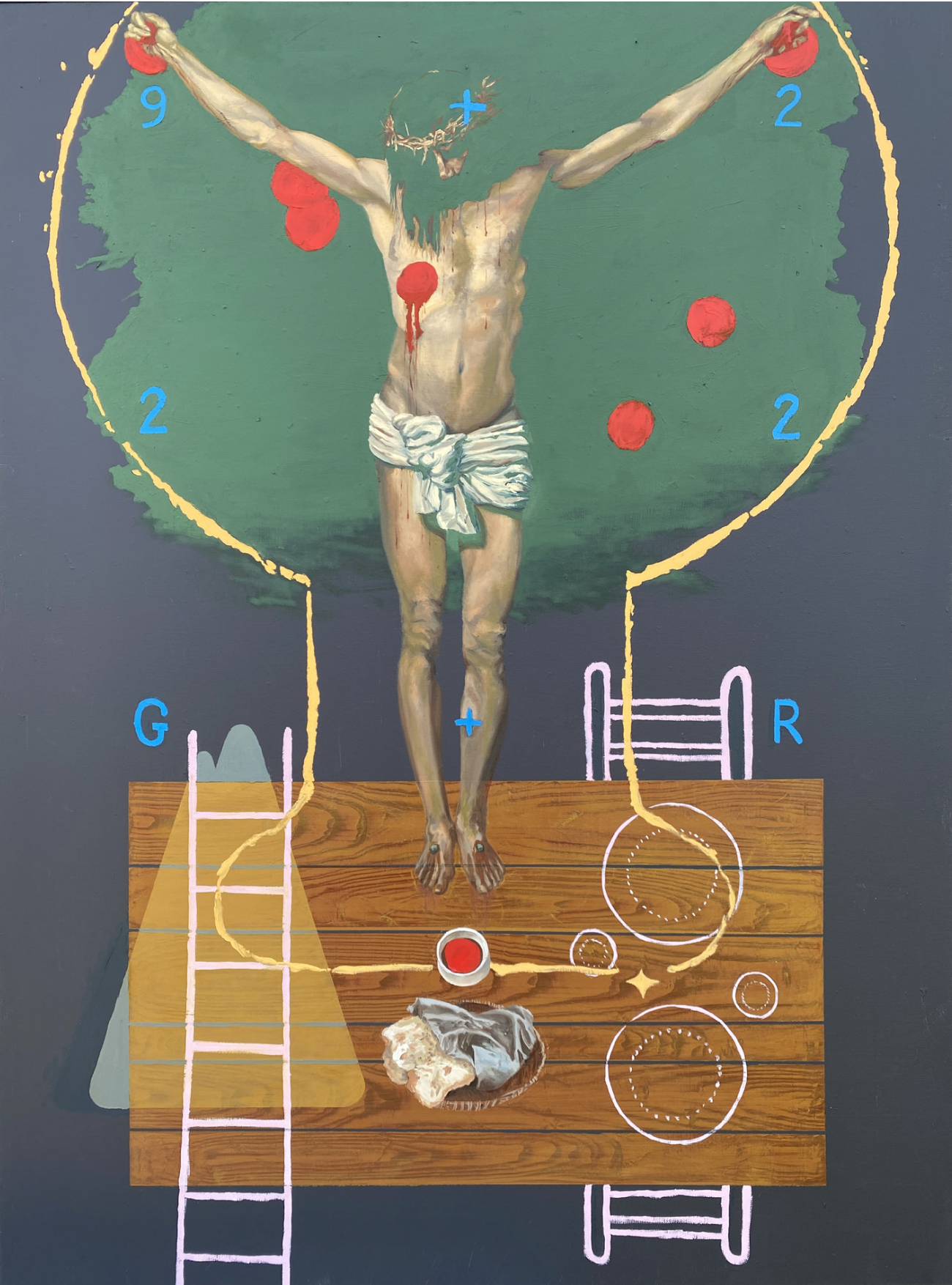
Rooted and Liminal No. 5 by Craig Hawkins. Oil on Canvas, 36” x 48”

So let’s look at this piece by Craig Hawkins with Kevin, Rochell, and Adam. It’s titled Rooted and Liminal No. 5, and it will be on display at Sojourn Arts in the exhibit Manifest, opening tomorrow. 

Jordan: What is happening in this image?
Rochell: So, I see communion. I see communion because I see the bread and the wine. And I see a table because these are just plates and cups and the ladder is also chairs, if you think about it.
Adam and Kevin: Whoa.
R: And then I also see from Genesis to Revelation.
J: What do you see that makes you say from Genesis to Revelation?
R: The G to the R.
A: I see that now, that's really cool.
K: I see the tree.
J: What makes you see a tree, Kevin?
K: The green, right. And it's in the shape of a tree. And then the red little dots, kind of like fruit.
J: What else is happening in this image?
A: The yellow is also like a cup, like of His sacrifice, His blood poured out. That's kind of what I was thinking with it too.
K: Also, we see Jesus, a person representing Jesus.
A: I see numbers. Ro was wondering what they stand for.
All: [Laughter]
J: Okay, we see numbers. We are not quite sure what they stand for.
A: It might represent a verse, but I don't know what it is. I thought this was a triangle, like, maybe the gold triangle is the Trinity.
R: I interpreted it as a mountain. I saw a mountain because of the shape of it.
A: That's good. The ladder…Maybe Jesus coming down from on high to us.
J: Yeah, so maybe the ladder represents Jesus coming down. Maybe the ladder could be like Jacob's ladder, too.
A: And I think these are chairs because of the place setting of, like, again, this idea of we have a spot at the table.

And it’s as simple as that! Our group then read Craig’s artist statement for more context about the series, adding to our understanding of the work.

Manifest features paintings by Craig Hawkins and Matt Armstrong. It opened on Friday, September 11th and is on view through Sunday, November 8, 2026.

This post originally existed as an email sent to Sojourn Midtown members.

The Third Annual Sojourn Artist Showcase /  by Jordan Lienhoop Crump

by Jordan Crump

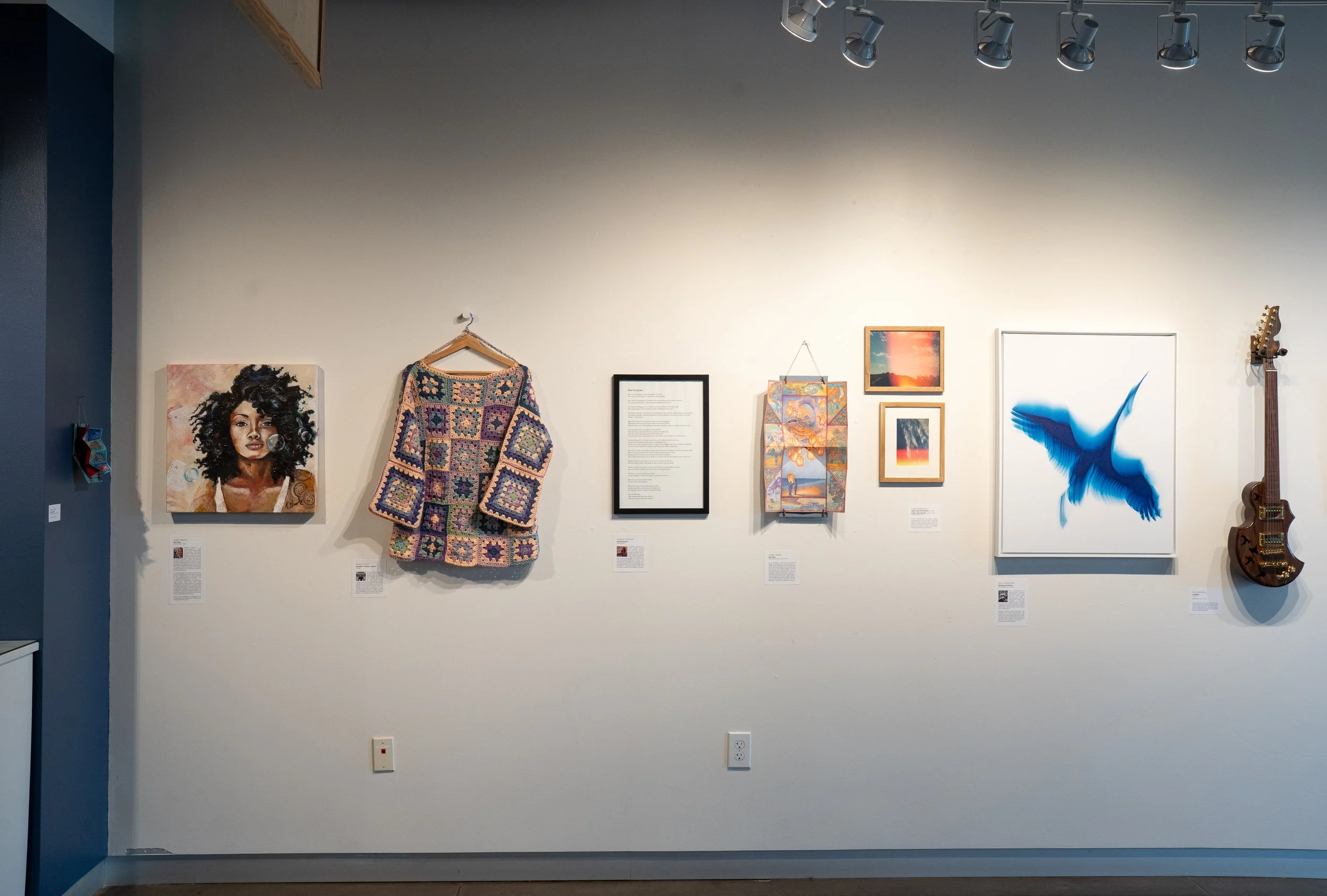
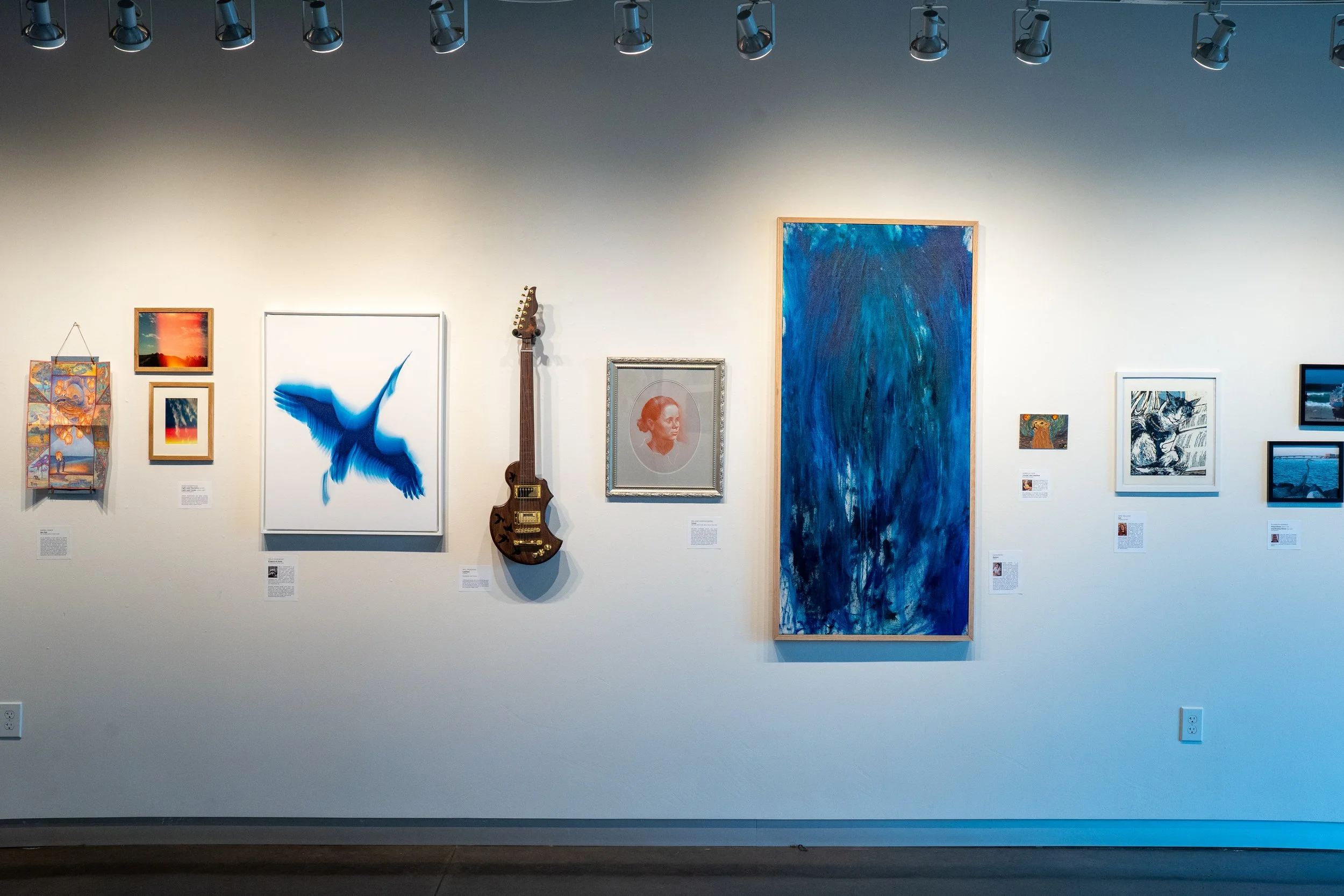
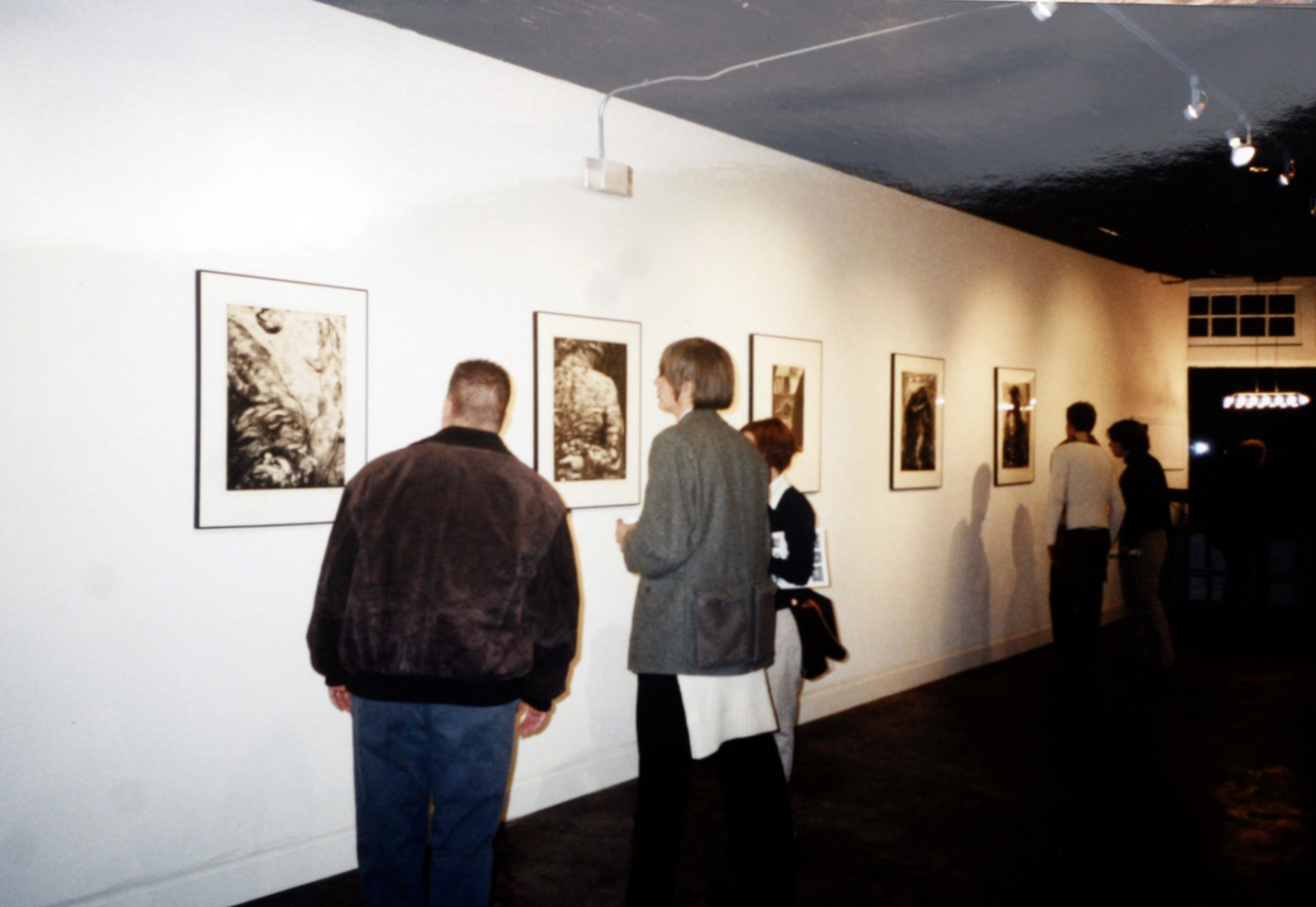
The Sojourn Artist Showcase has a long history at Sojourn Midtown, popping up periodically throughout the church’s history (see here and here). This year marks the 3rd consecutive row of hosting the Showcase in the summer, celebrating the artistic work of Sojourn Midtown and our extended church family through the visual and performing arts.

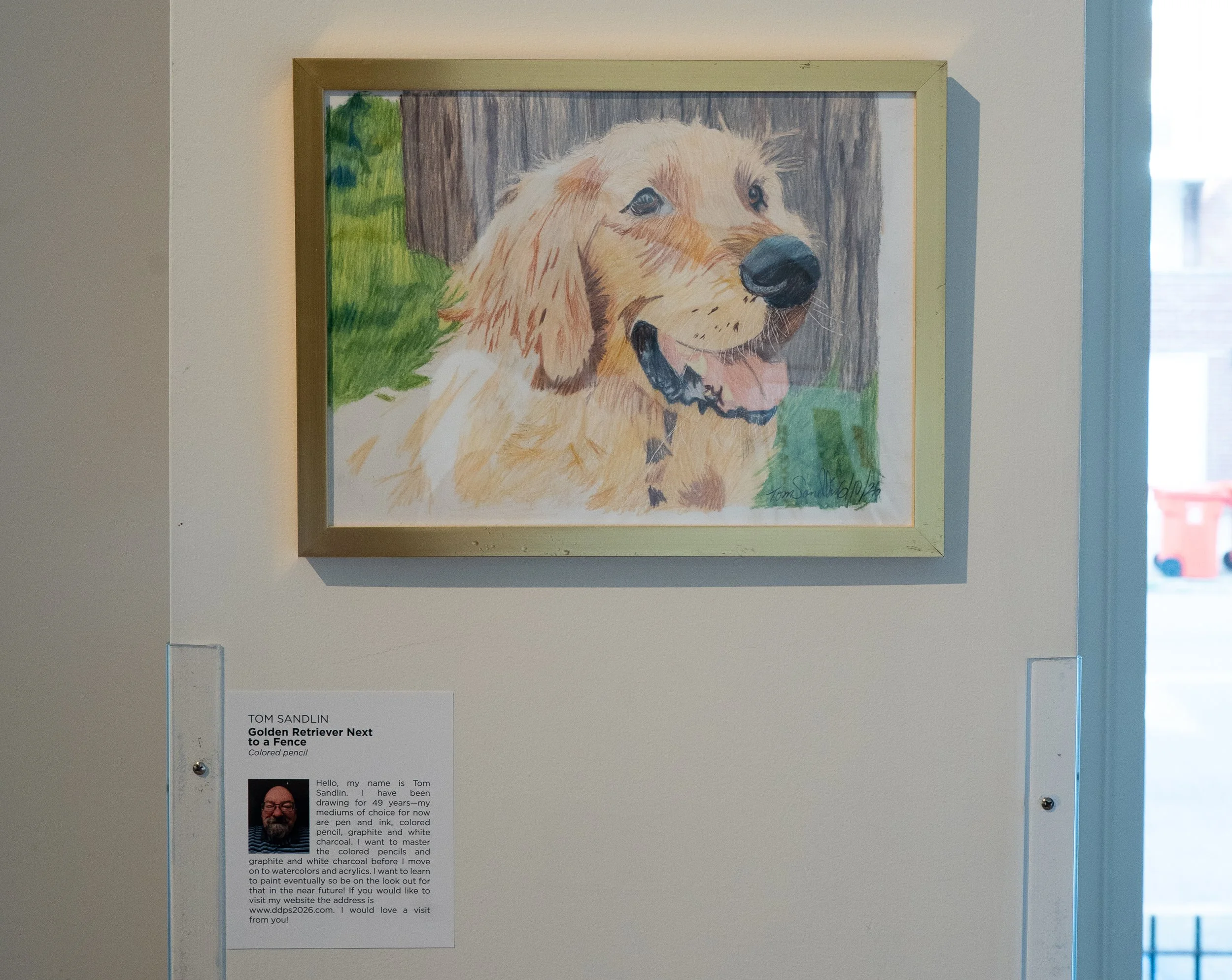
Above: Photograph by Allison Rushing. Below: 3 Photographs by Fred Games.

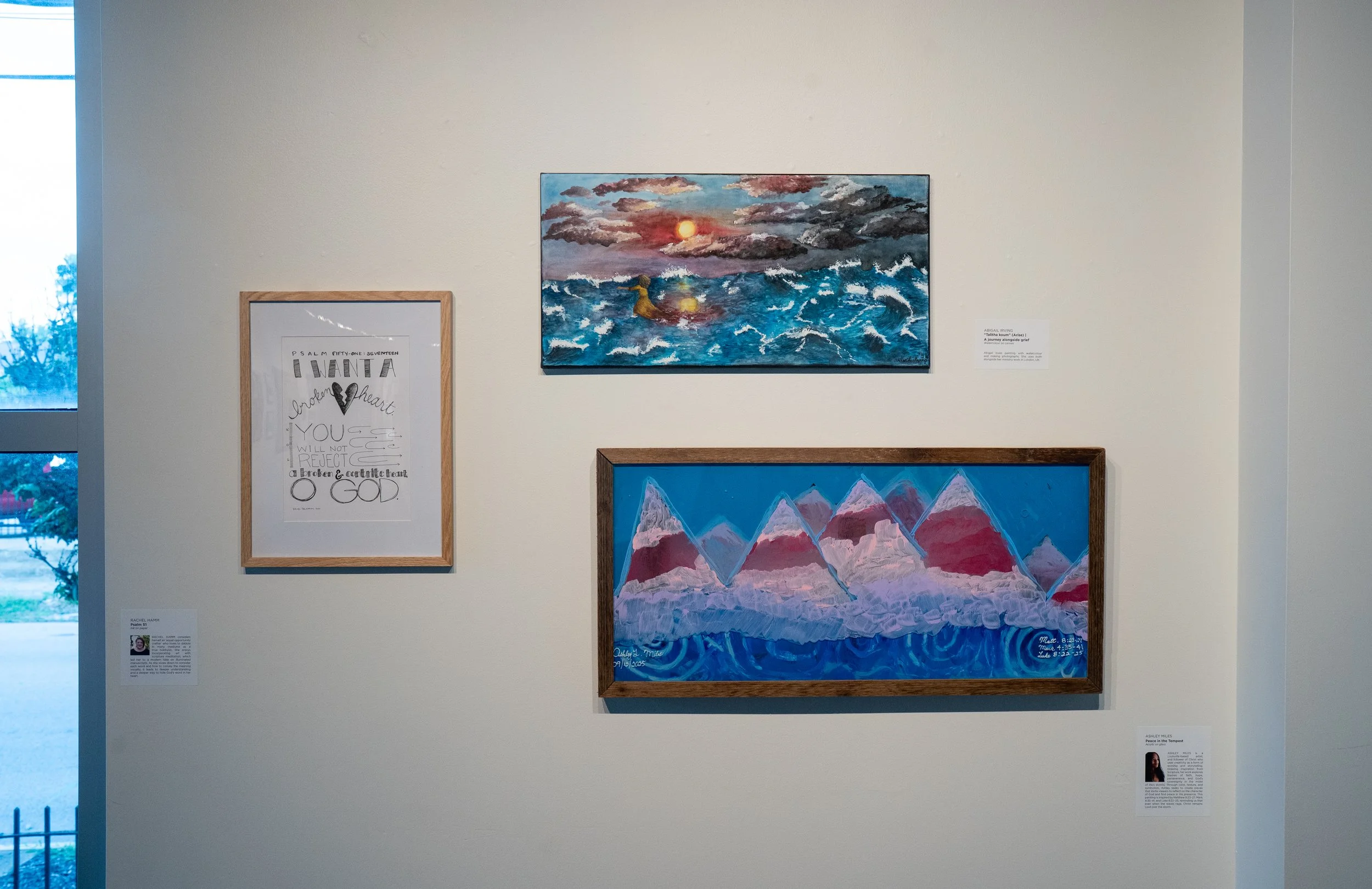
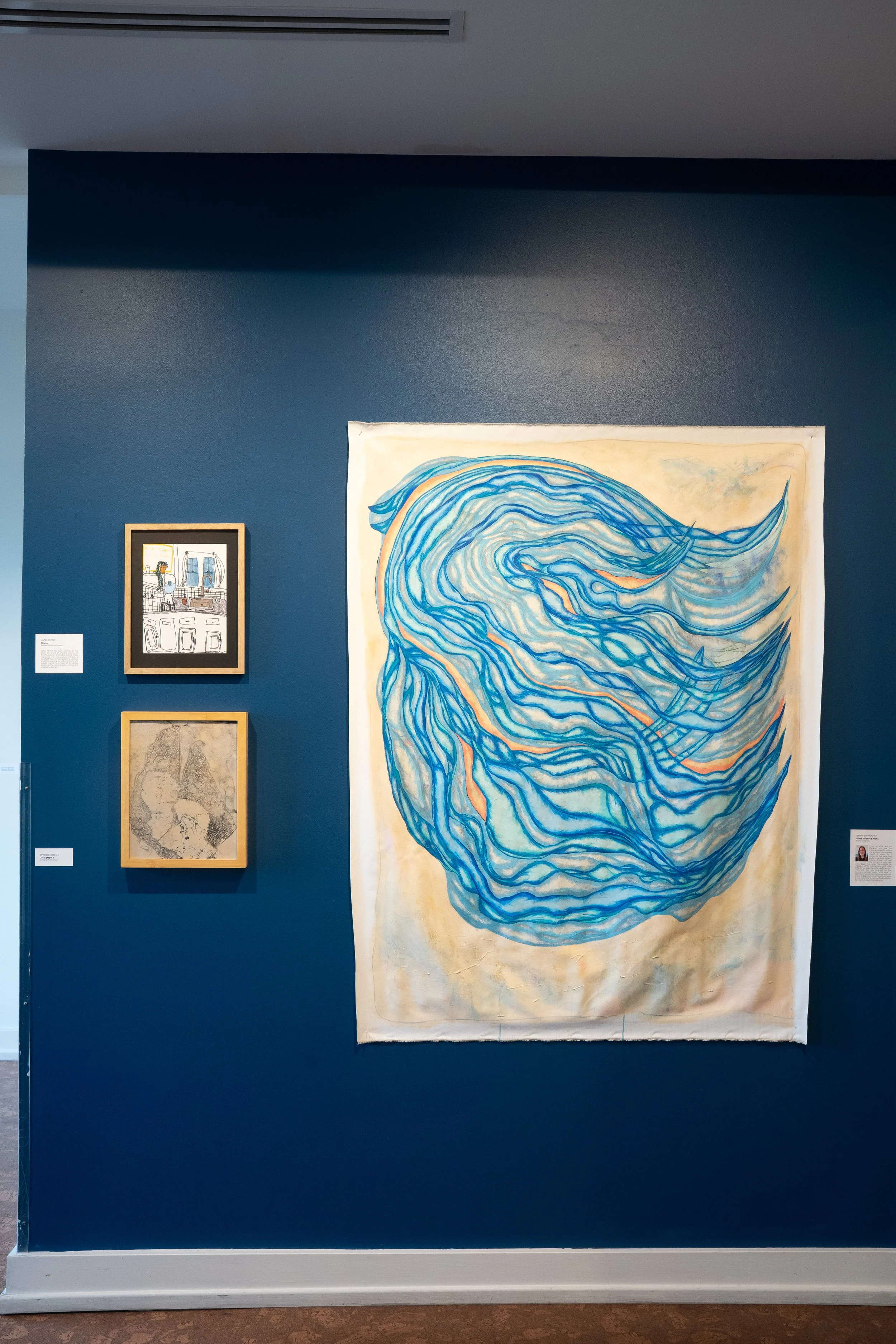
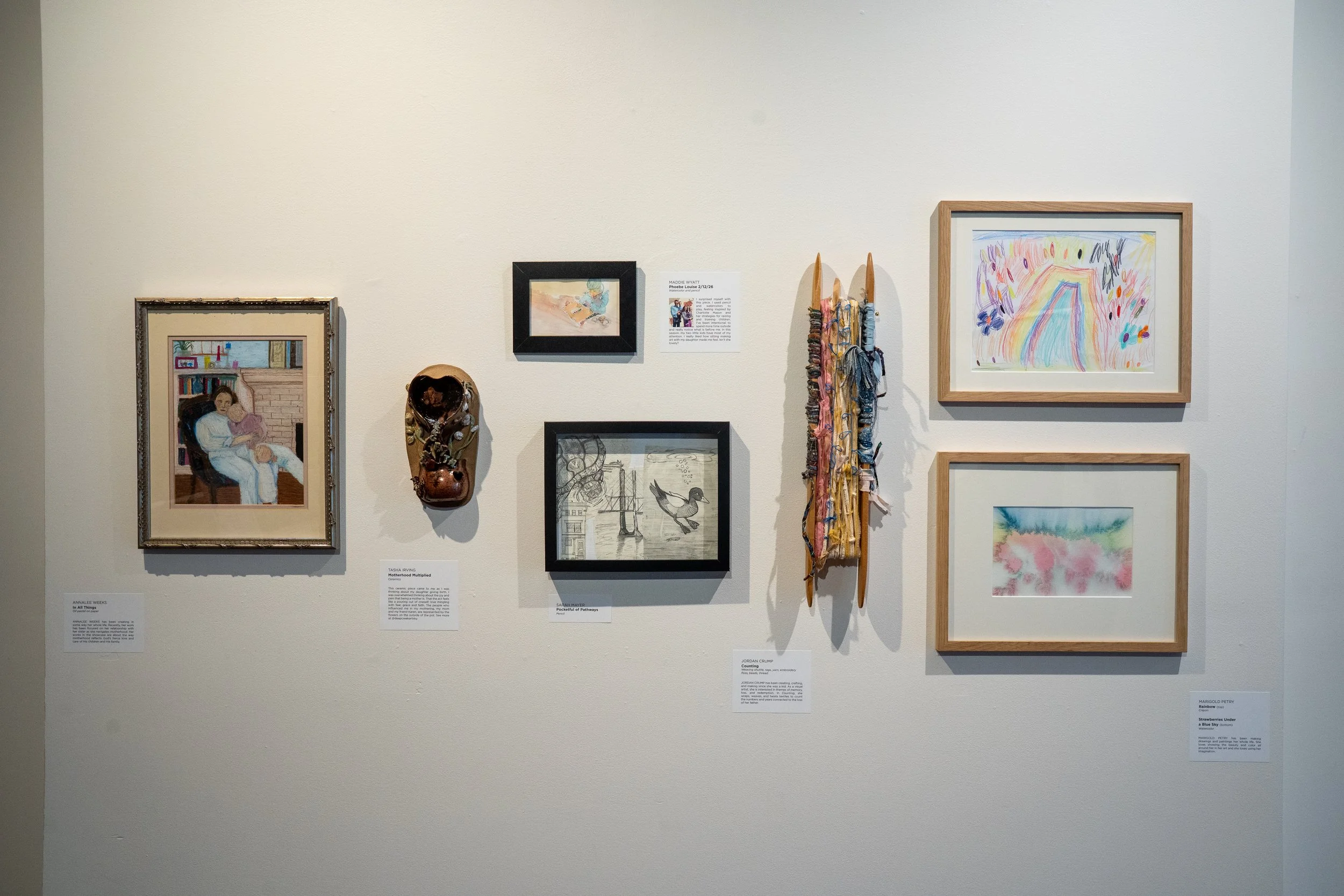
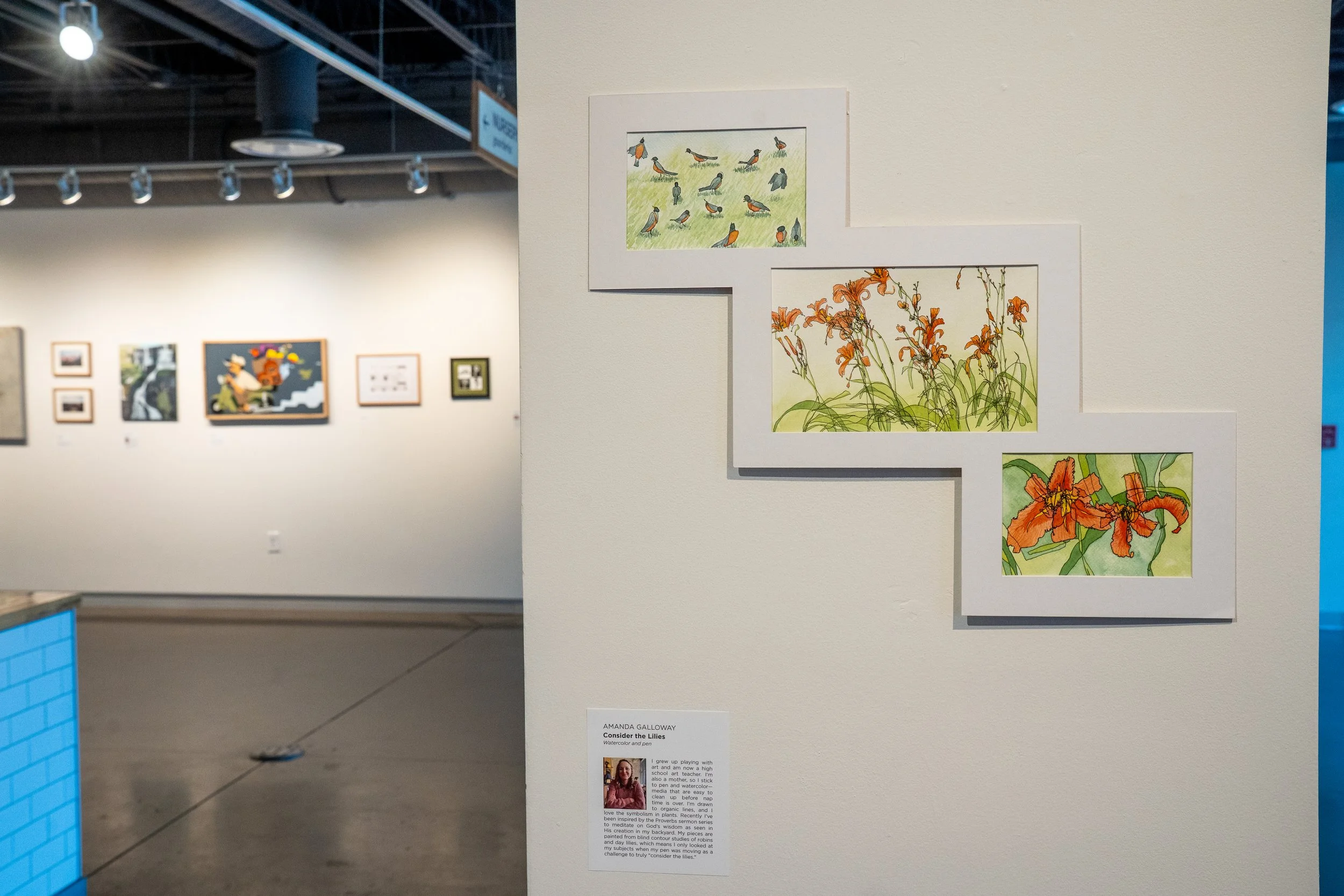
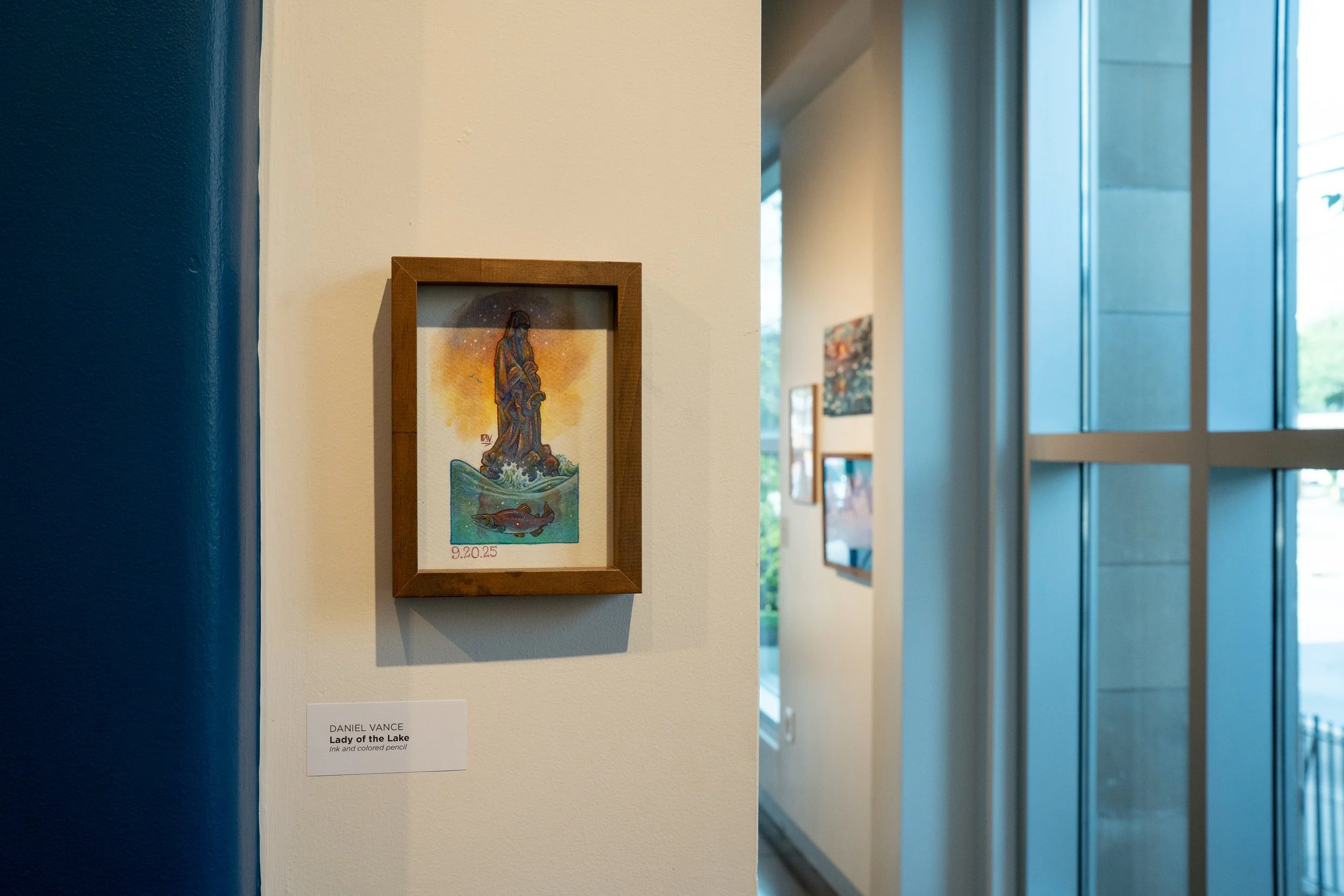
47 artists from Midtown and our extended church family submitted to the Showcase this year, with almost 100 pieces of artwork shared for consideration across multiple mediums: fiber arts, paintings, photography, sculpture, pottery, drawings, and illustrations.

The gallery features artwork by Jon Abreu, Jagur Allen, Melanie Harding Bates, Isabella Cape, Jordan Crump, Kelly Davenport, Camille Davis, Amanda Galloway, Alex Gerwe, Karen Grantz, Casey Hamm, Olin Hamm, Rachel Hamm, Savannah Harper, Brandon Hochhalter, Abigail Irving, Tasha Irving, Brittany Anne Jennings, Sylvan Jennings, Hannah Johnson, Elisabeth Kennedy, Jennifer Kramer, Deborah Leach, Skylar Mason, Sarah Mayer, Will Meadows, Ashley Miles, Jane Petry, Katie Petry, Marigold Petry, Sarah Ritz, Ian Robertson, Owen Robertson, Tim Robertson, Brian Rodman, Rhonda Rose, Allison Rushing, Thomas Sandlin, Asia Sloan, Suyun Son, Crystal Sridhar, Everly Sridhar, Meridian Sridhar, Daniel Vance, Dani Wallace, Annalee Weeks, and Maddie Wyatt.

Throughout the evening in the back of the sanctuary, we heard poetry, prose, and spoken word, songs and comedy. It was an evening full of enjoying the good gifts God has given us in creativity and community.

The Open Mic featured performances by Asher Chavez; Jonathon Crump with Dave Swanberg, Will Meadows, Chris Millett and Danley Pyles; Andy Fillebrown; Alex Gerwe; Rachel Hamm; Payton Harris; Nadia Irving; Skyler Markwell with Rachel Hamm; Christopher Owen; Tom Sandlin; Paul Sridhar with Michael Butterworth and Payton Harris; Sam Stevenson; Josiah Williams, Drew Dreher, Jonathan Shoemaker and Asher Chavez; and Annalee Weeks.

Photographs above by Allison Rushing.

The Showcase is on view through Sunday, September 6, 2026. We hope sharing our creative work inspires others in our community and beyond to make and share their own creative projects too!

Recorded Wanderings /  by Jordan Lienhoop Crump

by Jordan Crump

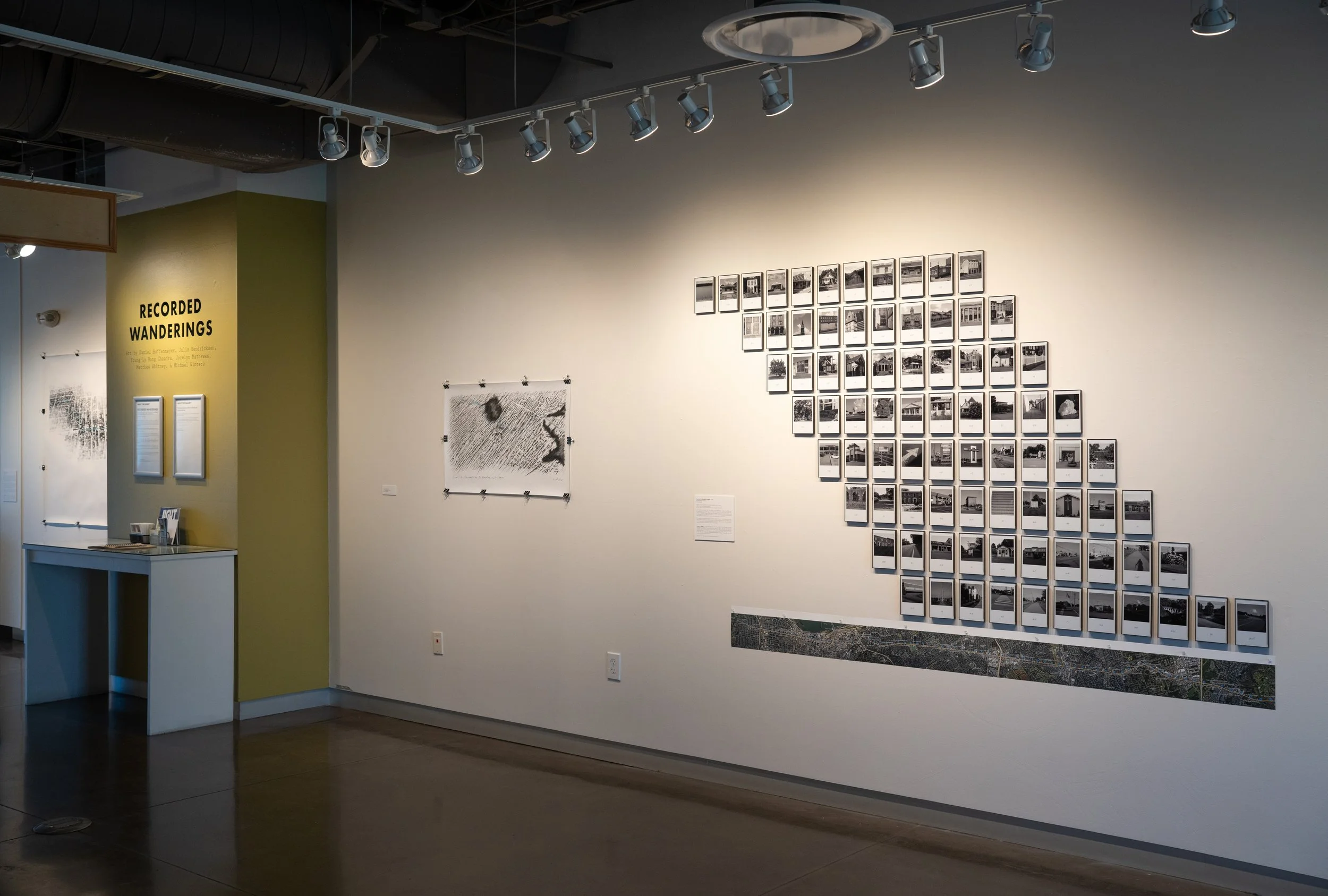
Recorded Wanderings opened last week at Sojourn Midtown. The exhibit features artwork by Daniel Buffenmeyer, Young-Ly Hong Chandra, Julia Hendrickson, Jocelyn Mathewes, Matthew Whitney, and Michael Winters.

Throughout Scripture we read that God leads us in paths of righteousness, makes known to us the path of life, and makes our paths straight. He records our wanderings and bottles our tears; He sets the boundaries of our time and place; His presence is with us in the heights and depths. 

The artists in this exhibit have recorded their wanderings, whether paths and places intentionally set down or ones they come upon. They have taken note of their places. 

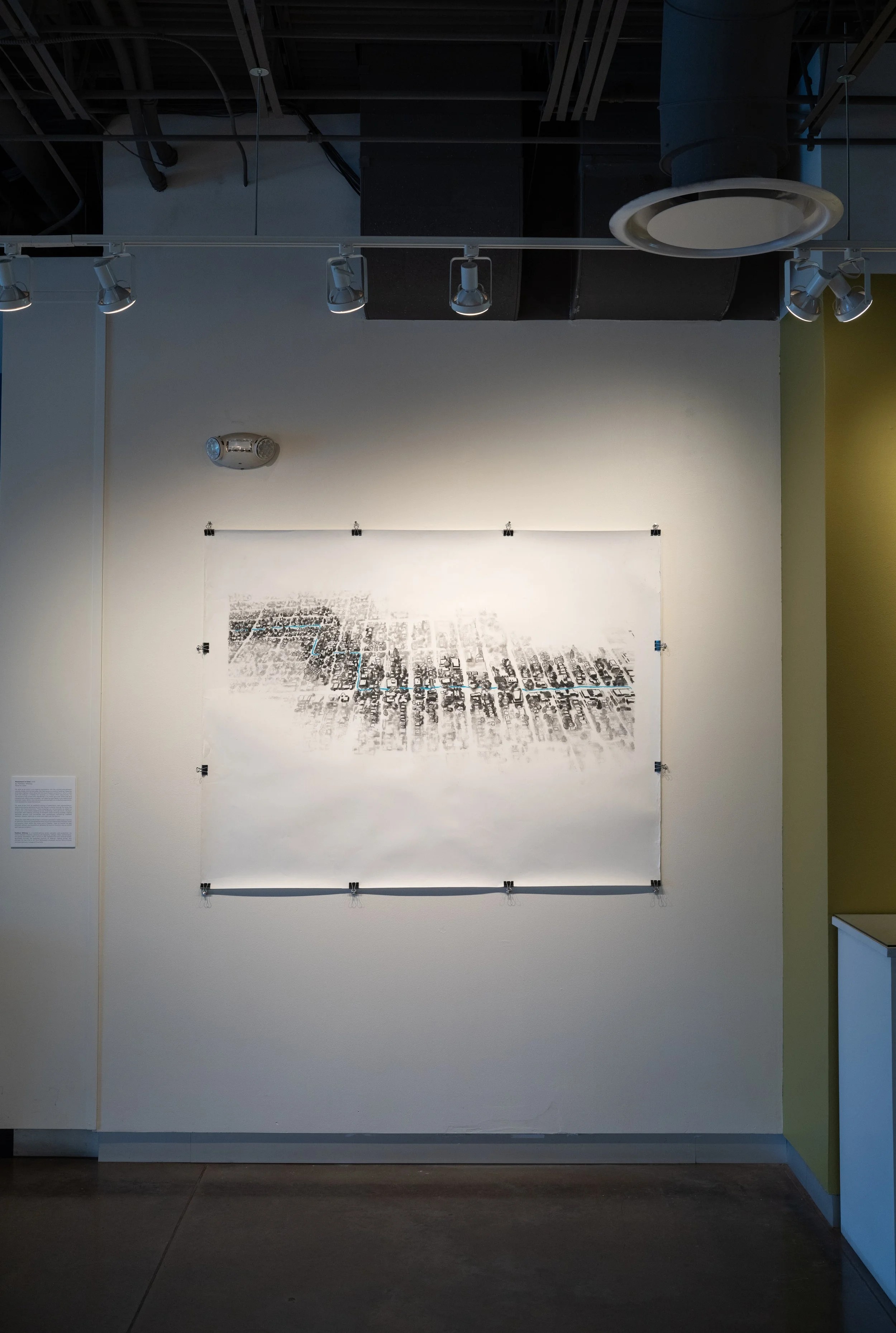
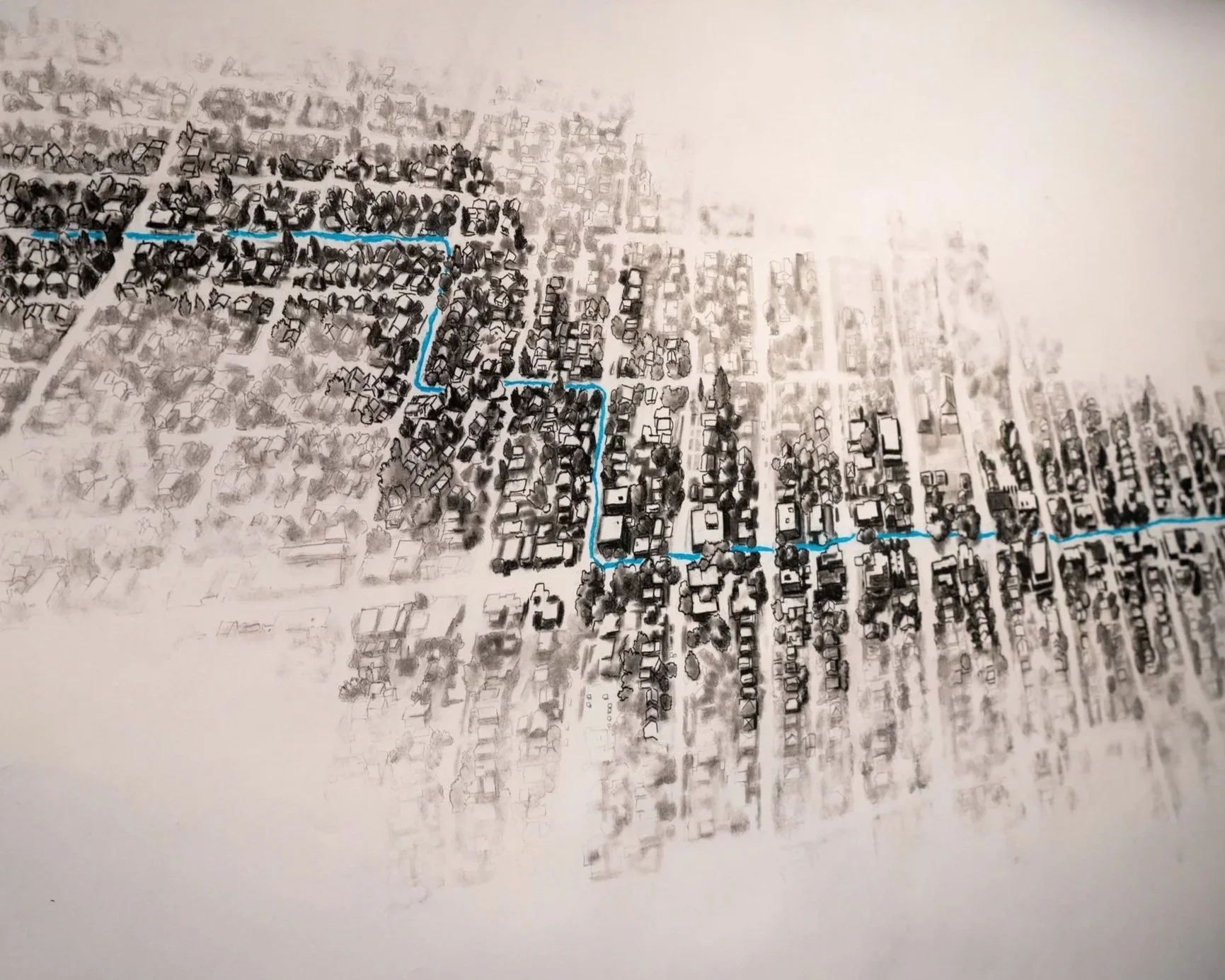
Matthew Whitney and Michael Winters walk or bike particular paths in their cities, recording their movement through the places they live by drawing maps and making photographs. 

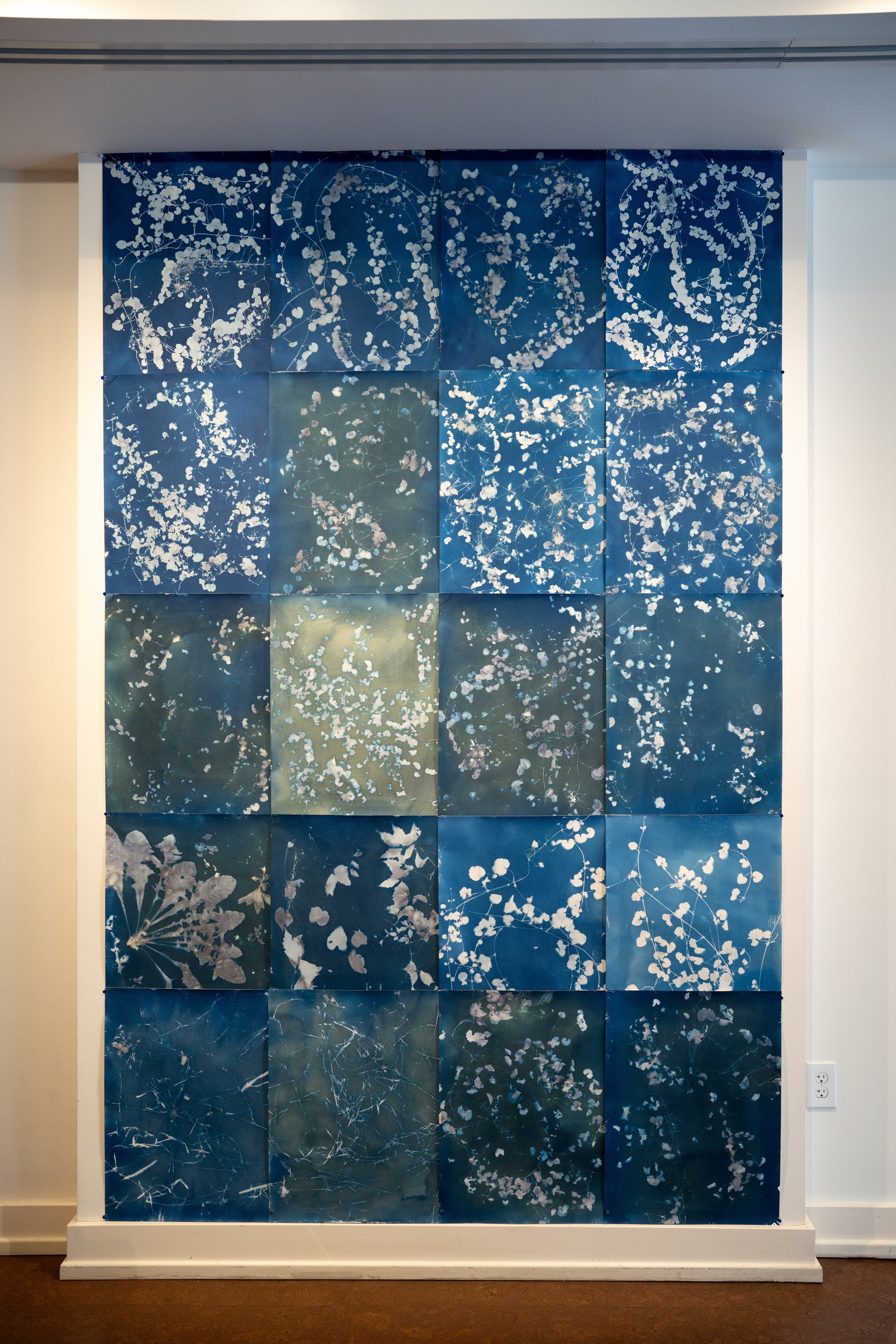
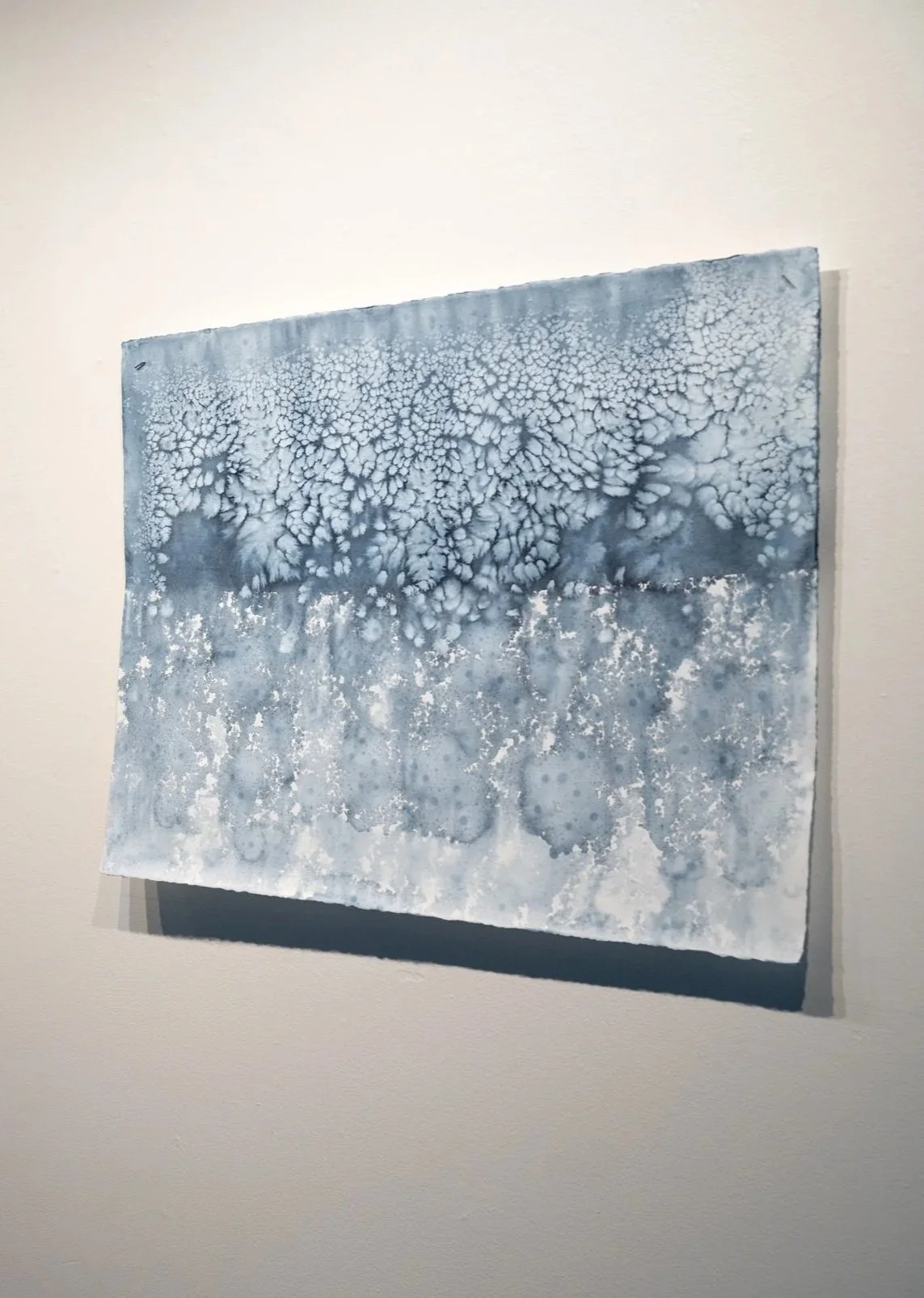
Julia Hendrickson and Jocelyn Mathewes create paintings and cyanotypes, respectively, from the regional nature surrounding them, from recording particular California raindrops to the seasonal flora of Appalachia.  

Daniel Buffenmeyer seeks out God’s presence in wild woods, places untouched by human hands, and Young-Ly Hong Chandra’s pieces remind us of God’s presence wherever we go, placemaking in the midst of migration.  

Much like God knows our daily wanderings, trials, and joys, these artists are intentionally attuned to the places and paths around them. May we also seek to be present to the people, places and paths God leads us to as well.

Daniel Buffenmeyer earned a BFA in Printmaking from Tyler School of Art (Temple University) in Philadelphia. Some of his past involvements include: Curator for Lebanon Valley Council on the Arts and adjunct professor at Lebanon Valley College. Currently, Daniel exhibits throughout South-Central Pennsylvania, and works both on location and from his studio in rural Pennsylvania. See more of Daniel’s art at Buffenmeyer.com.

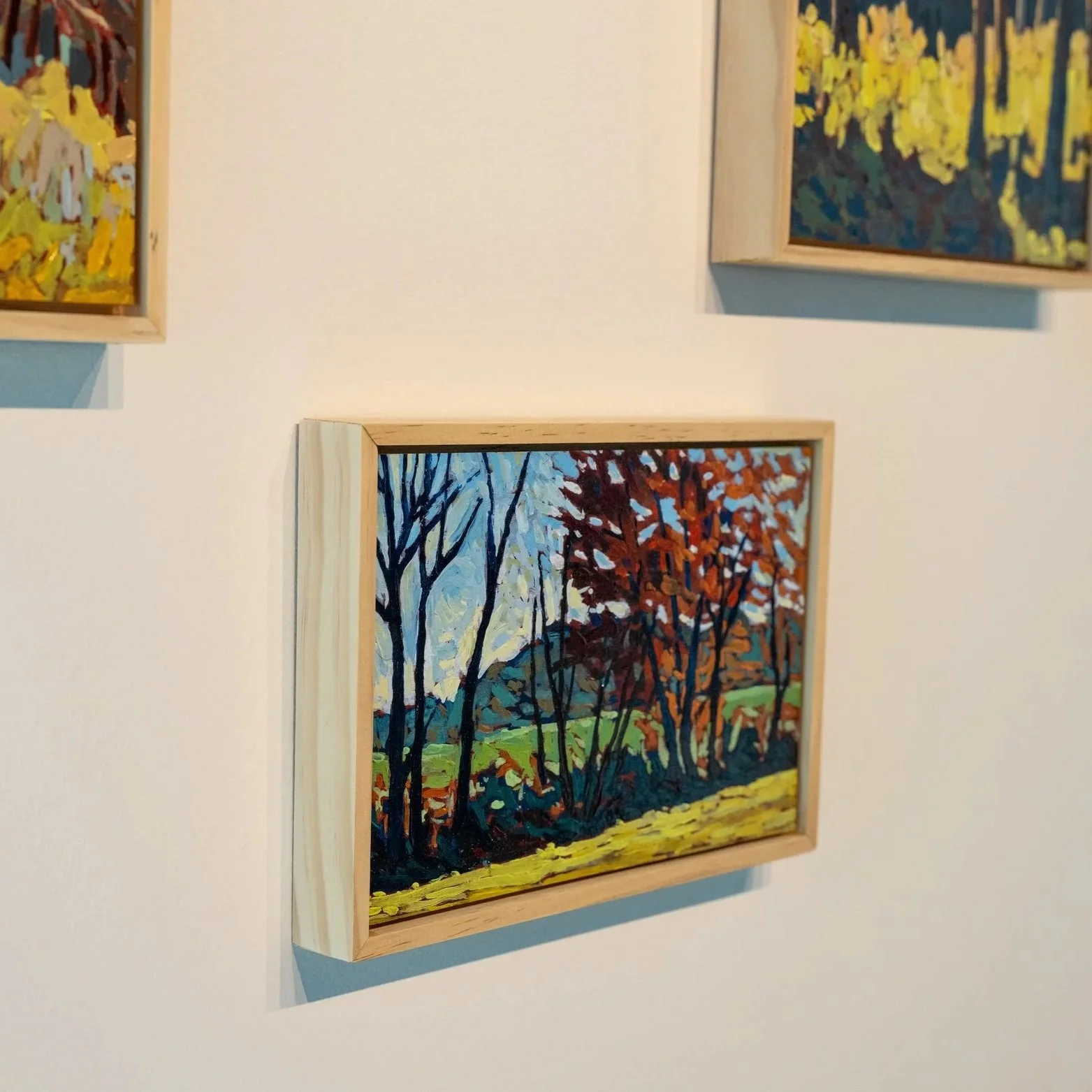
Middle Creek Preserve, Pennsylvania, 11-03-2022 by Daniel Buffenmeyer

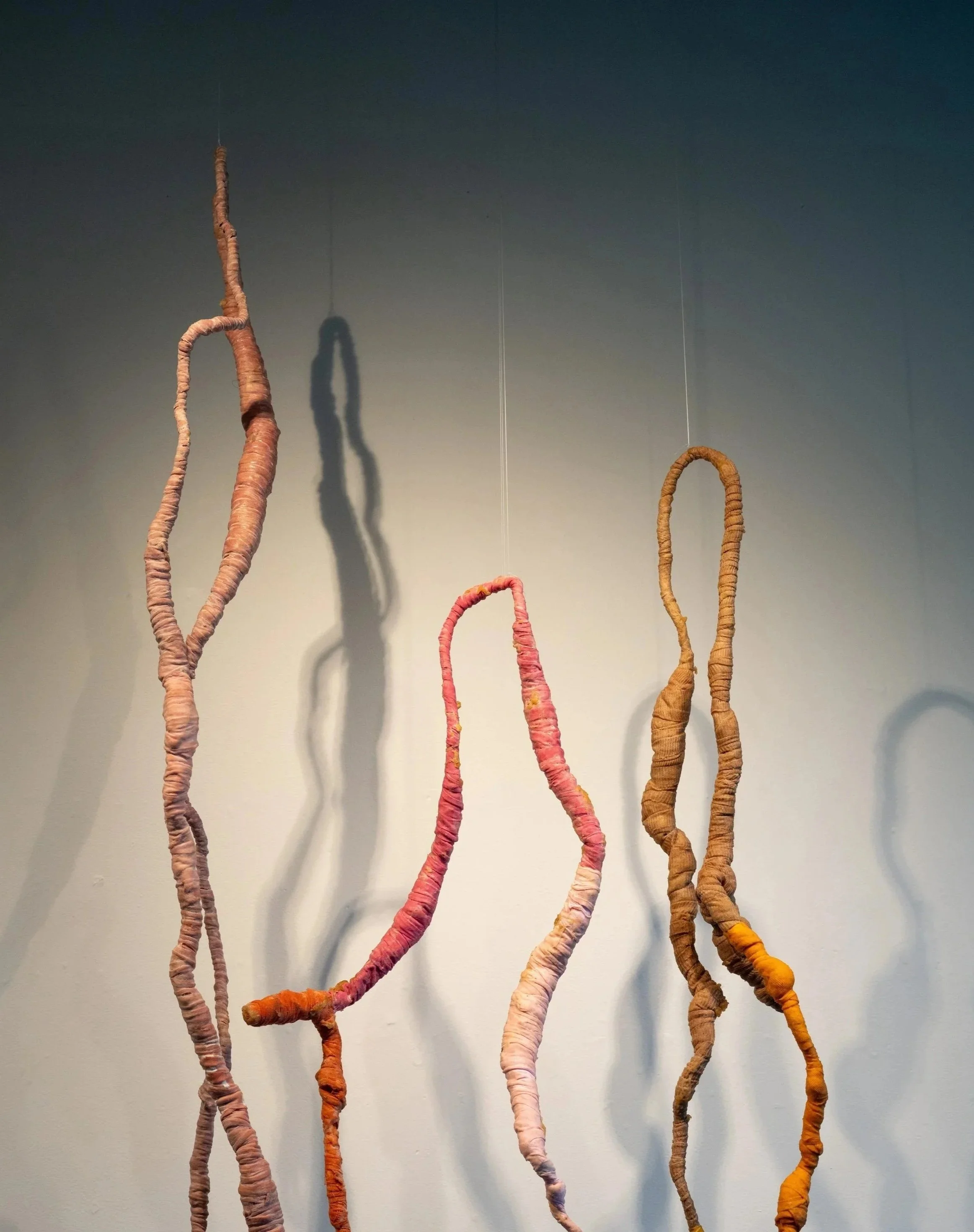
What Upholds Us by Young-Ly Hong Chandra

Young-Ly Hong Chandra is a Seoul born, interdisciplinary artist. With her roots across multiple cultures and countries, she explores layered  boundary crossing in physical, cultural, material and spiritual realms through making soft sculpture, painting, drawing, experimental filmmaking and site specific installations.

Her work-process engages contemplative gazing at her environment and her mediums and ushering their own stories out, through her bodily labor. It often involves repetitive acts of cutting, stretching, wrapping, squeezing, stroking and knotting. See more of Young-Ly’s work at younglyhongchandra.com.

Julia Hendrickson is a practice and process-based visual artist and theologian. She lives a Covid conscious life, as a mechanism of inclusion and care, in the Los Angeles Plain ecoregion. Julia works serially with watercolor and salt, digital formats, and relief prints. She expands the Benedictine tradition of ora et labora to opera Divina, daily work as prayer, with each artwork being a manifold conversation with the Divine. As a professor, Julia facilitates reflections about the role of art in the world and self-filmed digital studio visits she models this on social media. Julia has an M.F.A. from Cranbrook Academy of Art in Print | Media and an MDiv from Fuller Theological Seminary. These dual degrees distinctly inform her thought and studio practice. She is a Fujimura Fellow and strives to be generative in acts of Culture Care. While waiting for paint to dry, she takes long walks, documents flowers, and reads a lot of books. See more of Julia’s work at juliahendrickson.com.

Hedgerow by Julia Hendrickson

From The Harvest by Jocelyn Mathewes

Jocelyn Mathewes is a mixed-media interdisciplinary artist living with her family in rural Appalachia in East Tennessee. She earned a B.A. in Studio Art and English Literature from Messiah College, and her work has been exhibited in galleries, museums, and community spaces across the United States and internationally. Working primarily in alternative photographic processes—especially cyanotype—alongside film photography, collage, and mixed media, her practice investigates the unrepeatable moment: what it means to document time passing through a body, a season, a place.

In 2020, Jocelyn founded EAT/ART space, a dining room pop-up gallery in Johnson City that celebrates hyper-local Appalachian artists and culture, and has hosted 19+ exhibits since its founding. She is the current executive chair of her local public art committee, and releases a monthly newsletter featuring arts events across the Southern Highlands, connecting creatives throughout East Tennessee, Western North Carolina, and Southwest Virginia. Her work has appeared in publications including The HAND Magazine and Cyanotype: The Blueprint in Contemporary Practice by Christina Z. Anderson, and has been collected by the Reece Museum. See more of Jocelyn’s artwork at jocelynmathewes.com.

Matthew Whitney (he/his/him) is a multidisciplinary artist, educator, and pedestrian. He works between drawing, painting, photography, collage, video, performance, and group facilitation, with a focus on the metaphorical and spiritual power generated through the everyday rhythms of walking, making things, and stillness. He has a BA in Art from Whitworth University and an MFA in Visual Art from Vermont College of Fine Arts. See more of Matthew’s work at matthewwhitney.com.

Detail of Movement in Kind by Matthew Whitney

Photograph by Michael Winters

Michael Winters is a photo-based artist in Louisville, KY. His artwork has been featured in galleries including Kentucky Museum of Art & Craft, Georgetown College, and Intersect Arts Center. His work has also been featured online on Vice and in print in CIVA’s Seen Journal. Michael led Sojourn Arts from 2007-2025. He now works as a Marriage and Family Therapy Associate and is a church member of Sojourn East. See more of Michael's art at michaeltwinters.com.

Recorded Wanderings is on view at Sojourn Midtown until July 12, 2026.

A Weekend of Wilderness Waiting /  by Jordan Lienhoop Crump

by Jordan Crump

Wilderness Waiting: Art inspired by old songs of lament, hope, and deliverance for Adam’s race by assemblage artist Marianne Lettieri opened Sunday, March 15 at Sojourn Midtown and was on display through Sunday, May 10, 2026.

About her work, Marianne writes:

“Wilderness Waiting illustrates popular Christian songs that crossed over from religious to secular audiences and were recorded in multiple musical genres by famous performers of the 20th Century. Songs were selected for their deeply spiritual lyrics offering hope in the midst of trials and tribulations. Many have origins in the struggle for freedom and equality, some became catalysts for social and cultural change, and others have provided comfort and resilience throughout the ages. The emotional power of these old songs have the ability to unite people across different backgrounds, fostering a sense of community and shared humanity.”

Sojourn Arts had the joy of hosting Marianne for a weekend of stories, music, and art making in April.

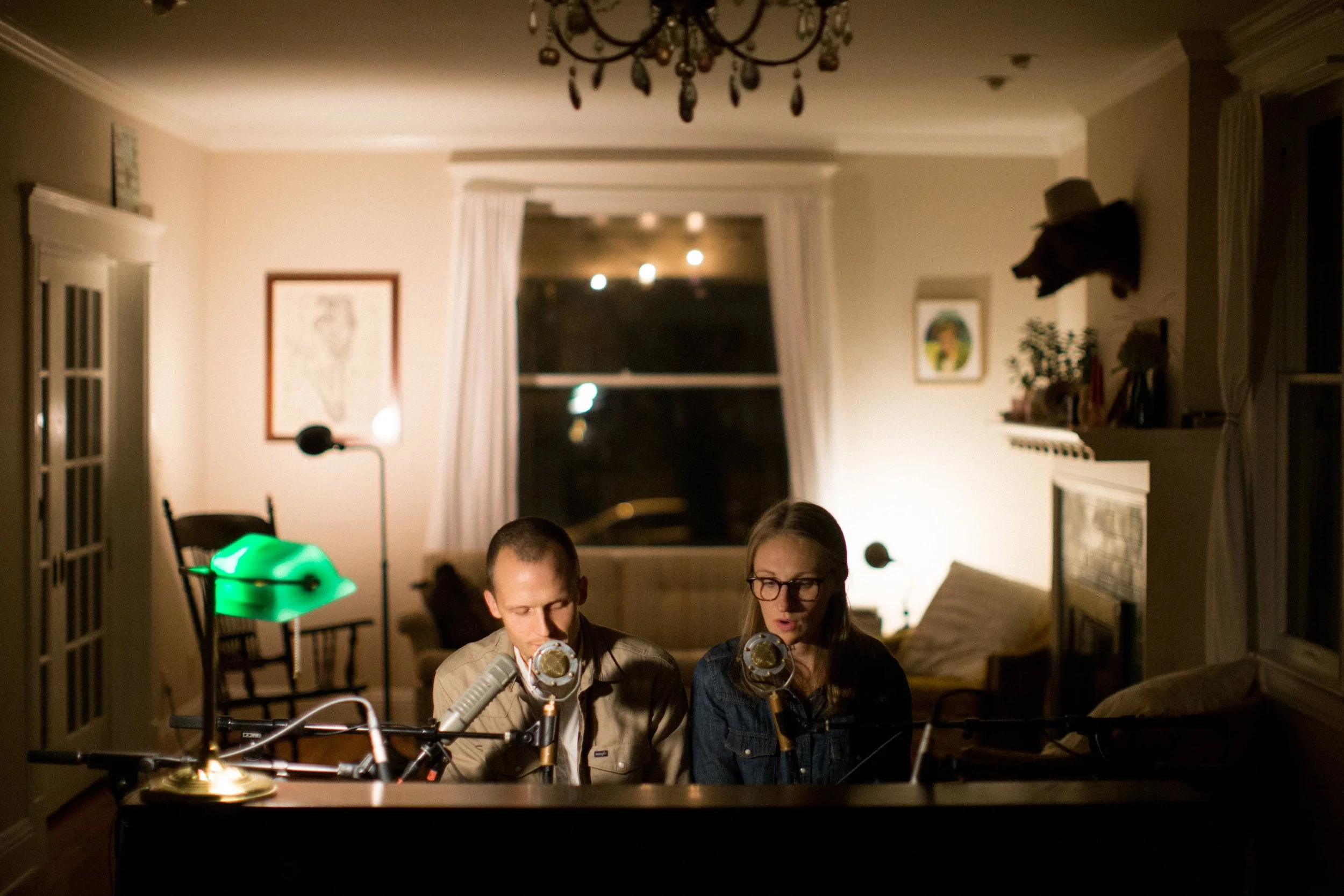
On Friday, April 17, Marianne shared her story as an artist and believer, and a group of vocalists and musicians from Sojourn Midtown performed 4 hymns featured in the exhibit, selecting the songs based on the personal significance to them.

Jonathon Crump, Rachel Hamm, Dani Wallace, Bekah Polley, Brittany Jennings, Liz Klee, Will Meadows, Estrella Flores, and Michael White performed “Great is Thy Faithfulness”, “Be Thou My Vision”, “It Is Well”, and “Amazing Grace.”

You can view a video of Marianne’s artist talk and the musical performances on Sojourn Arts’ Instagram, here.

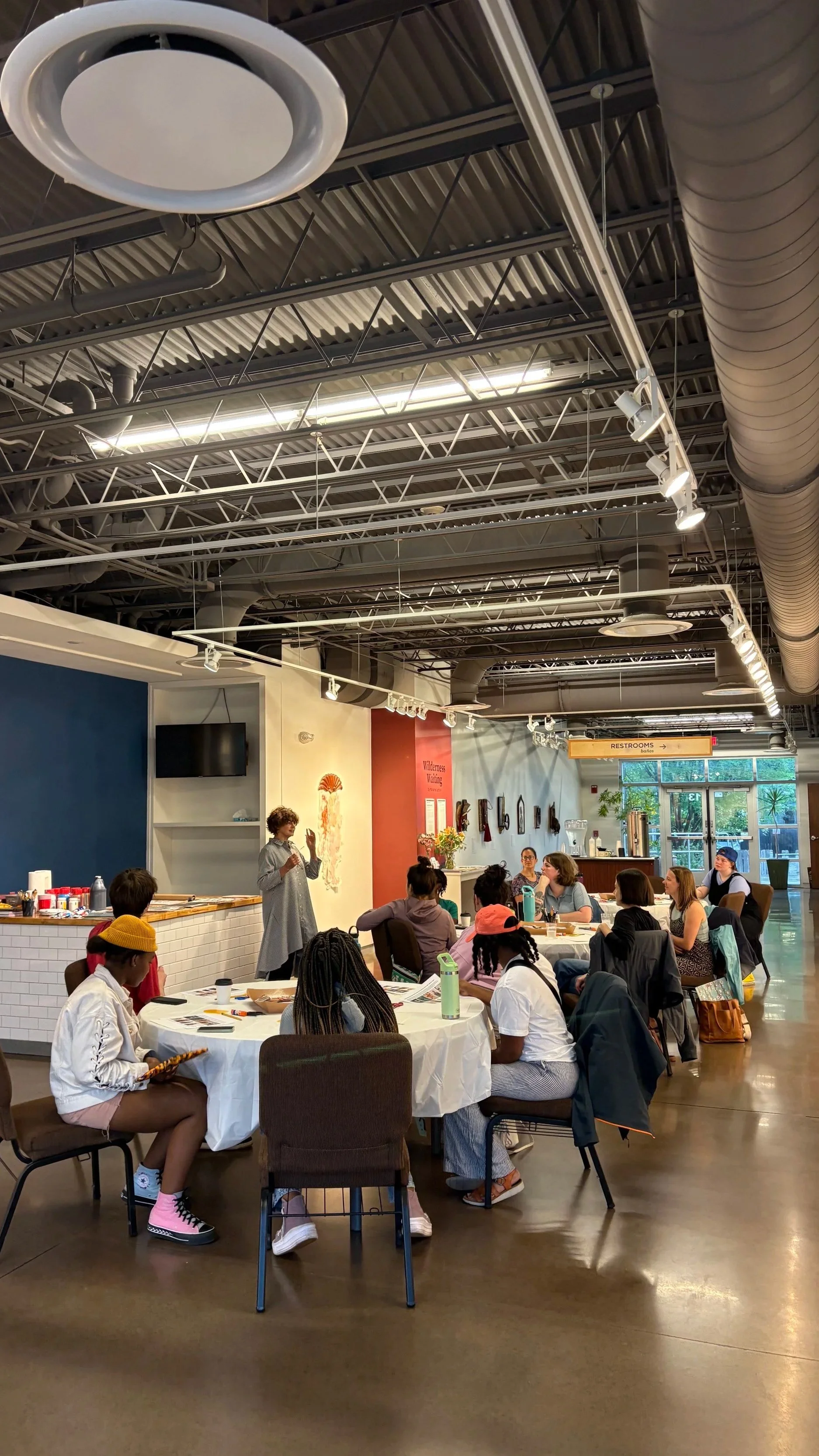
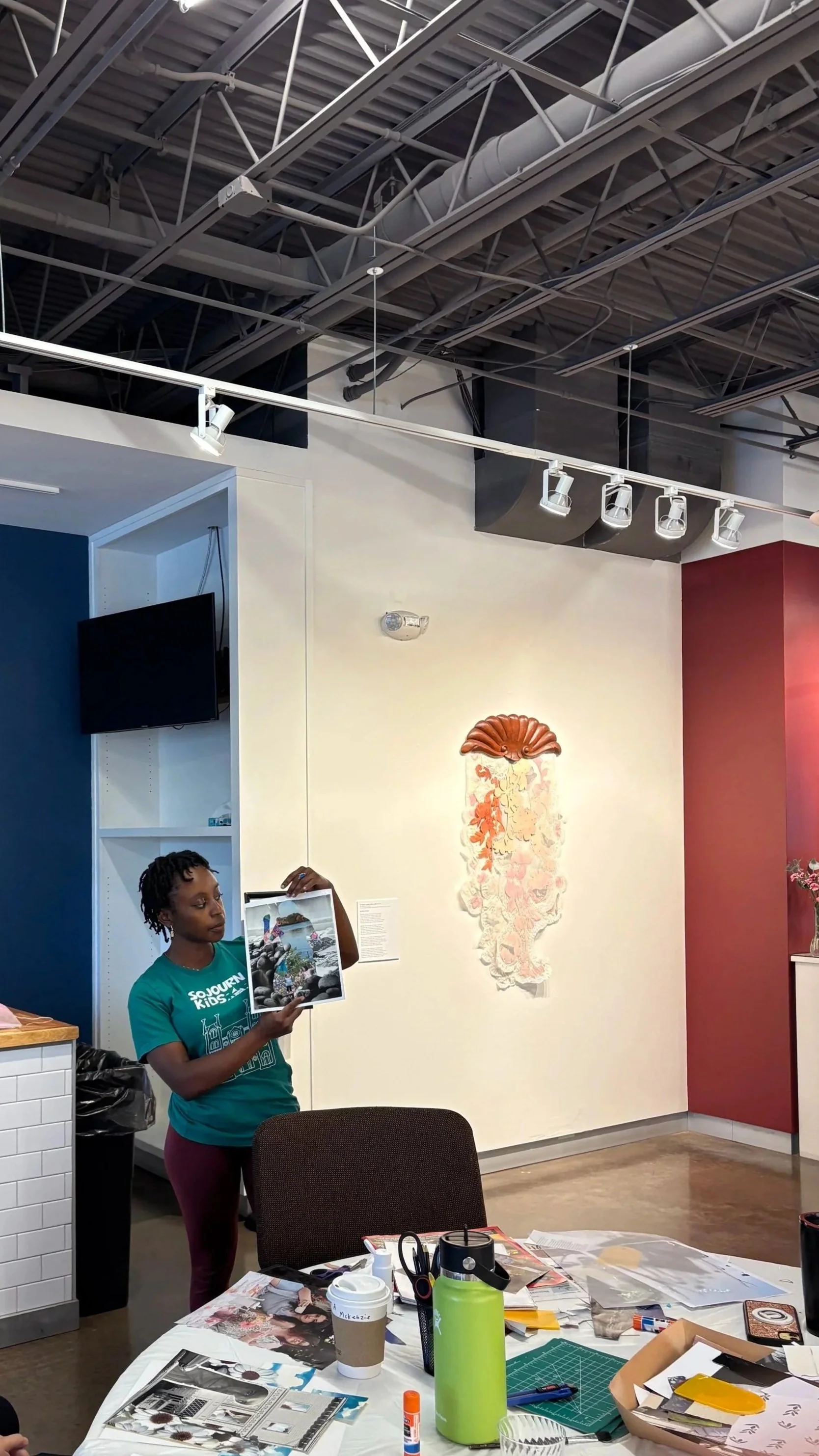
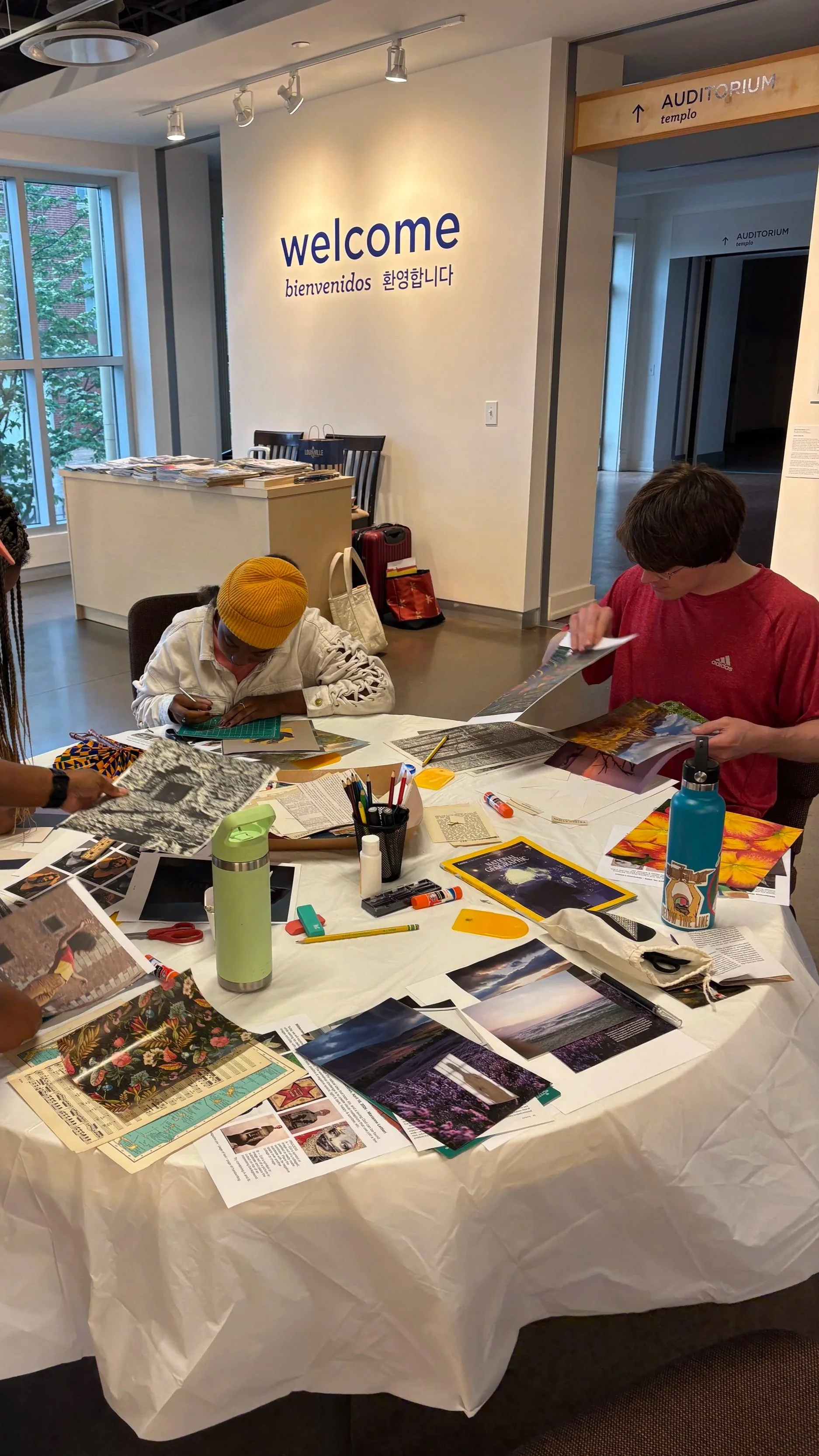
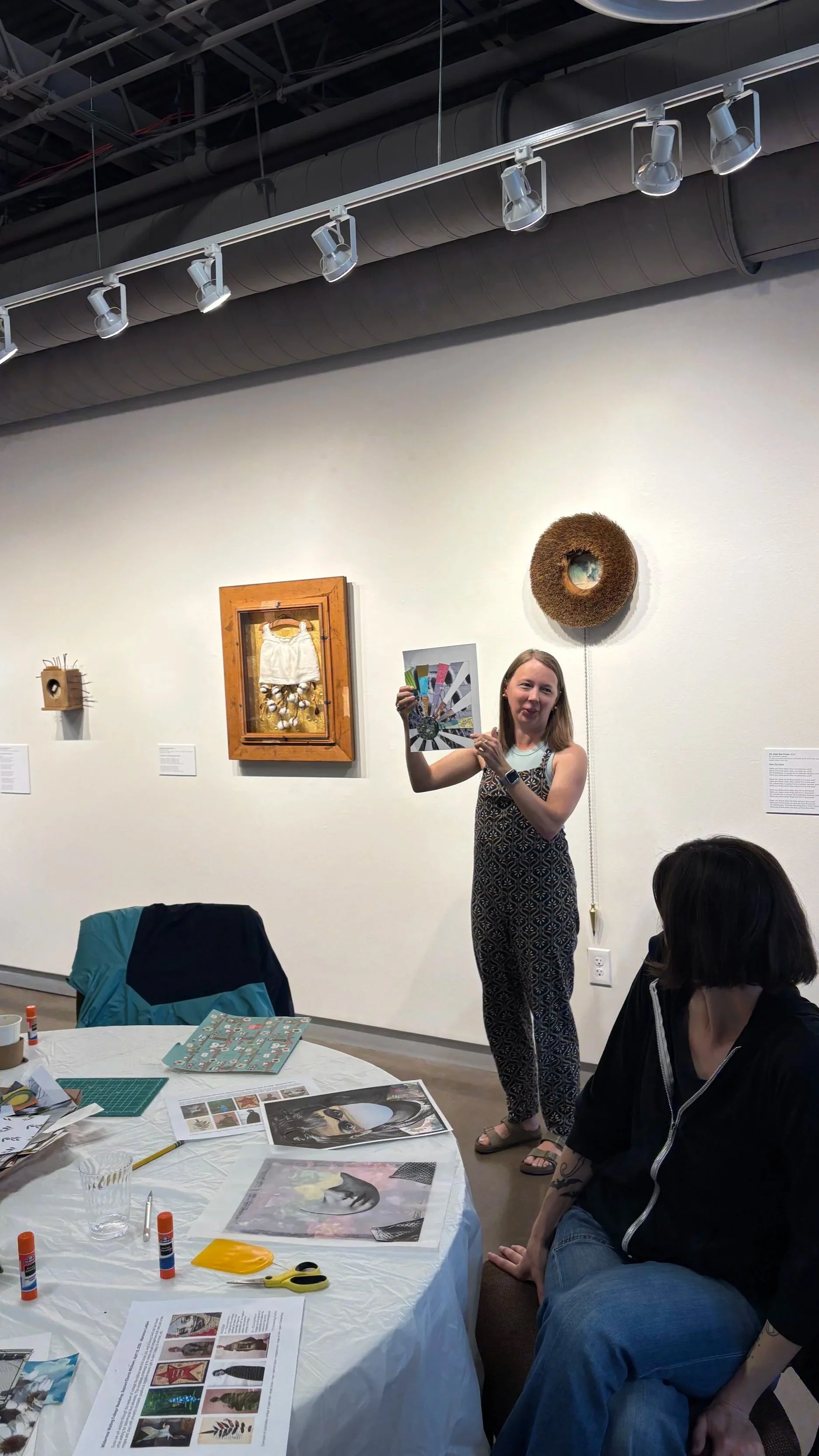
The following morning Marianne led 14 participants in a collage workshop in the gallery. Marianne shared her process of creating collages that explore God’s presence in the midst of lament and encouraged participants to make a collage that visually expressed the idea of hope.

Marianne Lettieri creates art with found objects and repurposed materials. Her work explores the brevity of life, human preoccupations, and shifts in cultural values associated with historical artifacts. She is interested in the interconnectedness of people, communities, and nature through time. Her work has been exhibited extensively across the country. She has an MFA in Spatial Arts from San Jose State University and BFA in Drawing and Printmaking from University of Florida. She resides near Fort Worth, Texas.


A Meal of Remembrance /  by Jordan Lienhoop Crump

by Jordan Crump

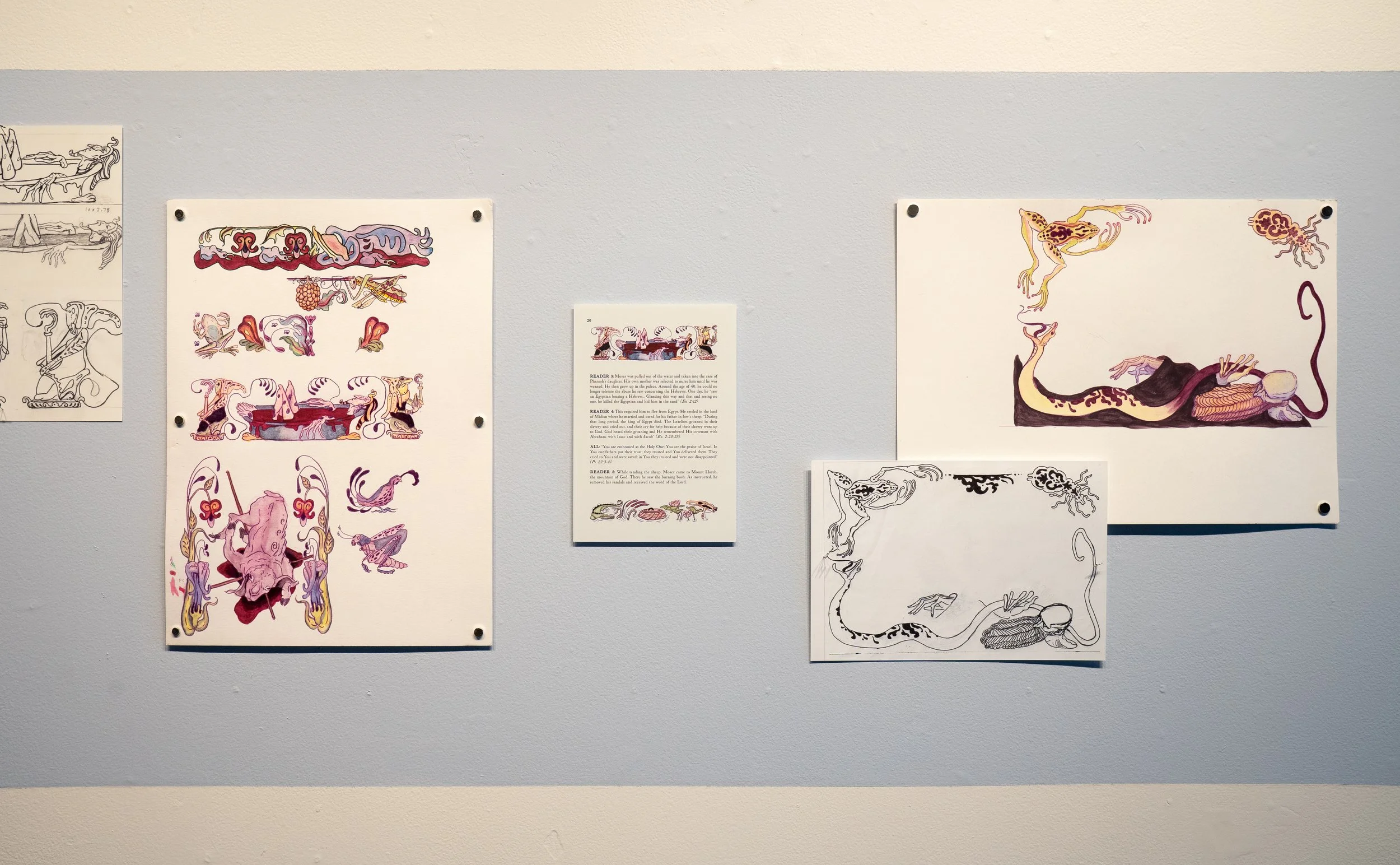
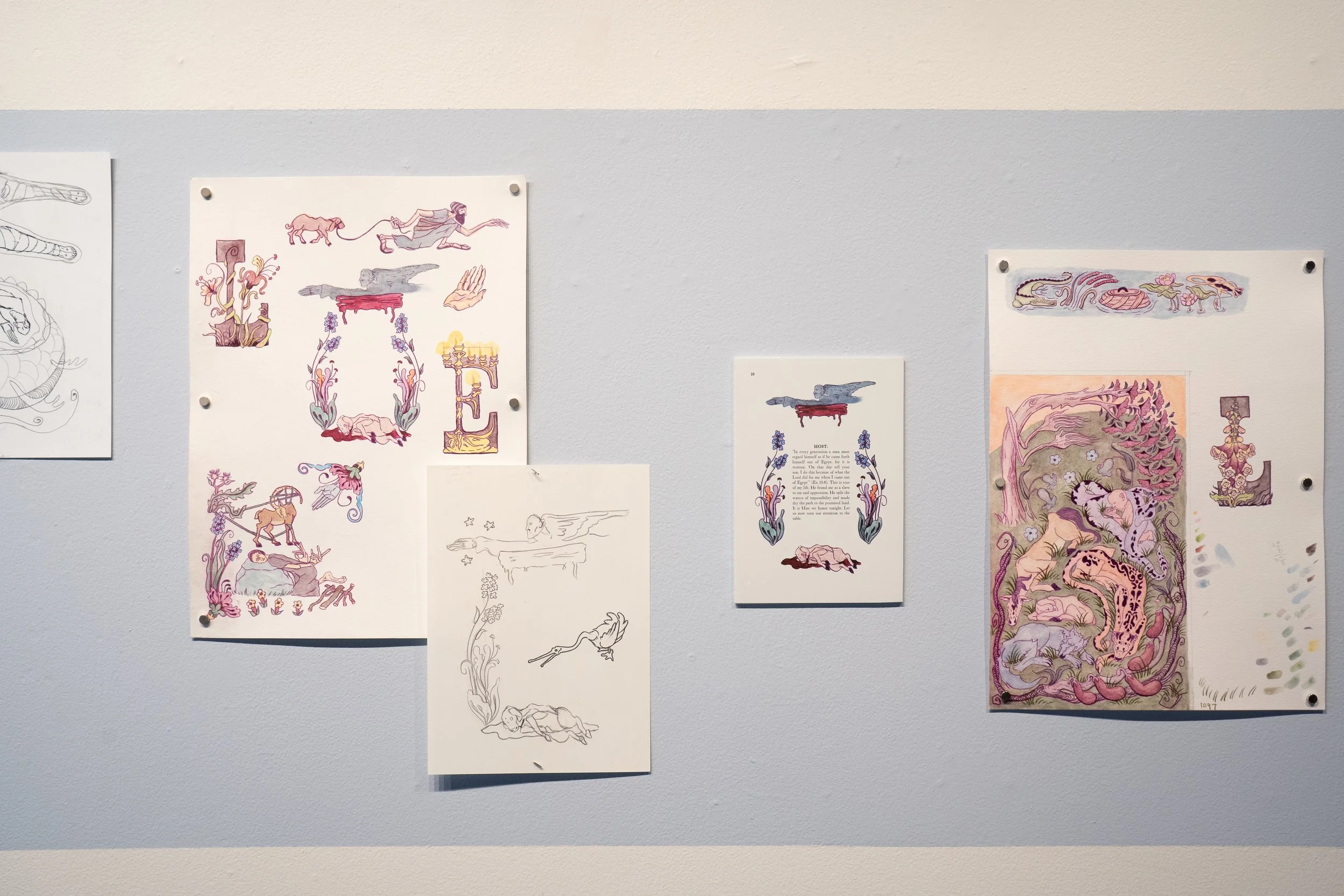
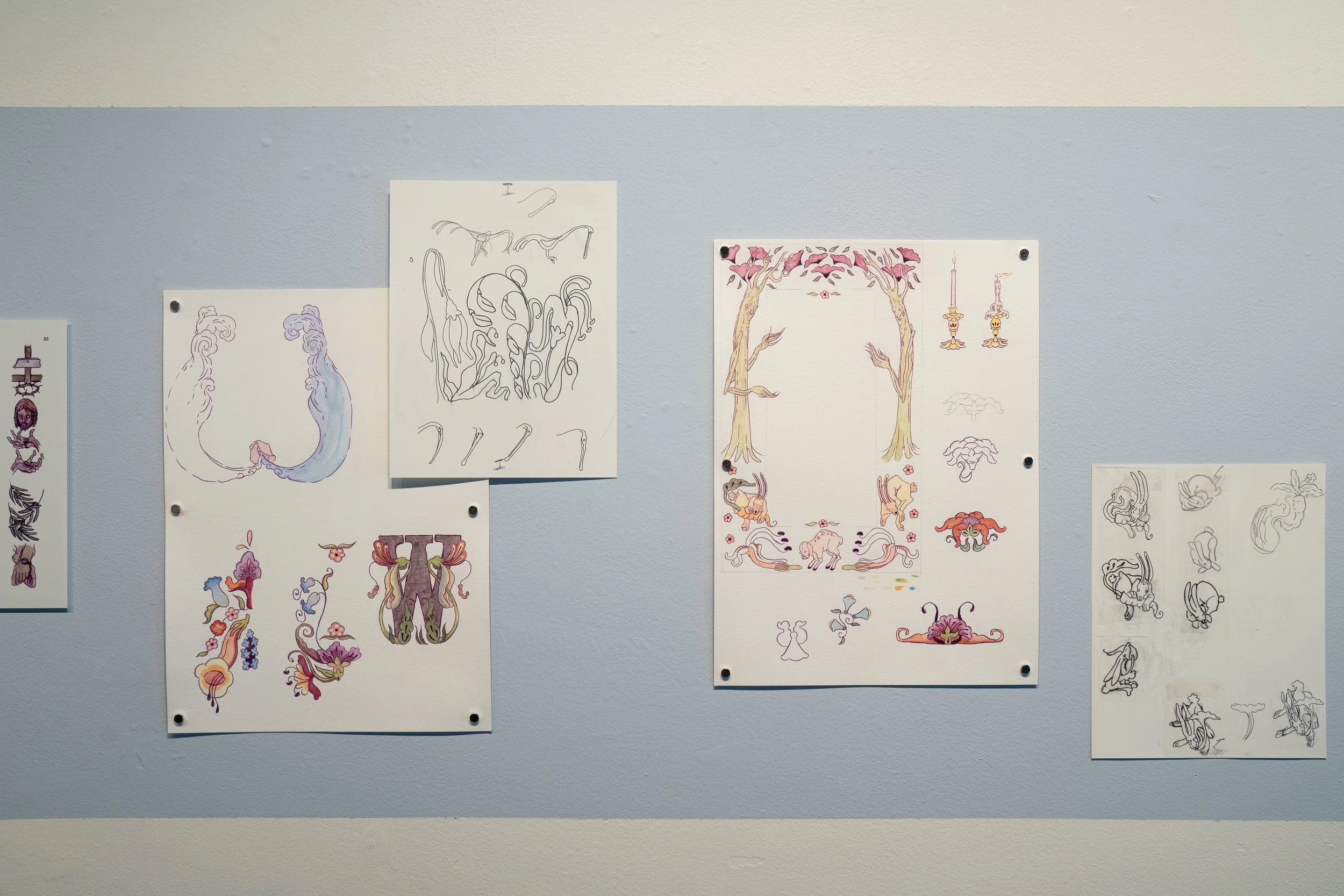
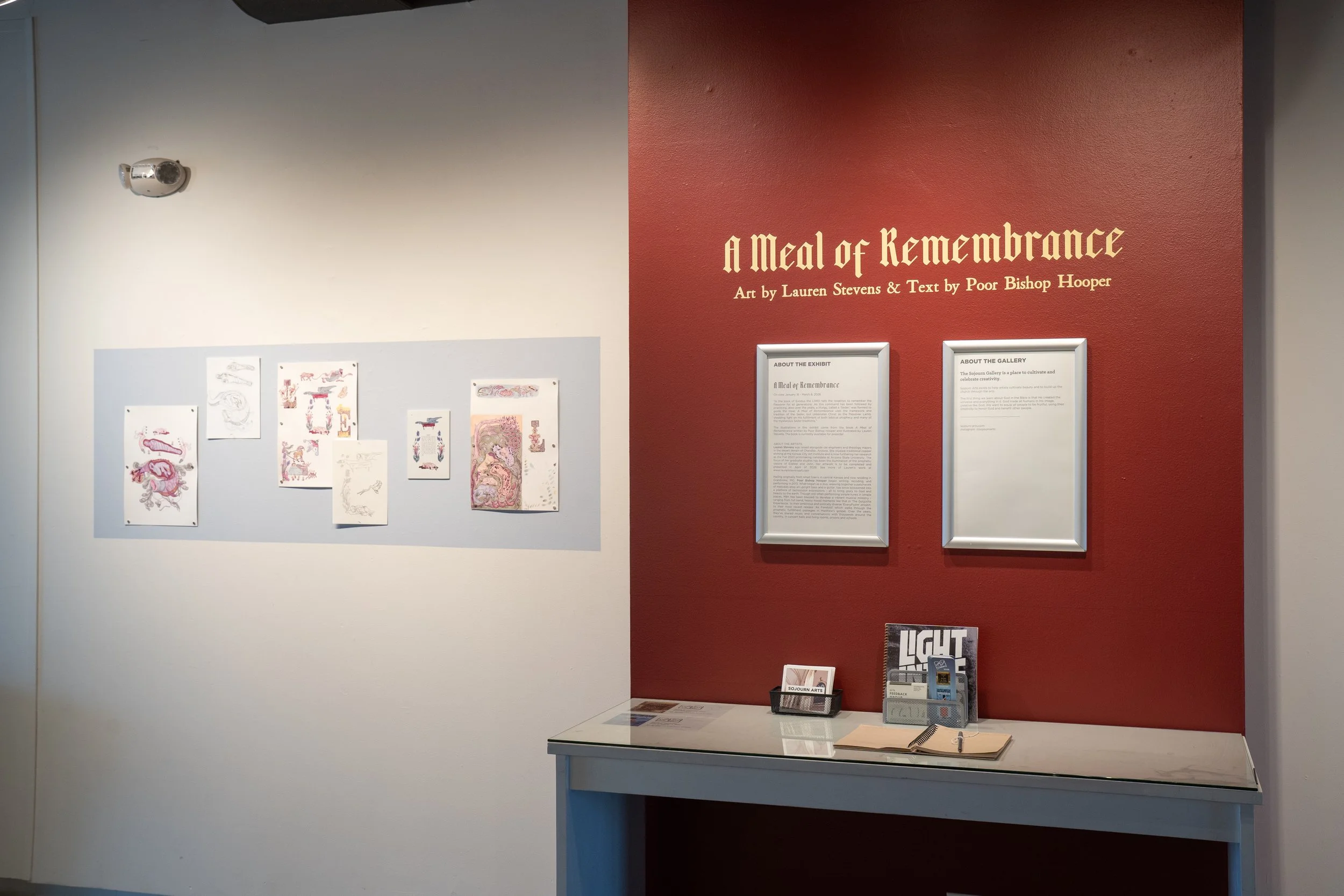
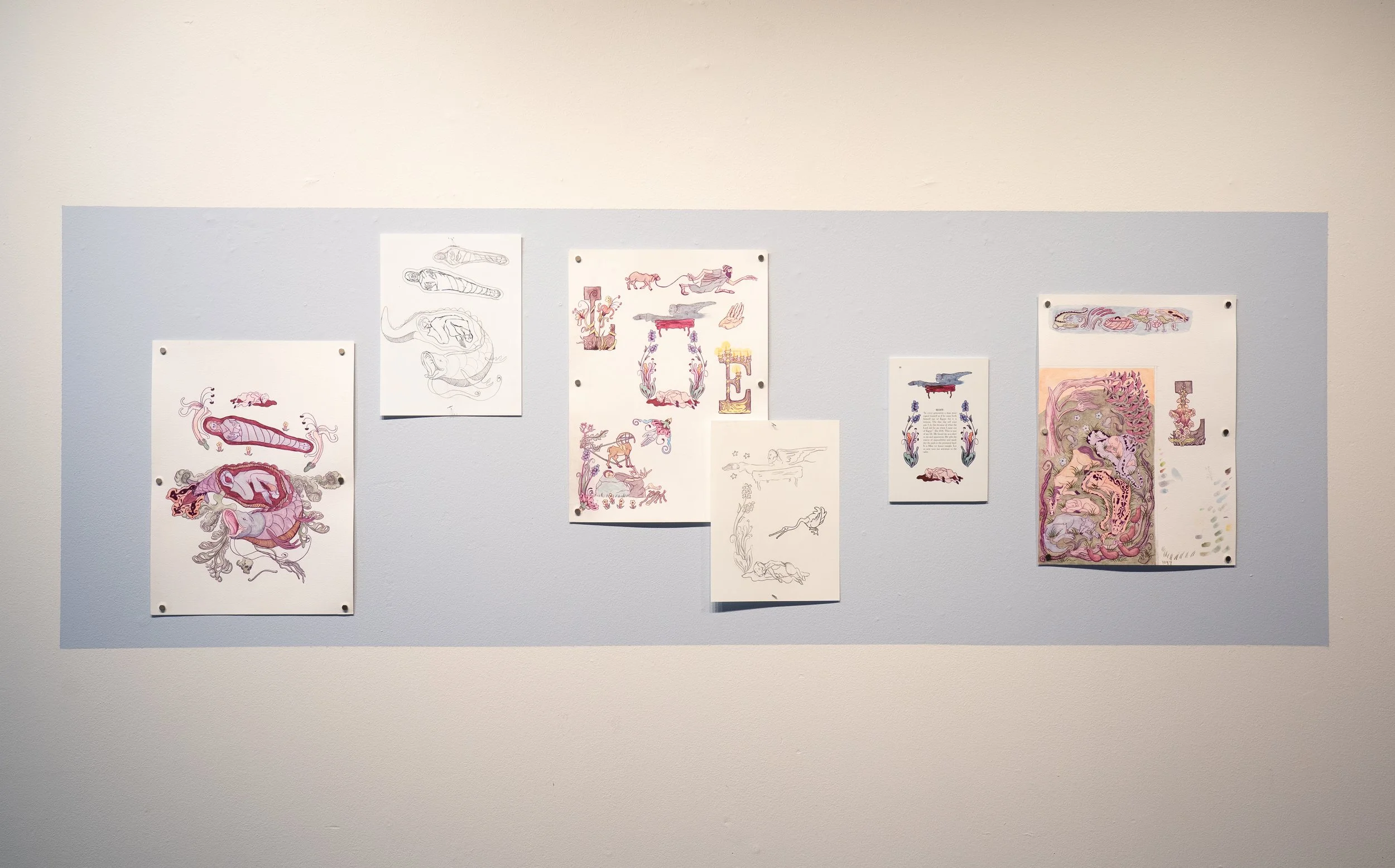
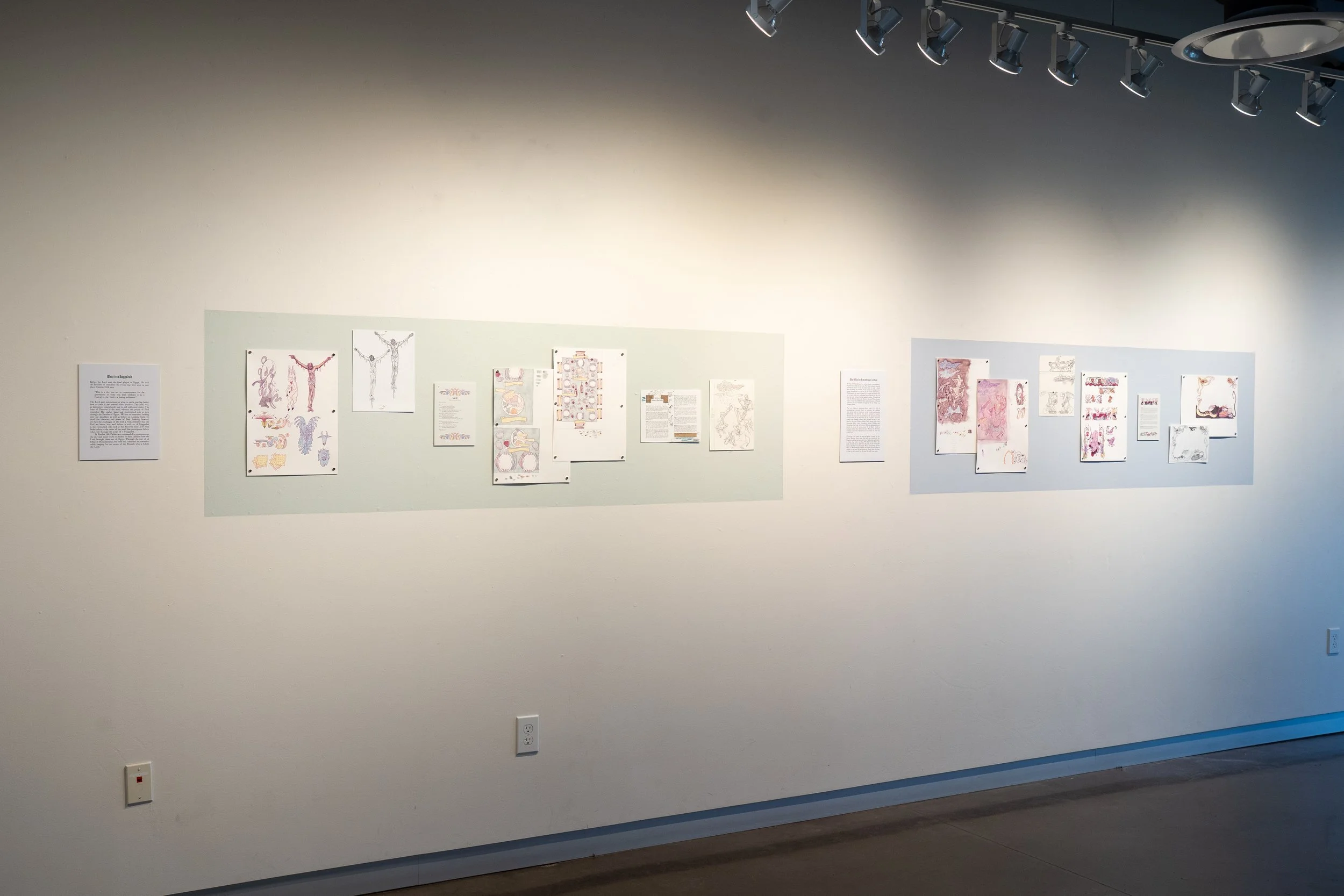
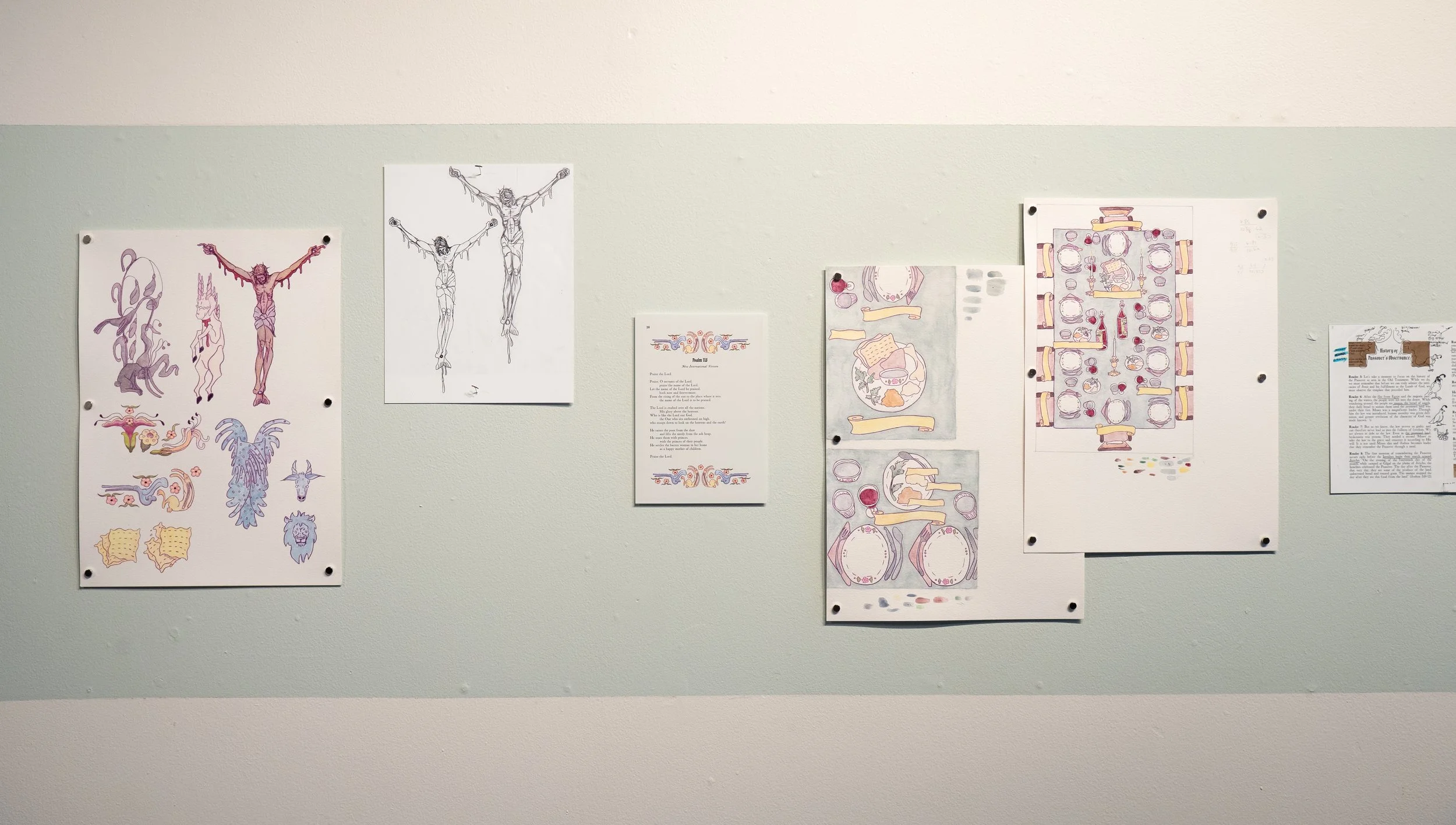
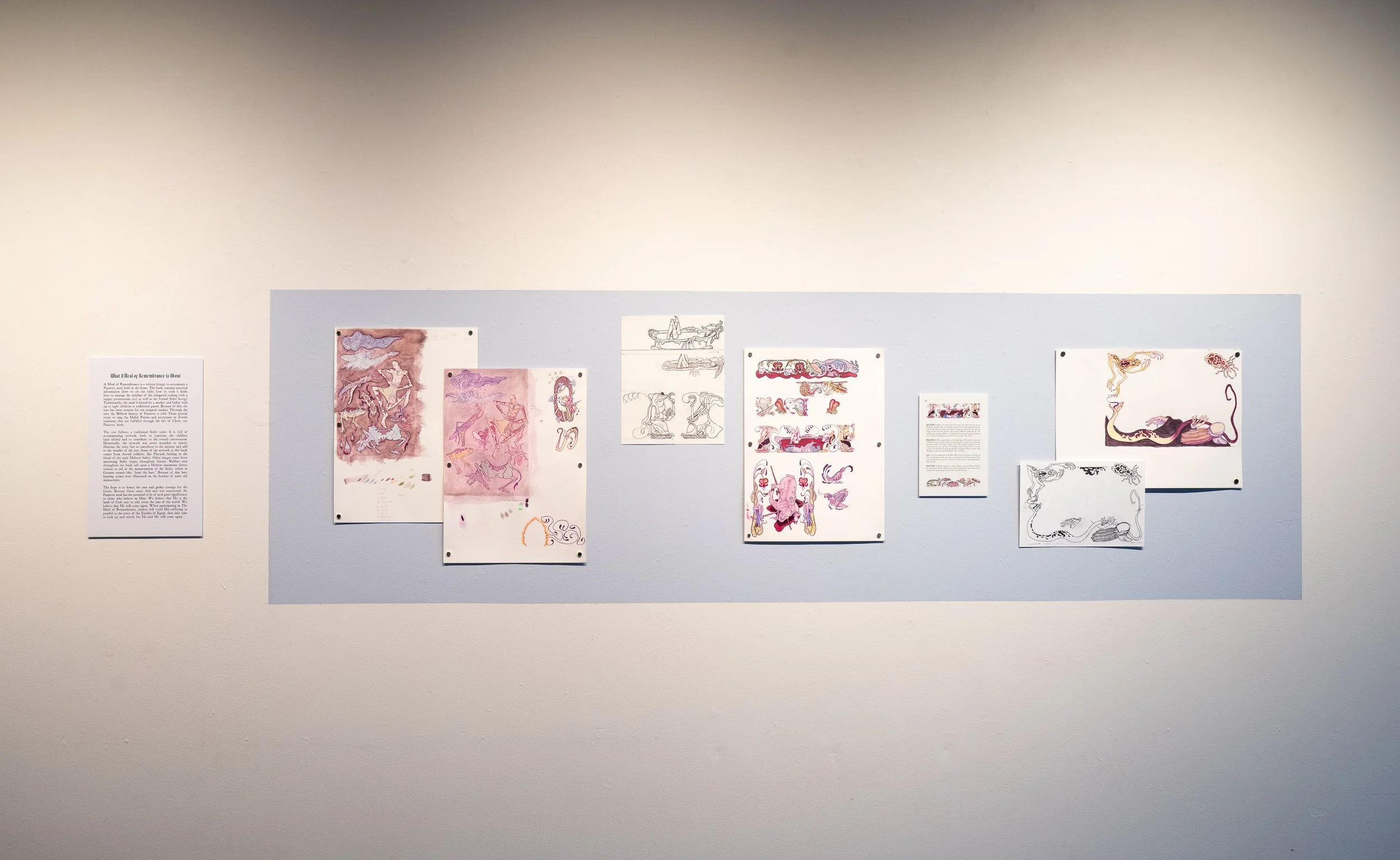
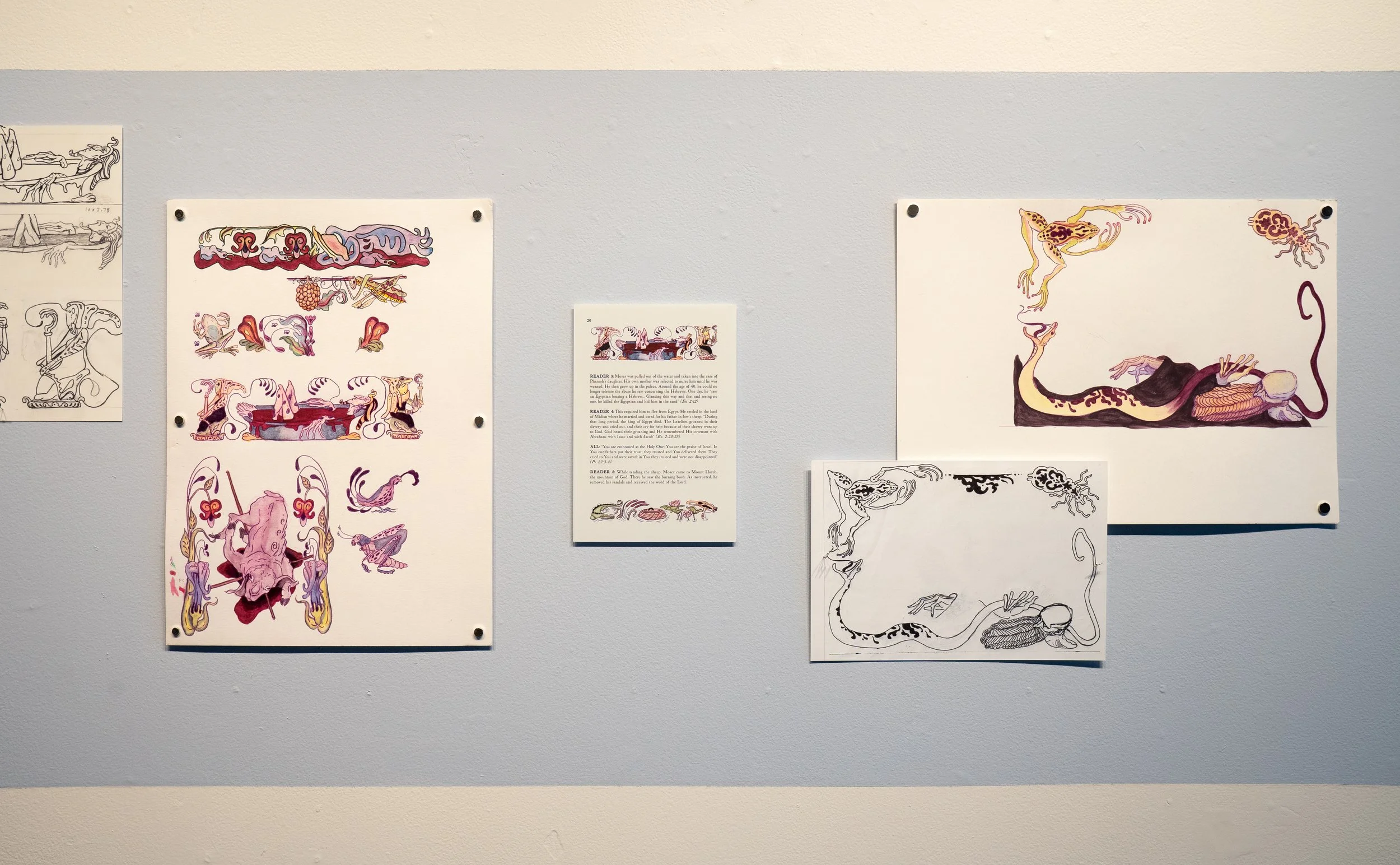
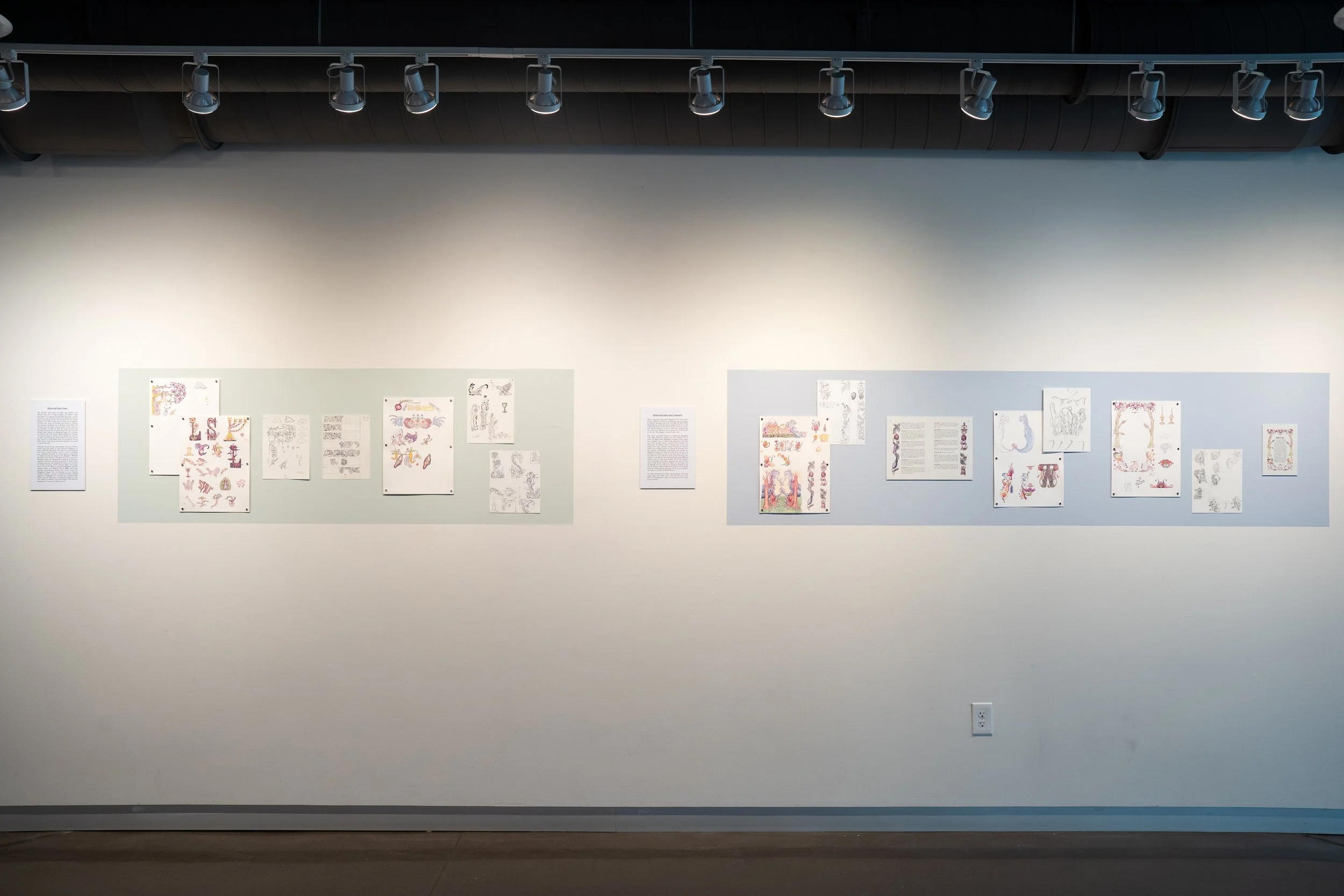
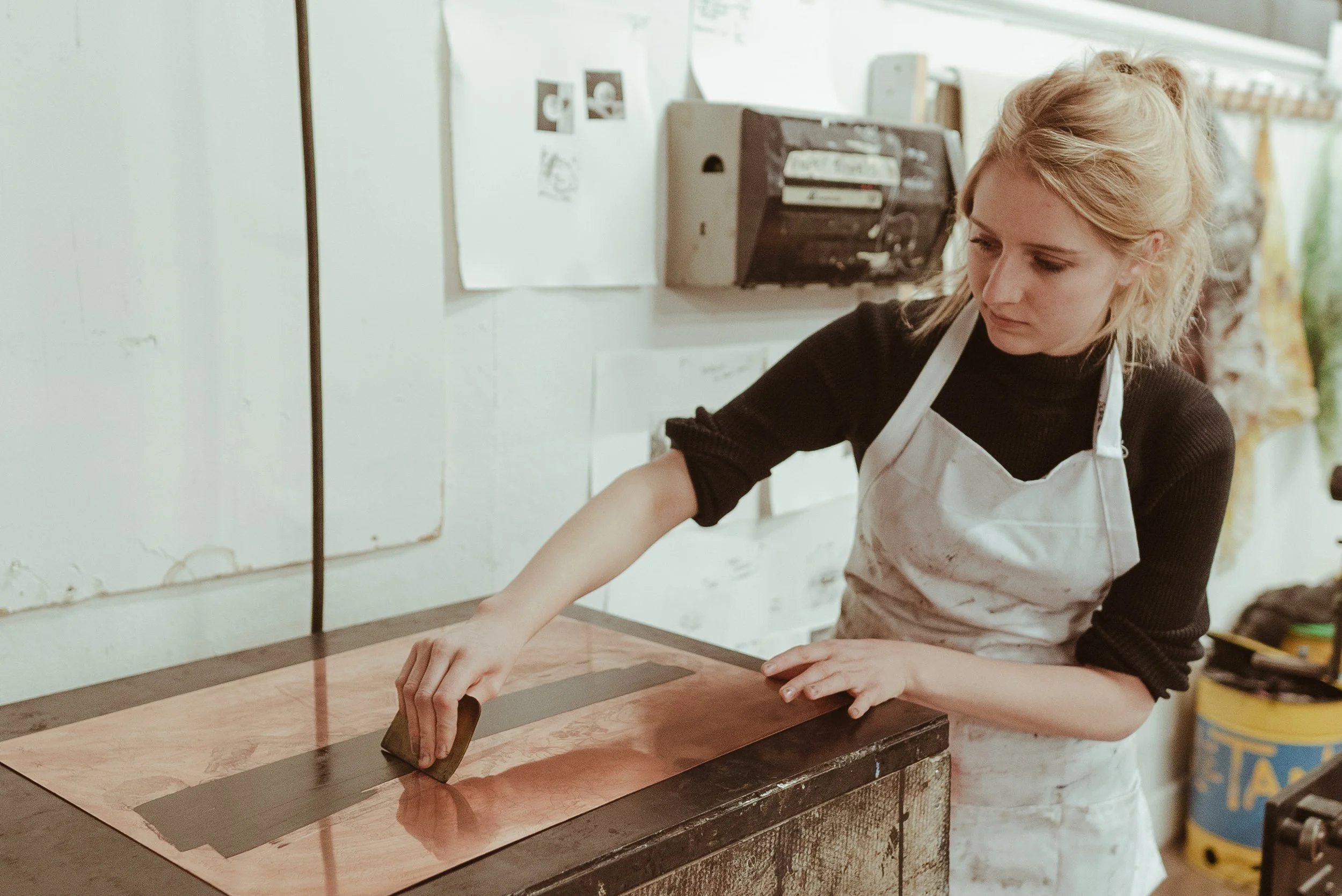
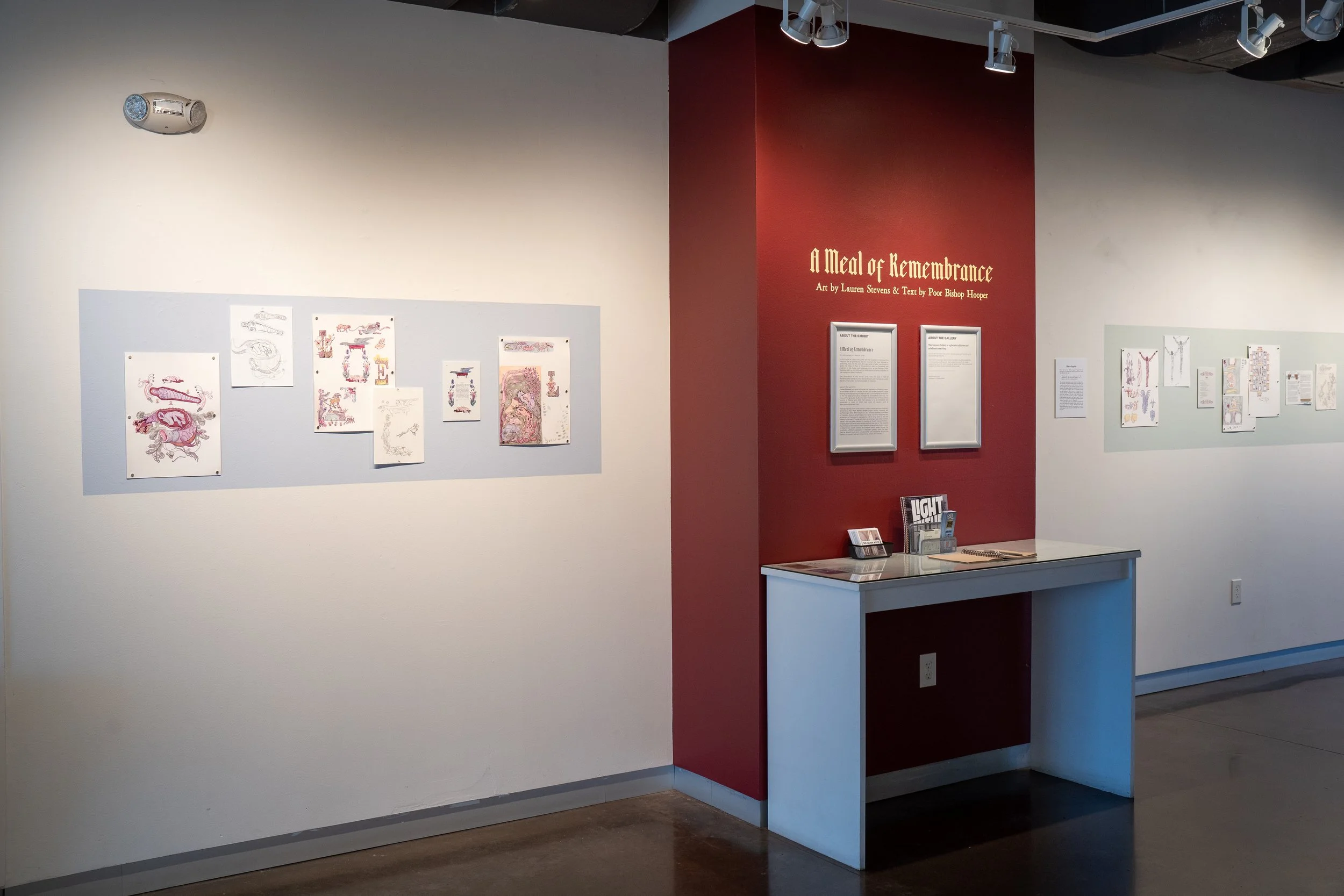
A Meal of Remembrance is on view January 18 - March 8, 2026, at Sojourn Midtown, and details the process of artist Lauren Stevens illustrating the book A Meal of Remembrance, written by Leah Roberts of Poor Bishop Hooper. Below, you’ll find photographs of the exhibit, showcasing Lauren’s initial sketches, watercolor paintings and final book spreads, along with the context and history written by Leah for the exhibit.

“In the book of Exodus the LORD tells the Israelites to remember the Passover for all generations. As this command has been followed by practicing Jews over the years, a liturgy, called a 'Seder,' was formed to guide the meal. A Meal of Remembrance uses the framework and tradition of the Seder, but celebrates Christ as the Passover lamb, shedding light on His fulfillment of both biblical prophecy and many of the mysterious Seder traditions.”

What is a Haggadah

“Before the Lord sent the final plague in Egypt, He told the Israelites to remember the events that were soon to take place. Exodus 12:14 says, 

‘This is a day you are to commemorate; for the generations to come you shall celebrate it as a festival to the Lord—a lasting ordinance.’

The Lord gave instructions on what to eat (a yearling lamb), how to roast it and several other specifics. This meal was, as instructed, remembered, and is still celebrated today. The feast of Passover is the meal wherein the people of God remember His mighty hand and outstretched arm as seen through the Exodus of Egypt. We are to remember, looking over our shoulders as well as before us. Looking back, we recall the character and power of God. Looking forward, we face the challenges of life with a fresh reminder that the God we know, love, and believe is with us. A Haggadah is the formalized text read at the Passover meal. The term Seder refers to the order of the meal that participants follow when led through the script of a Haggadah. 

In Exodus 13:8, Fathers are commanded to commemorate the day and stand ready to declare to their children how the Lord brought them out of Egypt. Through the text of A Meal of Remembrance, we obey this command to remember, while longing for the return of the Messiah who is Christ the Lord.”

What A Meal of Remembrance is About

“A Meal of Remembrance is a written liturgy to accompany a Passover meal held in the home. The book contains practical information (how to set the table, how to cook a lamb, how to manage the timeline of the elongated reading with a supper presentation, etc.) as well as the formal Seder liturgy. Traditionally, the meal is hosted by a mother and father with up to eight children or additional guests. Because of this, the text has been written for ten assigned readers. Through the text, the Biblical history of Passover is told. Those present recite or sing the Hallel Psalms and participate in Jewish traditions that are fulfilled through the life of Christ, our Passover lamb. 

The text follows a traditional Seder order. It is full of accompanying artwork, both to captivate the children (and adults) and to contribute to the overall conversation. Historically, the artwork was never intended to merely illustrate the story, but to contribute to the mystery and add to the wonder of the text. Some of the artwork in this book comes from Jewish folklore, like Pharaoh bathing in the blood of the male Hebrew babies. Other images come from interesting Seder tropes throughout history. Rabbits seen throughout the book call upon a Hebrew mnemonic device created to aid in the memorization of the Seder, which in German sounds like, ‘hunt the hare.’ Because of this, hare hunting scenes were illustrated on the borders of some old manuscripts.

The hope is to honor the past and gather courage for the future. Because Jesus came, died and was resurrected, the Passover meal has the potential to be of such great significance to those who believe in Him. We believe that He is the lamb of God, sent to take away the sins of the world. We believe that He will come again. When participating in The Meal of Remembrance, readers will recall His suffering in parallel to the story of the Exodus of Egypt, then take time to look up and watch, for He said He will come again.” 

Historical Connections

“The Passover meal began the night the Israelites were liberated from their bondage in Egypt. The Passover meal was observed for many years following the exodus – in the wilderness, in the Promised Land, in the Kingdom of Israel and in exile. Sometime after the destruction of the Second Temple in 70 AD, a home service liturgy was formalized. Up until that point, the Temple was crucial in fulfilling the traditions established for a Passover meal. With the Temple gone, the home took the place as the center for the observance of Passover. This led to the structure and formalized order known as a Seder meal. The script followed during a Seder, known as a Haggadah, began to be compiled as a book in the 13th century. Rabbi Samuel ben Solomon of France has been accredited with formalizing the order of the Seder meal which has been followed ever since. In the 16th century, a special Seder plate was introduced. In the 19th century, songs, poems and other additions were added to the overall meal.

‘Wealthy Jewish families commissioned artists and Hebrew scribes with fine hands to create beautiful Haggadot. In places in Europe where Jews were said to have been excluded from artists’ guilds, Christian artists in secular workshops were sometimes instructed by Jewish patrons (with advice of rabbis) to create the images for the Haggadah. Whether the artists were Jewish or Christian, they were exposed to Christian images and illuminating techniques. In particular, traditions of layout, including decorations of initial words, full-page miniatures, and marginal decorations, were resources for Jewish expression. Unlike Christian Bibles with images meant to teach the illiterate, illuminated Haggadot generally assumed readers were familiar with the Bible and popular midrashic interpretations. Further, for Jewish readers, the Haggadah’s images were not intended as icons, fostering devotion through a practice of visual meditation. Adding images to a Haggadah was motivated by a principle called hiddur mitzvah, enhancing a commanded practice (in this case, telling the Passover story) with beauty’ (The Passover Haggadah by Vanessa L. Ochs page 47).

“Many captivating illuminated Haggadot have been made, but the earliest one known is perhaps the most fascinating. In Western Germany around the year 1300, the Birds' Head Haggadah was created. Entrancing images drawn by a scribe named Menachem led the readers through the Seder meal by bird headed characters. A sort of side story running along the tracks of the Passover meal is played out of the borders of the text. The imagery is unusual and lovely.
Over time, a standard practice for illuminated Haggadah took shape. This was comprised of four elements, all of which the Birds' Head Haggadah contained. These images were originally seen in hand made manuscripts and later used when printing became available. One standard was illustrations of Exodus specific images, such as the ten plagues and other midrashic stories. Pictures of Passover rituals such as baking matzah or finding the afikomen were also included. Additionally, illustrations from outside the Haggadah (scenes not mentioned directly in the text but ones that are alluded to, such as the early life of Moses or his death) were seen, with some artists going well beyond the specifics of the Exodus story and employing general Biblical imagery, such as scenes from Genesis. The fourth standard was eschatological illustrations depicting the end of days. These could include images of Elijah, the forerunner for the Messiah who was expected to announce Himself at the time of Passover. Others might be of paradise or of a rebuilt Jerusalem. This historical standard can be seen throughout the pages of A Meal of Remembrance. 

Just like all humans have their own fingerprint, each artist carries their own unique touch. The artwork seen in A Meal of Remembrance carries the fragrance of the artist Lauren Stevens.” 

— Leah Roberts, Poor Bishop Hooper


Lauren Stevens was raised alongside car engineers and theology majors in the desert terrain of Chandler, Arizona. She studied traditional copper etching at the Kansas City Art Institute and is now furthering her research as the Fall 2023 printmaking candidate at Arizona State University. The focus of her graduate studies has been the illumination of the prophetic visions of Ezekiel and John. Her artwork is to be completed and presented in April of 2026. See more of Lauren’s work at www.laurenstevensart.com. 

Hailing originally from small towns in central Kansas and now residing in Grandview, MO, Poor Bishop Hooper (PBH) began writing, recoding, and performing in 2013. What began as a duo, weaving together a patchwork of melodies atop an upright bass and a guitar, has since blossomed into a plethora of technicolor expressions - all to bring glory to God and beauty to the earth.

Though still often performing simple tunes in simple places, PBH has been blessed to develop a vibrant musical ministry - ranging from full band, heavy mood moments like that in ‘The Golgotha Experience,’ to their ambitious and sonically diverse ‘EveryPsalm' project, to their most recent release ‘As Foretold’ which walks through the prophetic fulfillment passages in Matthew’s gospel. Over the years, they’ve shared music and conversations with thousands around the country, in concert halls and living rooms, prisons and schools.

25 Years of Sojourn Arts /  by Jordan Lienhoop Crump

by Jordan Crump

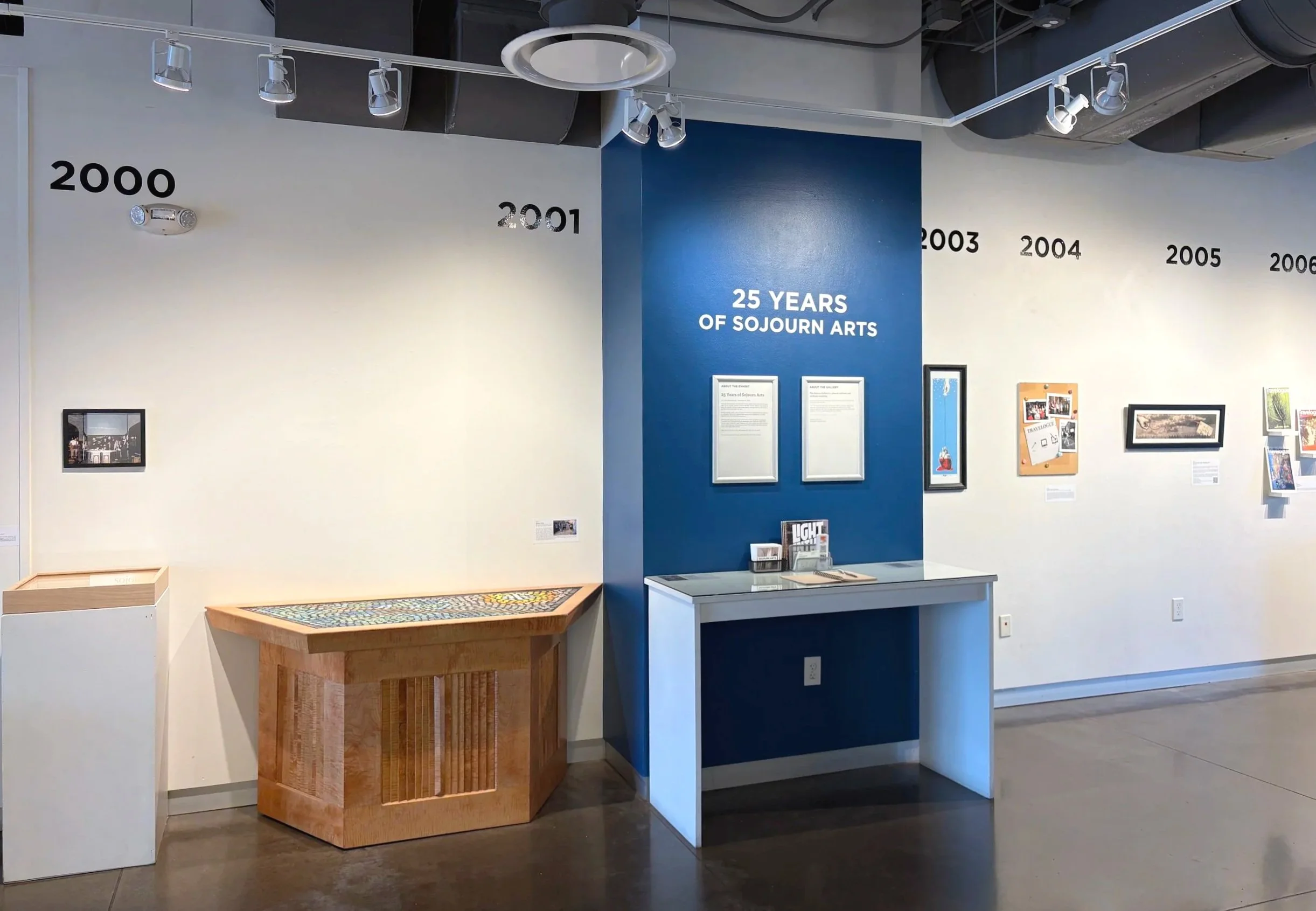
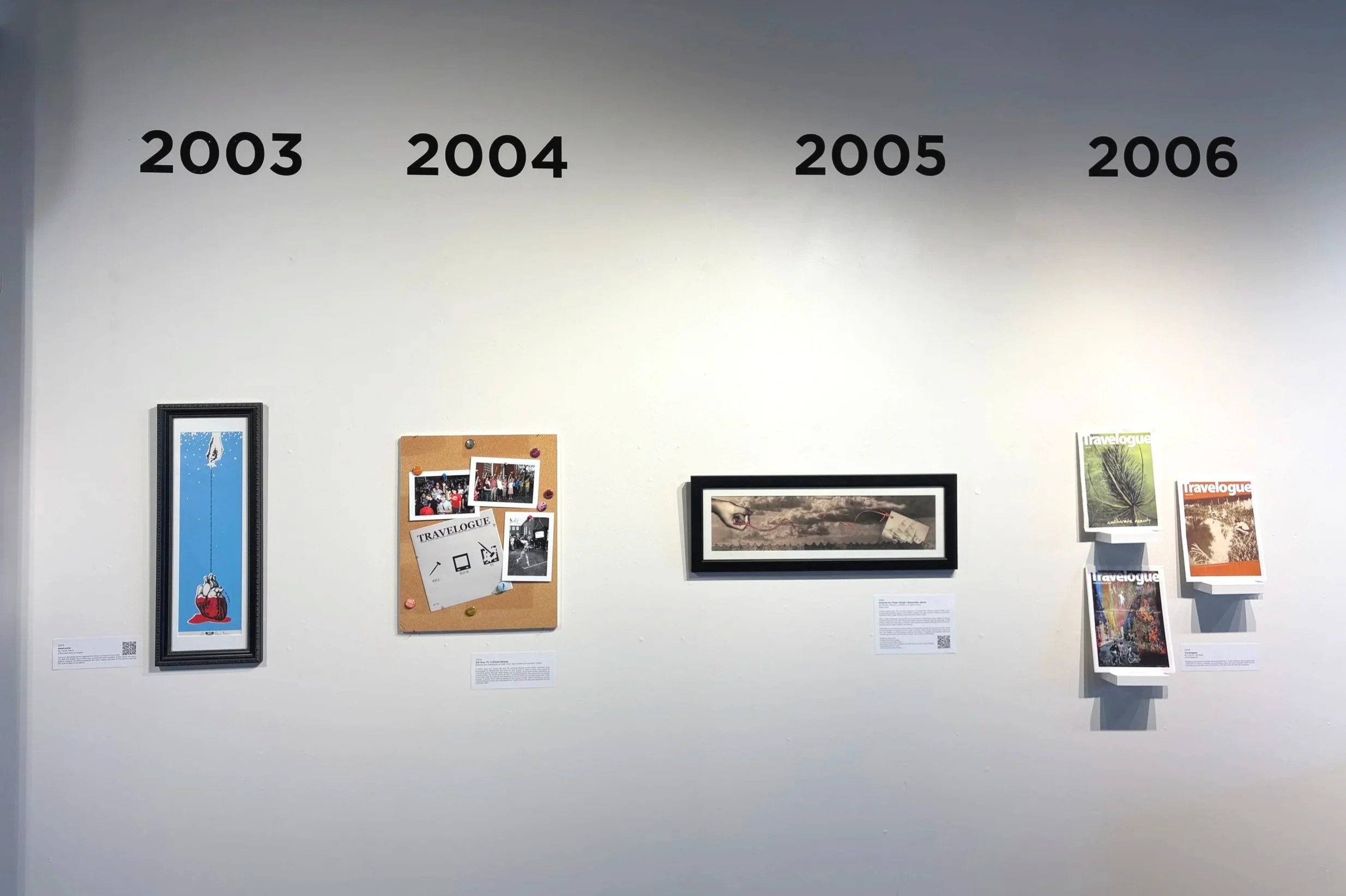
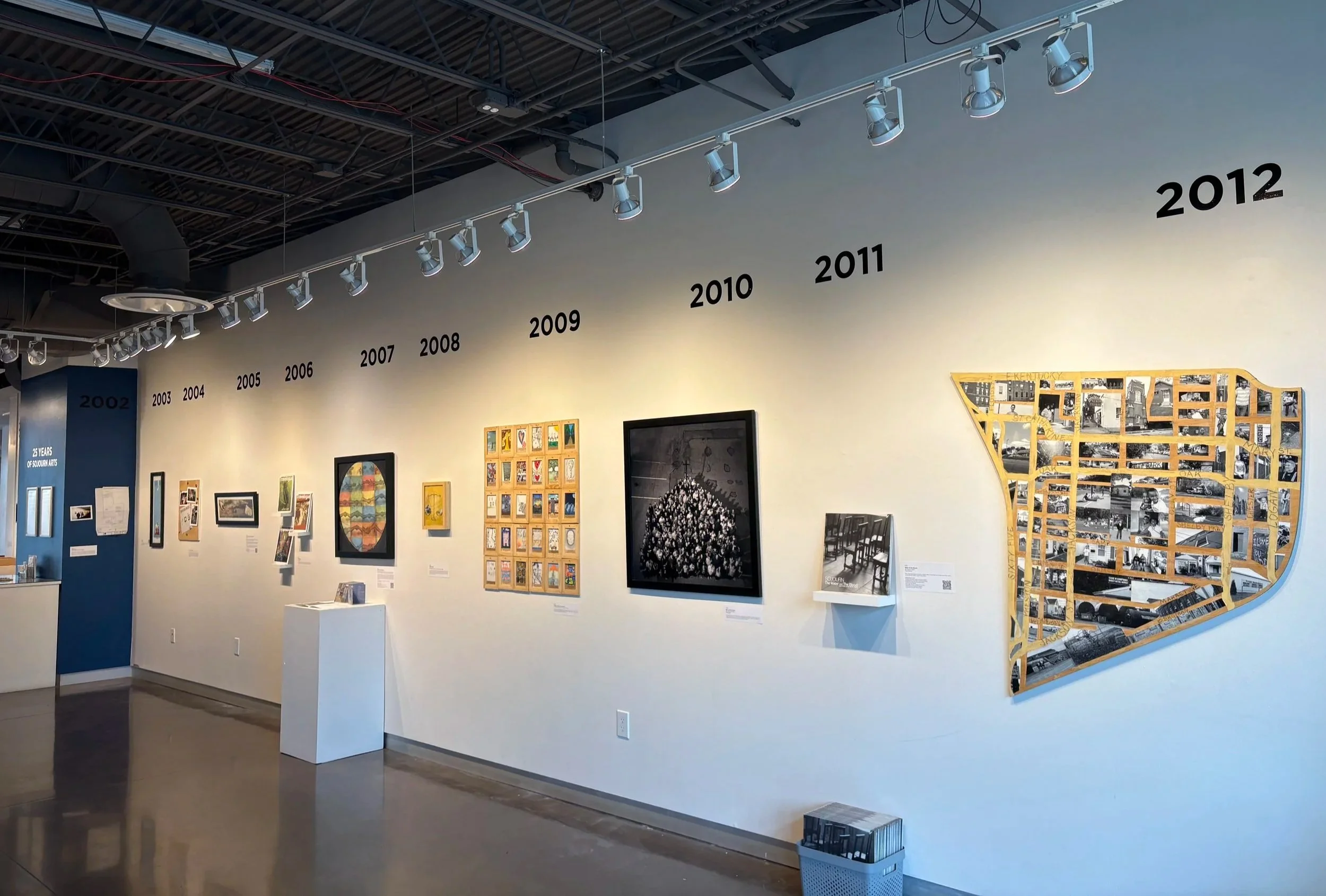
Installation shot of 25 Years of Sojourn Arts

Sojourn Community Church had its first public church service 25 years ago. In its quarter century history, art and culture making have been a part of Sojourn’s ethos: cultivating beauty, being fruitful, and building up the church through the arts. 

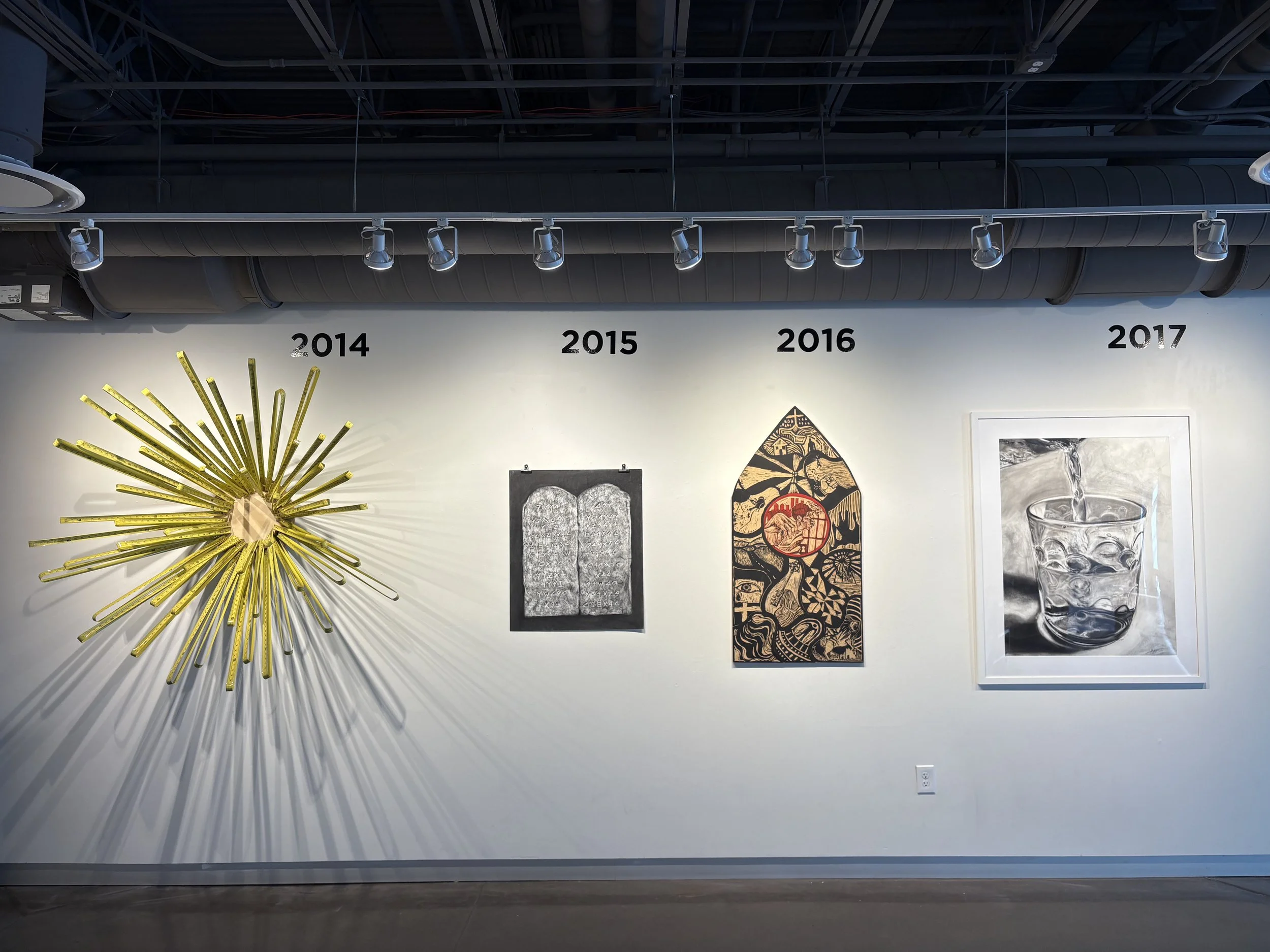
In this exhibit, on view September 14 - November 9, 2025, each year of Sojourn’s history is represented by a piece of artwork– from the original logo and bulletin designs to worship albums and commissioned artworks. 

Behind each piece are many hands and stories of artists visualizing scripture and members putting what their ears hear into what their hands make. Since its start, Sojourn Arts has hosted over 100 monthly artist meetings and curated more than 150 exhibits featuring artwork from more than 500 artists. 

2000: Photograph of early service, early documents.

The official ‘launch’ service of Sojourn Community Church took place in Fall of 2000. For about a year leading up to that point, a community was being brought together, mostly young people who were looking for a fresh expression of Christian faith. After Fall 2000, the worship services of the church took place on Sunday evenings in Highland Baptist Church at Grinstead and Cherokee Parkway.

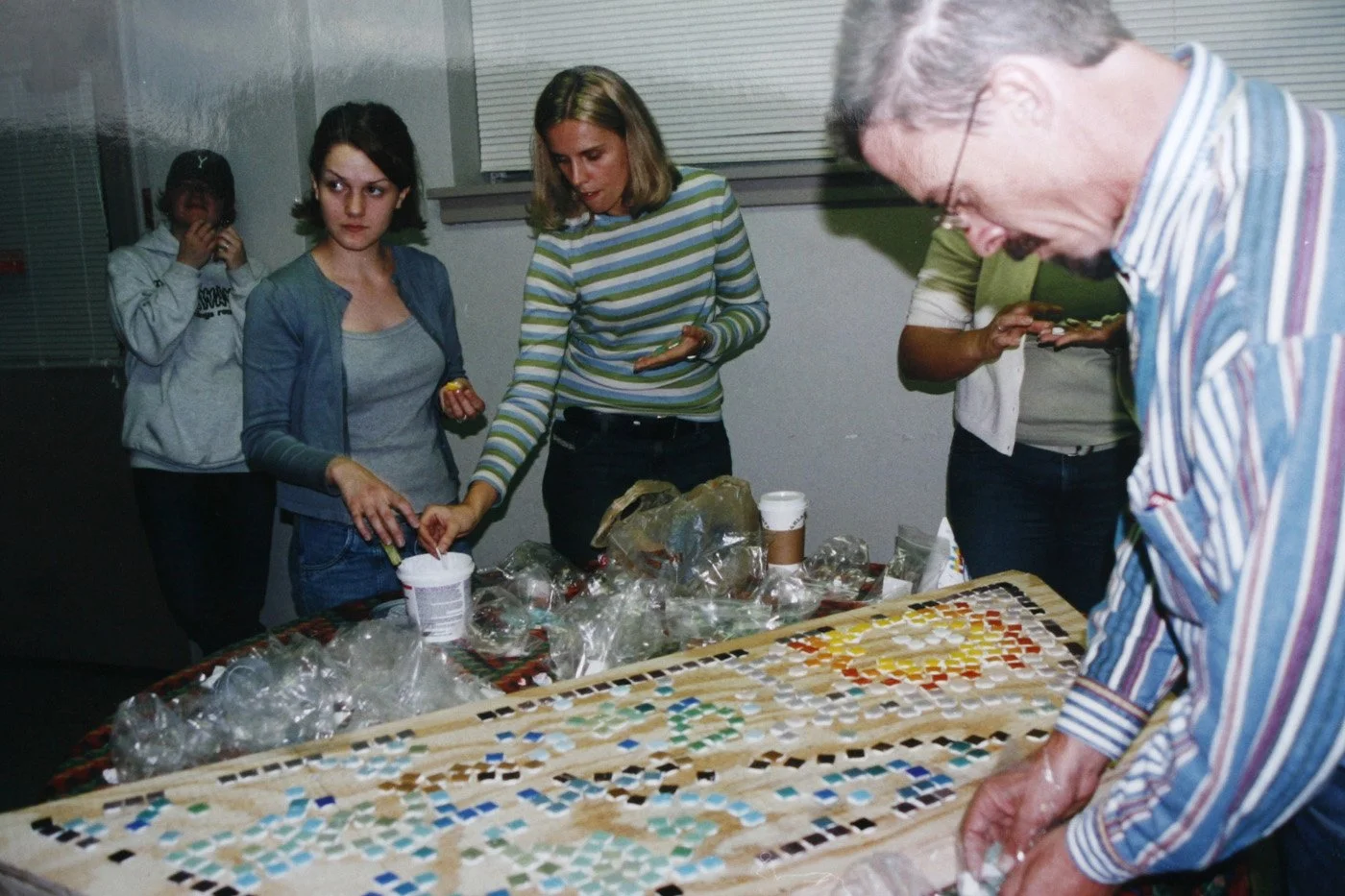
2001: Mosaic Table by Sojourn Community Church

This table top was probably the first community arts project completed by the church. Everyone present in that week’s worship service was invited to place a piece on the table. The table originally had no base, as it was moved in and out of storage since we rented worship space from other churches. After being used by Sojourn Midtown for many years, this table was given to Sojourn East where Joel Nussbaum created the wooden base.

2002: Aslan’s How design plan and photo.

Because Sojourn rented space for worship gatherings, the leaders desired a space where other meetings could happen during the week. Instead of only using the space as a private office, they opened the storefront space at 1906 Bardstown Road in the Highlands to also function as an art gallery and small music venue.

A document from that time describes the ministry’s purpose as: “to foster a relational environment for all people which celebrates the process of artistic creativity and discovering truth in association with a Christian community.” 

2003: Heart print by Aaron Marrs. Silkscreen print on paper.
This print was produced to celebrate the release of Sojourn Music’s first CD, With the Angels. Aaron Marrs was a prominent early member of the church. He was a graphic designer and helped establish the early creative aesthetic of the church. Listen to the album here.
2004: Kill Your TV, Cultivate Beauty

In 2002, April was named Kill Your TV, Cultivate Beauty month where members were encouraged to intentionally fast from TV and movies in order to give more space to cultivating beauty through other things such as sharing meals with friends, gardening, or making things. The month kicked off with TVs being smashed in the parking lot (or piñatas in the years after we realized how hazardous it was to break old tvs) and ended with a ‘film festival’ of wacky films made by people in the church, usually within community groups. Cultivate Beauty month was celebrated from ~2002-2005, with rebooted variations around 2008 and 2010. 

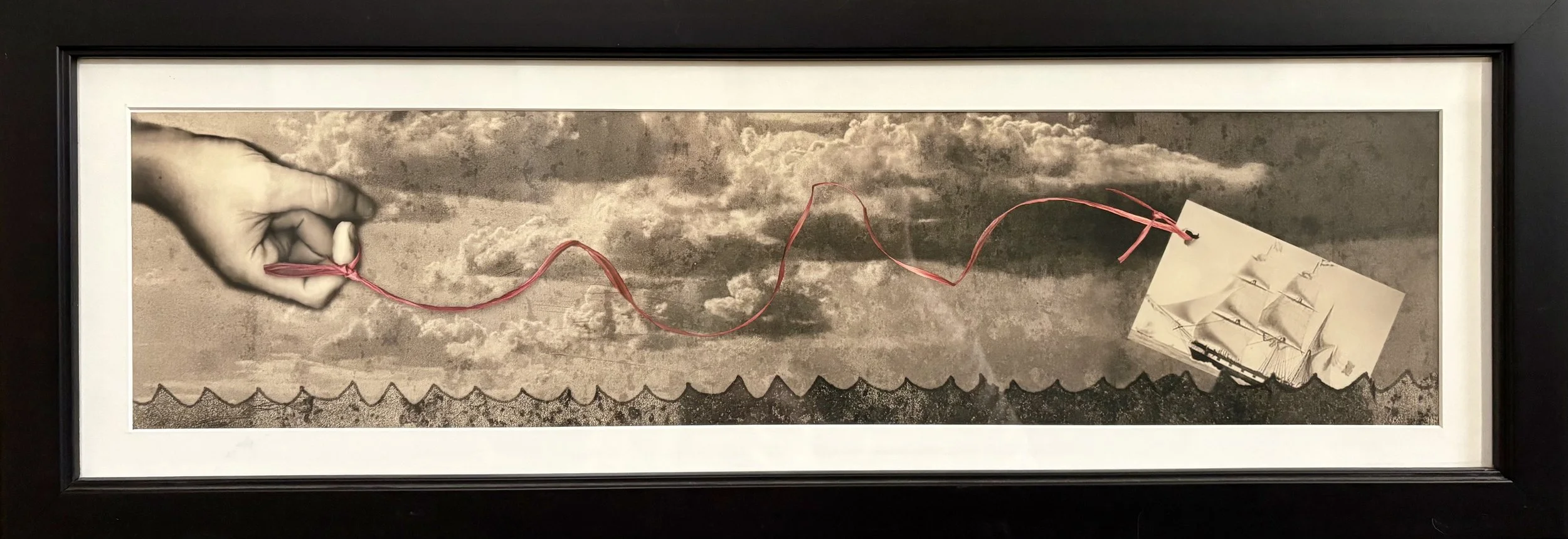
2005: Artwork for These Things I Remember album by Michael Winters, In Memory of Aaron Marrs

Original promo text: This 11-track collection of aesthetically diverse songs of faith, pain, longing and reflection based on the Psalms features worship music by Sojourn Community members Mike Cosper, Rebecca Dennison and Jeremy Quillo.

With stylistic influences ranging from the mountains of Appalachia to the villages of Asia to modern American rock, this record reconnects modern listeners with the language of the Psalms, reflects the diversity of creation and explores the tension between faith and doubt, triumph and struggle, laughter and lament.

Dedicated to the memory of Aaron Marrs, a community member lost at sea when the vessel he was working on capsized off the coast of Alaska, These Things I Remember focuses on loss and healing, and the stubborn faith in the midst of tragedy and questions that only comes from the Spirit of God. Listen to the album here.

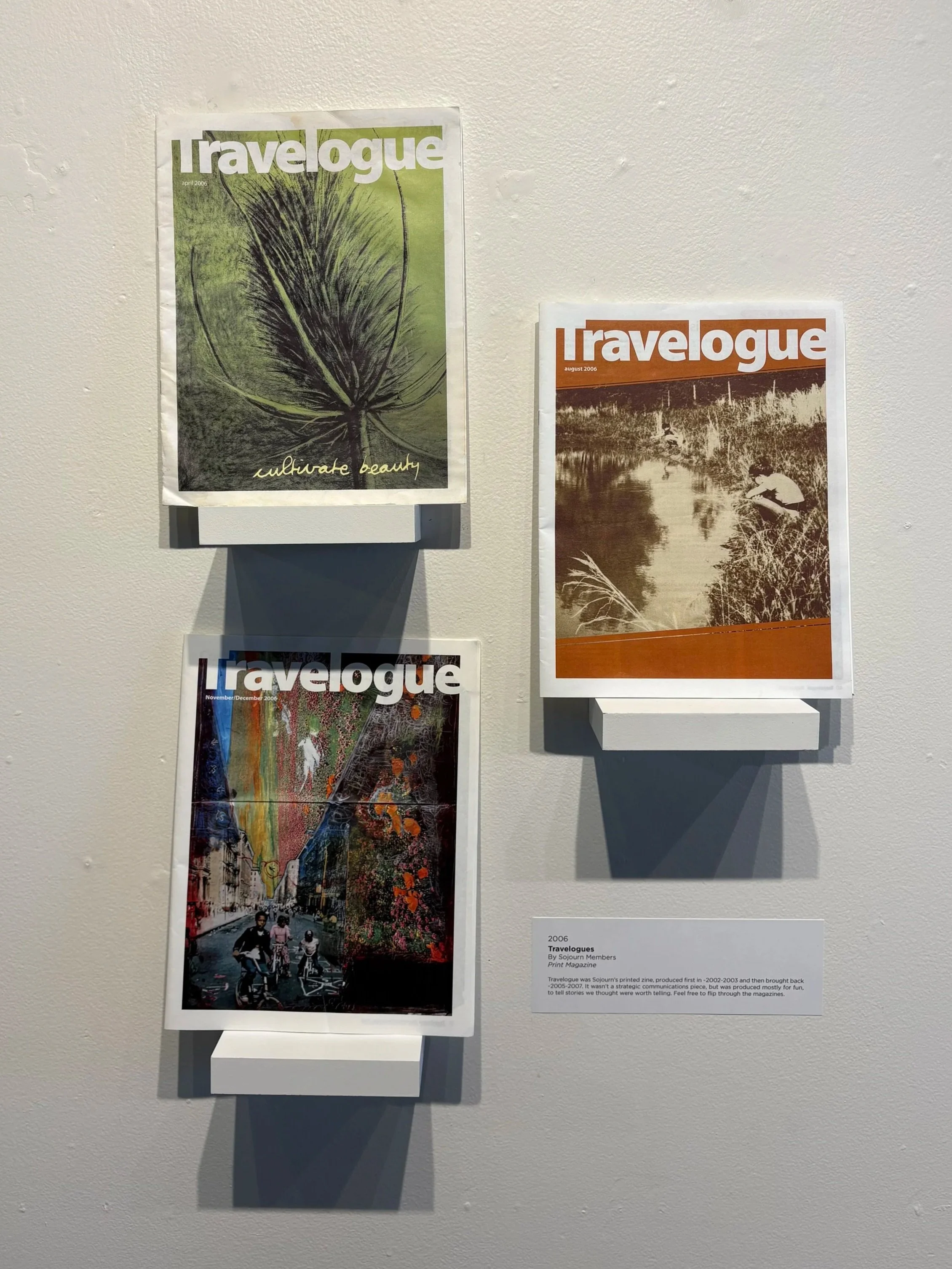
2006: Travelogues by Sojourn Members, Print Magazine.

Travelogue was Sojourn’s printed zine, produced first in ~2002-2003 and then brought back ~2005-2007. It wasn’t a strategic communications piece, but was produced mostly for fun, to tell stories we thought were worth telling.

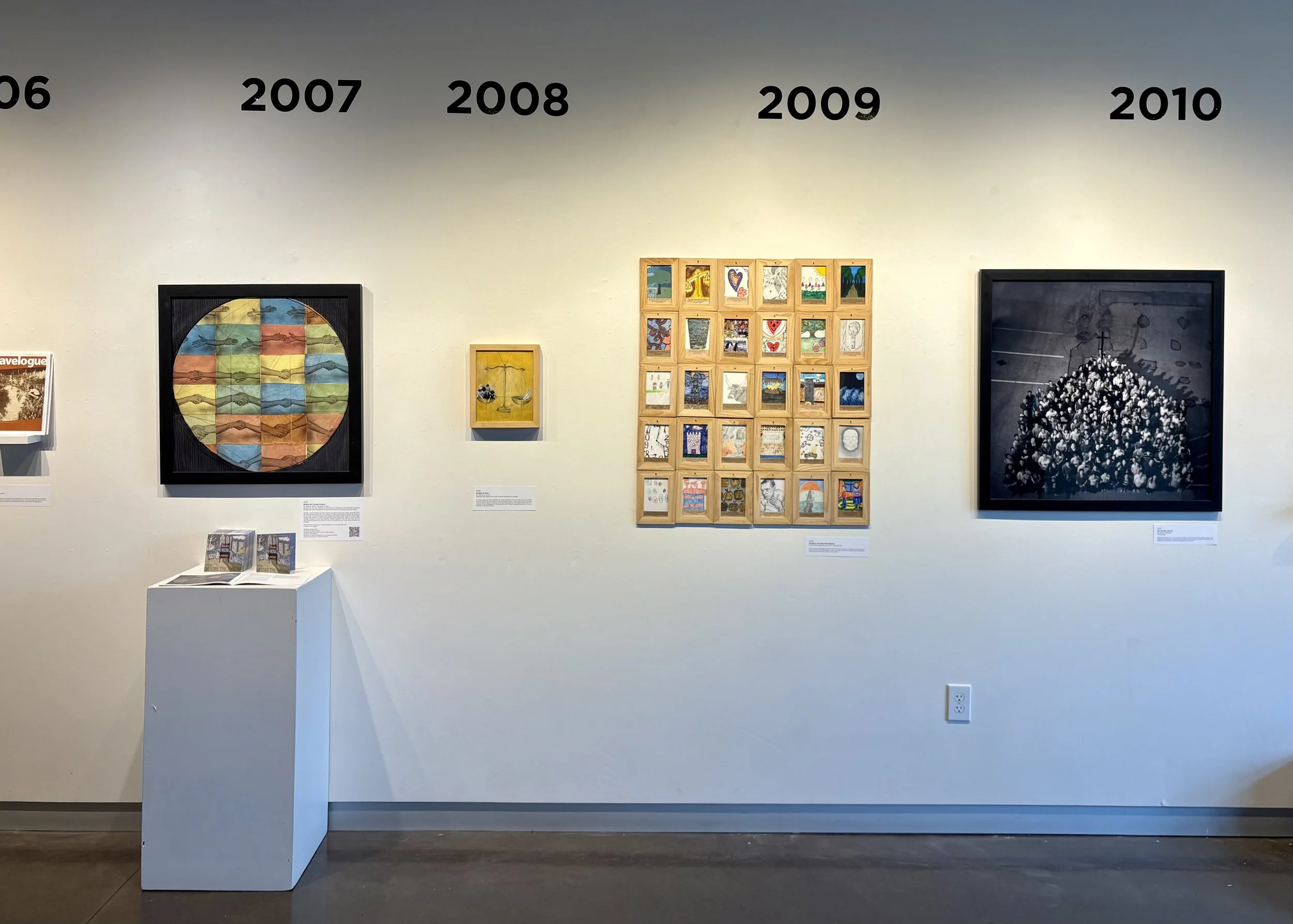
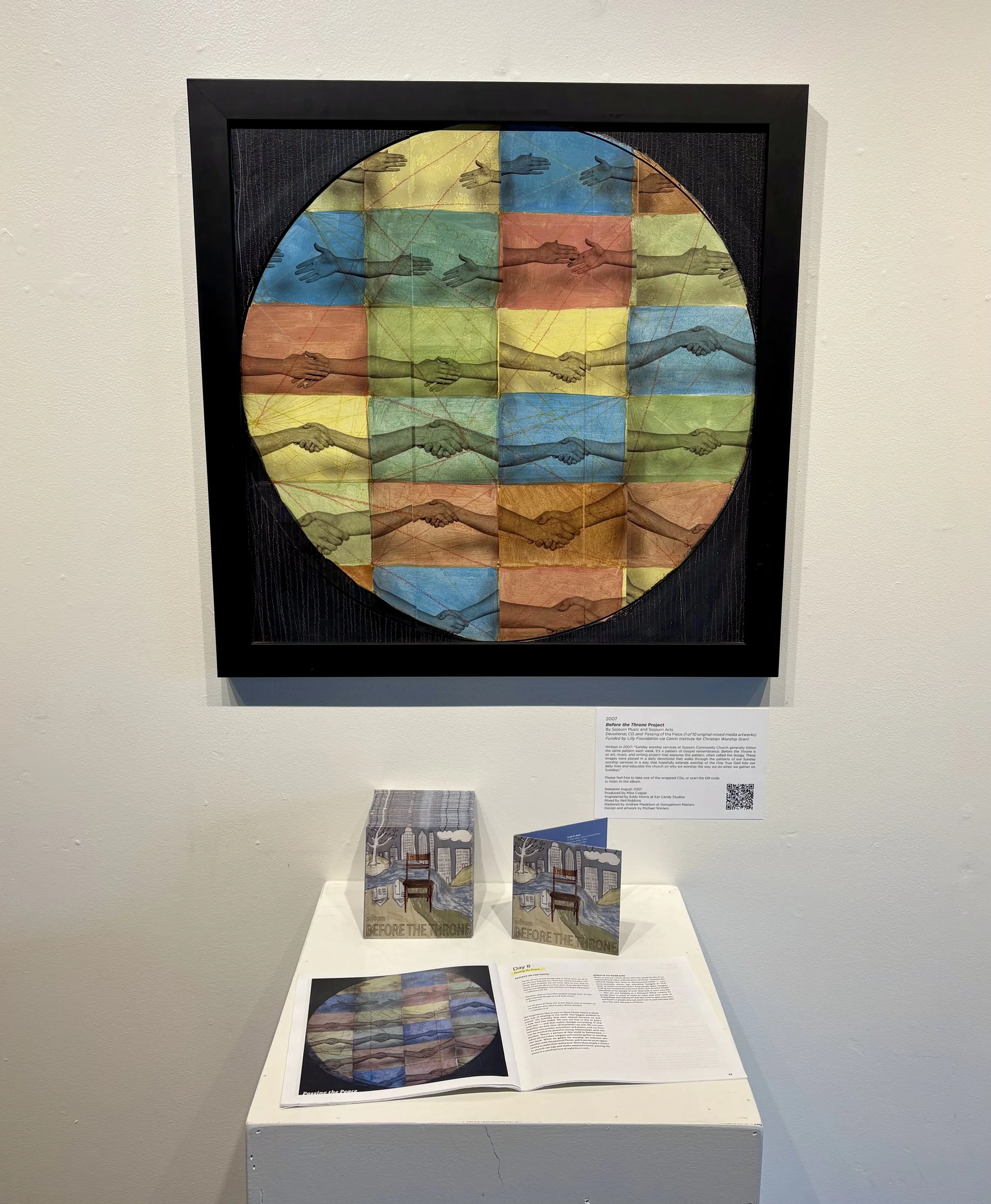
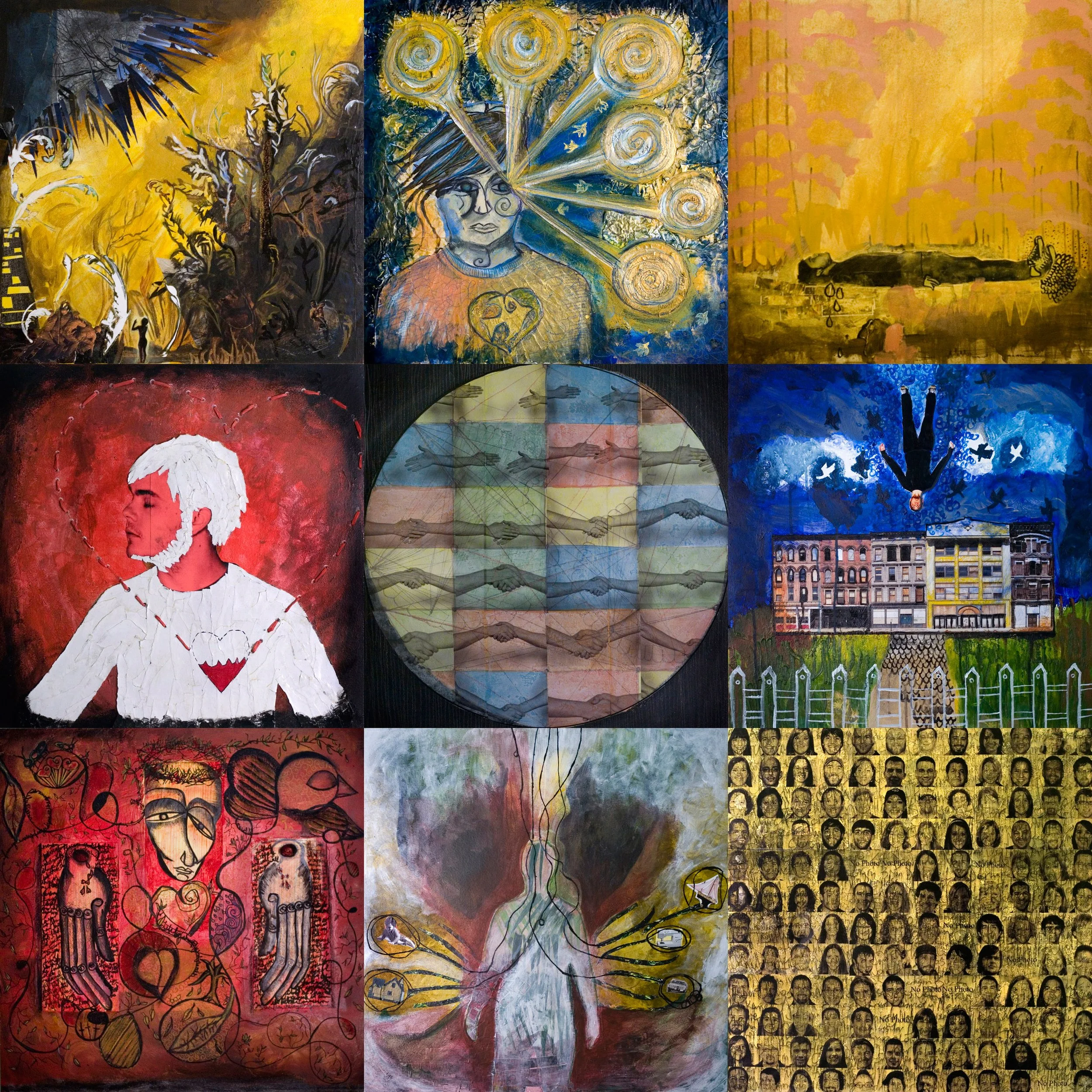
2007: Before the Throne Project by Sojourn Music and Sojourn Arts. Devotional, CD, and Passing of the Piece (1 of 10 original mixed media artworks).  Funded by Lilly Foundation via Calvin Institute for Christian Worship Grant

Written in 2007: “Sunday worship services at Sojourn Community Church generally follow the same pattern each week. It’s a pattern of Gospel remembrance. Before the Throne is an art, music, and writing project that explores this pattern, often called the liturgy. These images were placed in a daily devotional that walks through the patterns of our Sunday worship services in a way that hopefully extends worship of the One True God into our daily lives and educates the church on why we worship the way we do when we gather on Sundays.” 

Listen to the album here. 

2008: Feather & Keys by Katherine Groce. Reproduced digital print from original drawing and collage.

For many years, the church handed out paper bulletins to everyone who came for worship services. During this time period, it was typically an 8.5x11” sheet folded in half. The cover would have an image on it that was produced specifically for that week’s sermon text by a member of the congregation. This image was one of many images produced for a sermon series on the book of Romans. 

2009: Wisdom, Proverbs illustrations. Community-based project led by Sojourn Arts.

In this project, participants were invited to illustrate a proverb. A large grid of over 200 of these was hung in the 930 gallery as part of a larger exhibit that reflected upon the biblical Psalms and Proverbs called Prayer and Wisdom.

2010: We are the Church by Sojourn Midtown. Photograph

Photographed from the roof of Sojourn Midtown’s previous 930 Mary Street location, this image was made after a worship service. People were invited to stand in the shape of a building to illustrate the idea that the people are the church.

2011: Water & the Blood by Sojourn Music. Vinyl Record.

This album reimagined the hymns of Isaac Watts. Listen to the album here.

2012: Who is Shelby Park? by Sojourn Arts Photography Class. Photographs, wood, paint, pencil.

In 2012, Sojourn Midtown moved from 930 Mary Street in Germantown to our current location in Shelby Park. One of the ways we prepared for this was creating a photography class that would walk Shelby Park, make photographs and get to know the place and some of the people. The class made this ‘map’ of Shelby Park, which became part of the larger exhibit also titled Who is Shelby Park?

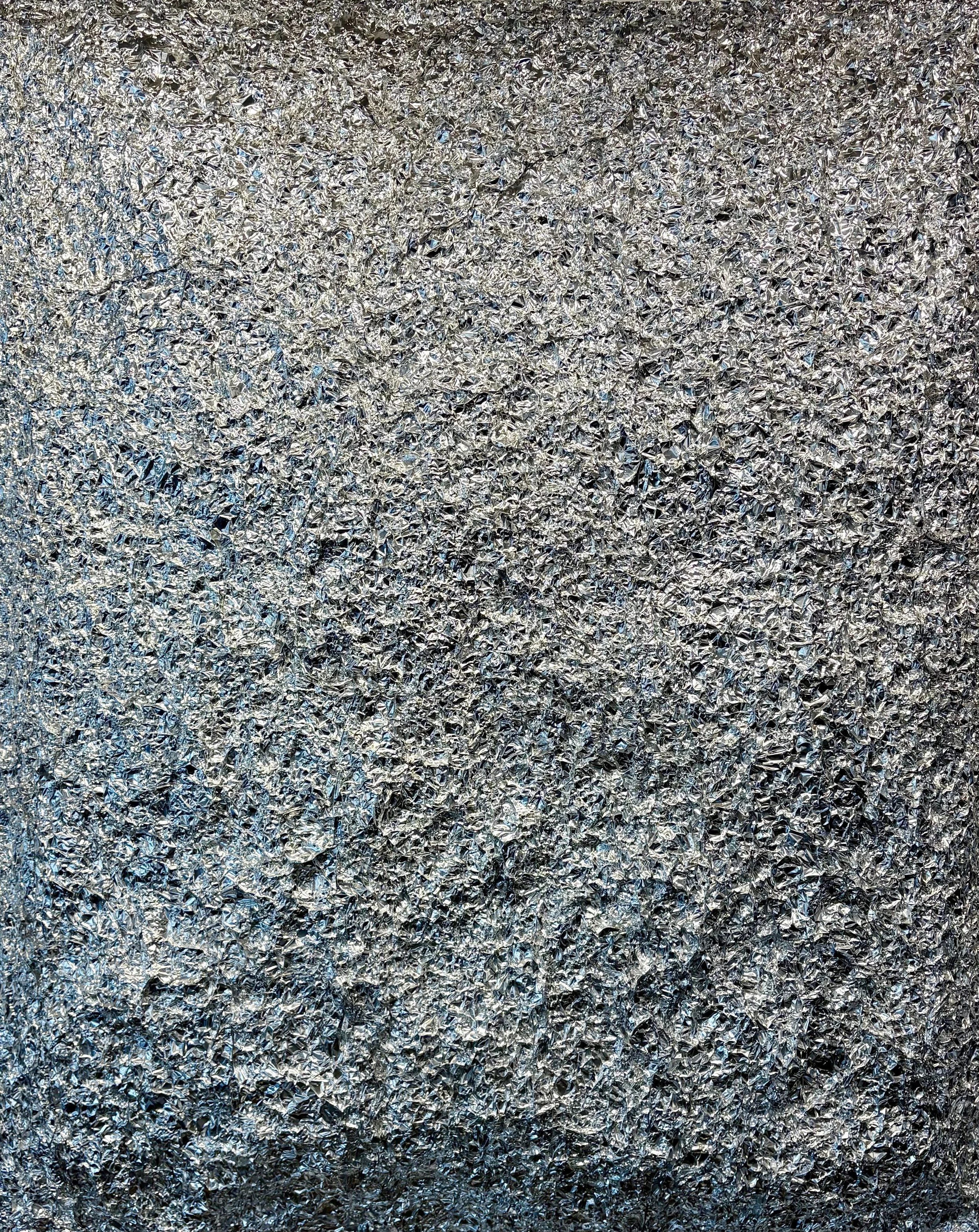
2013: Local Church by Wayne Adams. Aluminum foil on wood.

In the exhibit Signals and Reflectors, Artist Wayne Adams exhibited four large aluminum foil panels like this in our gallery. At the end of the exhibit, he gave one of them to us to keep; it usually hangs in the art collection by the balcony. He thought the way these panels reflect light is akin to how the church might reflect the light of Christ.

2014: Breadth by Stephen Watson. Measuring tapes, wood, screws.

As the church was preparing to study the book of Ephesians in a sermon series, we commissioned artist Stephen Watson to create an installation made for our sanctuary. Stephen noticed that the book of Ephesians uses a lot of measurement language and created something to reflect that. 

“I pray that you, being rooted and established in love, may have power, together with all the Lord’s holy people, to grasp how wide and long and high and deep is the love of Christ, and to know this love that surpasses knowledge—that you may be filled to the measure of all the fullness of God.” –Ephesians 3:17b-18

2015: Ten Commandments from Exodus by Kristin Busby. Charcoal.

As we prepared to study the book of Exodus in a sermon series, Kristin Busby created a series of drawings illustrating the book. The drawings were hung throughout the sanctuary. Kristin was a Sojourn Arts intern through Love Thy Neighborhood.

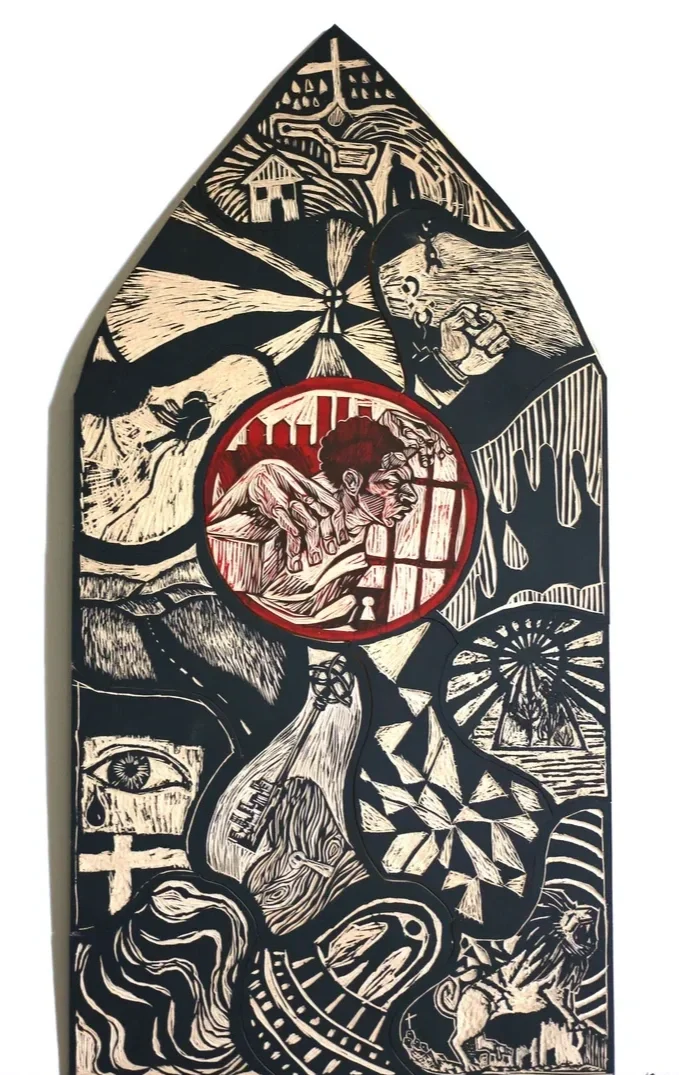
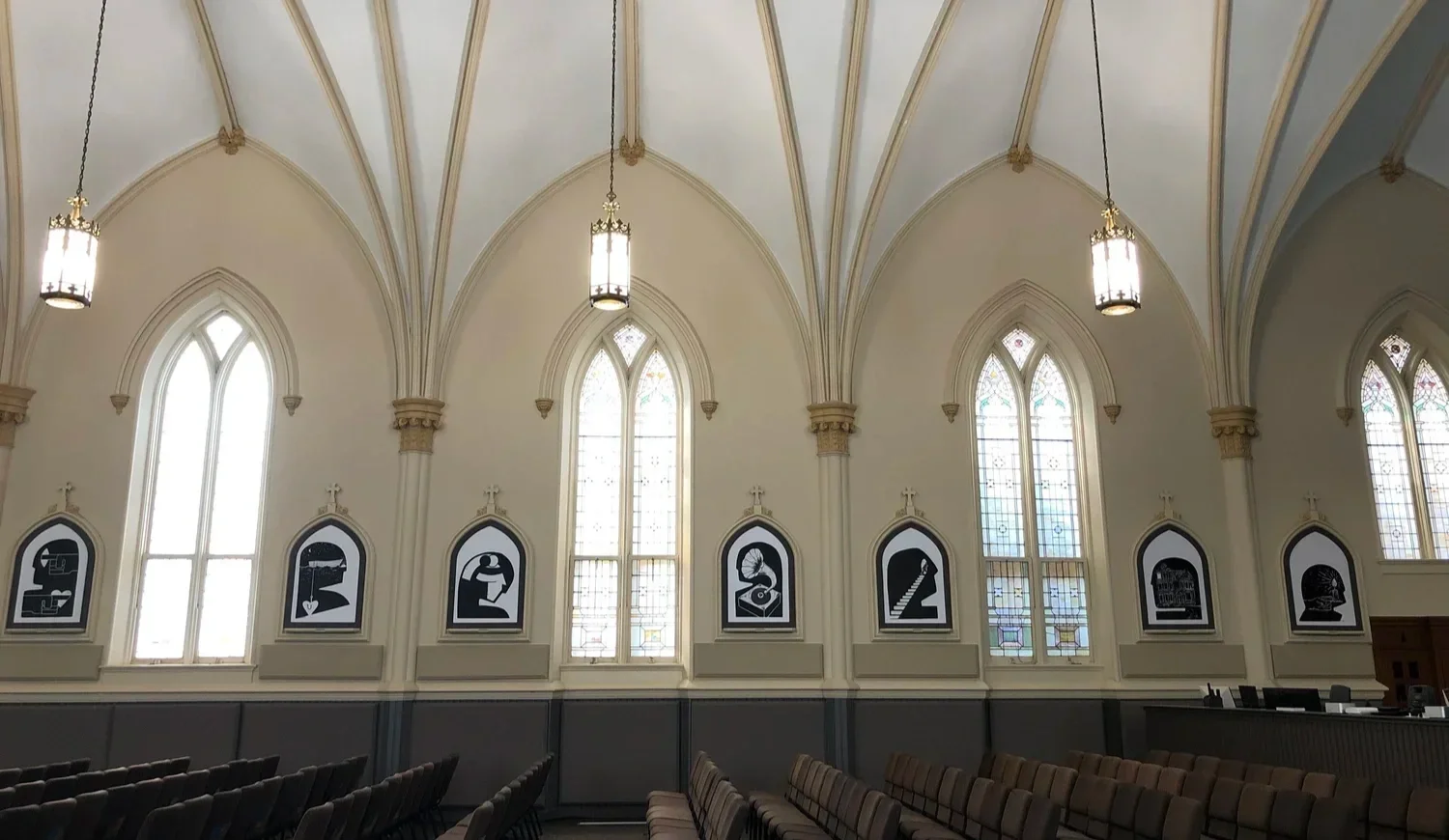
2016: Jesus carries his cross from Urban Stations by Steve Prince with Sojourn Midtown. Cut MDF, ink.

This piece is one of 14 pieces created for our sanctuary, meant to retell the story of Jesus going to the cross. These pieces often hang in the sanctuary during Lent. Artist Steve Prince created the red image in the center of the panel and members of the church created all the black parts during a series of workshops.

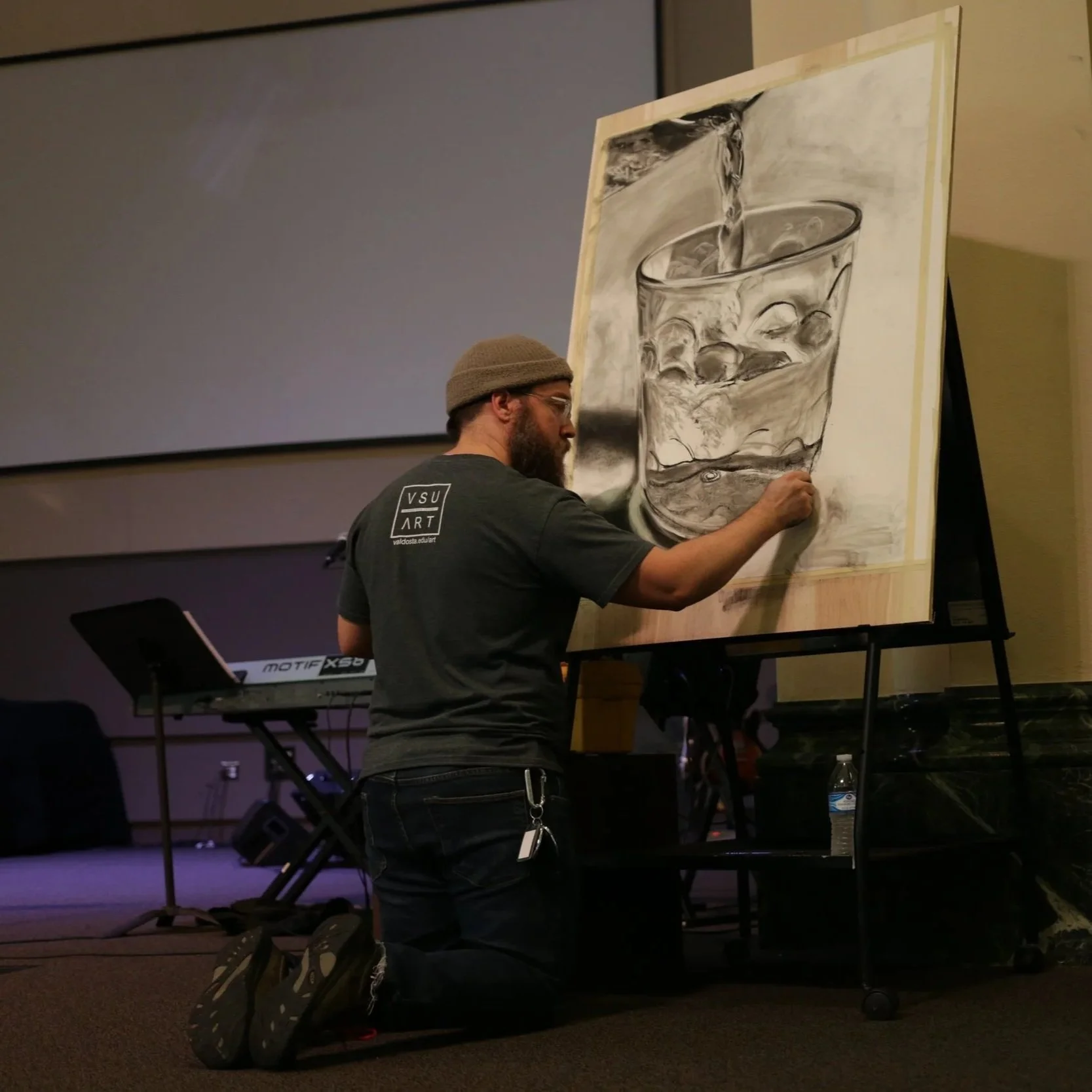
2017: Water Cup by Craig Hawkins. Charcoal on paper.

This drawing was created during a worship service, the only time we’ve had visual art produced on the platform during service. Craig Hawkins had produced many similar artworks for his home church in Georgia, and while we were exhibiting his art in Emmaus Road, we invited him to respond live to the sermon by making this drawing as part of the worship service.

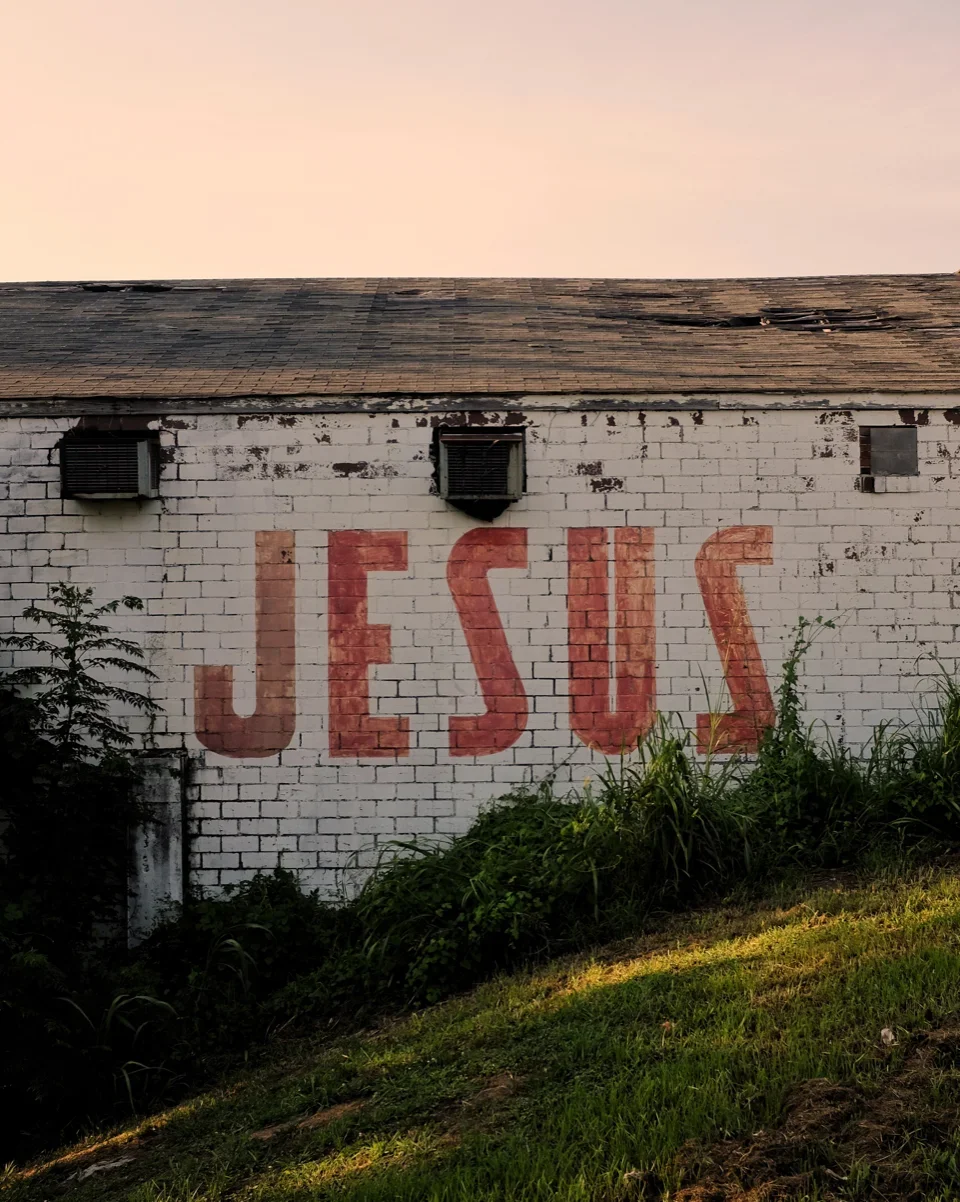
2018: ‘Jesus Warrior’, AL by Devin Lunsford. Photograph.

This print was part of the exhibit Roadside Jesus, curated by Michael Howard. The exhibit surveyed how contemporary photographers around the country were documenting Christian artifacts in the American landscape.

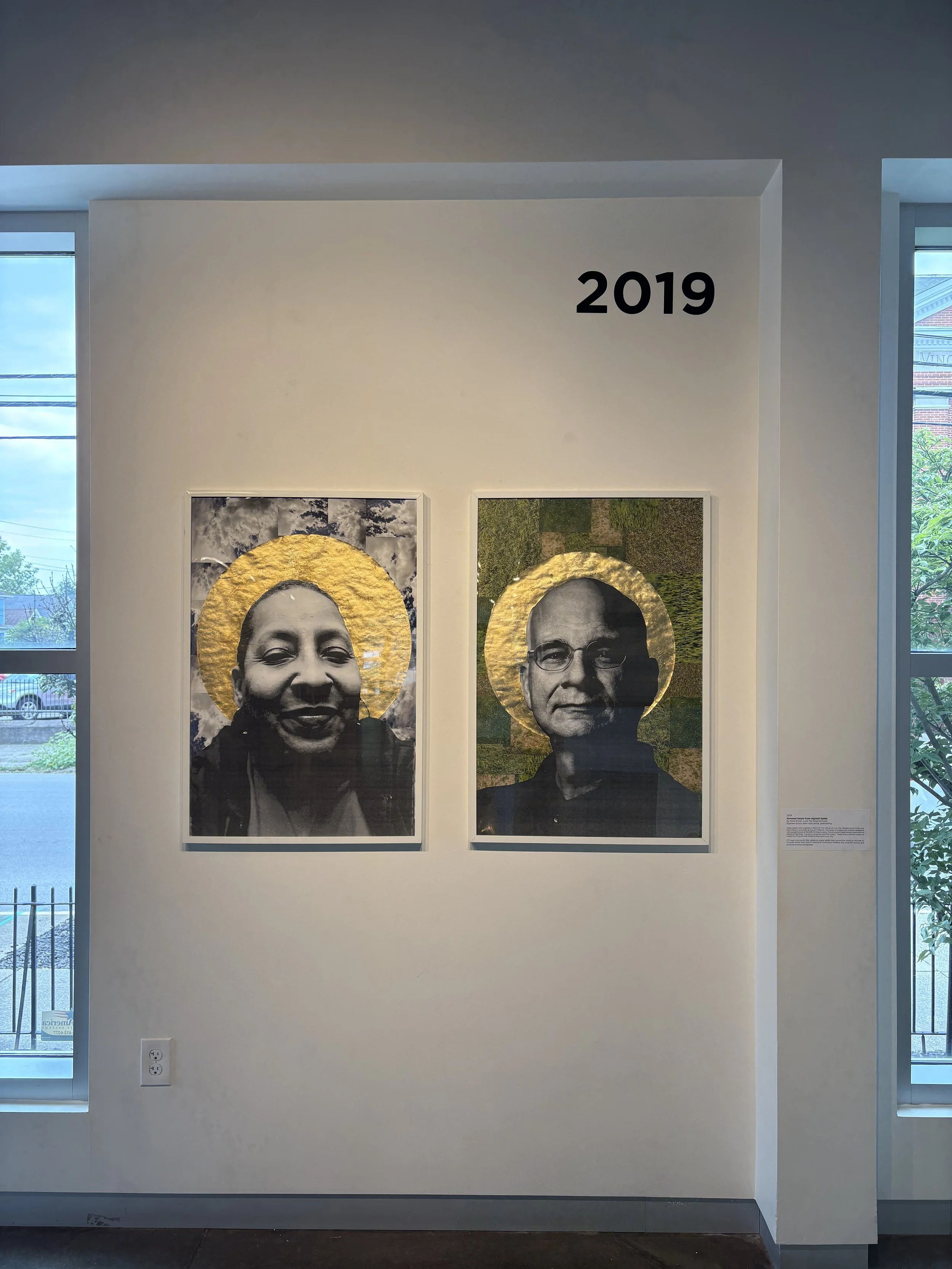
2019: Personal Saints from Asphalt Saints by Kiana Brown, Love Thy Neighborhood. Engineer prints, laser color prints, gold leafing.

These pieces were originally created for the offices of Love Thy Neighborhood (LTN) and then shared in an exhibit at Sojourn Midtown. This series of images pair ordinary neighbors with popular heroes of the faith; for Kiana’s saints, Timothy Keller hangs beside neighborhood matriarch Niki Ross. The goal LTN named with this project  “[was] to provoke the viewer to awaken to Christ at work inside of them and in our city.”

LTN was a non-profit that gathered young adults from around the world to relocate to Louisville where they lived in intentional community together, did nonprofit service, and practiced Christian discipleship. 

2020: Let Justice Roll. Community-based project, led by Sojourn Arts

During the sermon series “The Gospel, Race, and Justice”, we invited church attenders to decorate these plywood letters with images and phrases imagining a just world. The resulting sign was fixed to the exterior of our church building.

“But let justice roll on like a river, righteousness like a never-failing stream!” 

–Amos 5:24

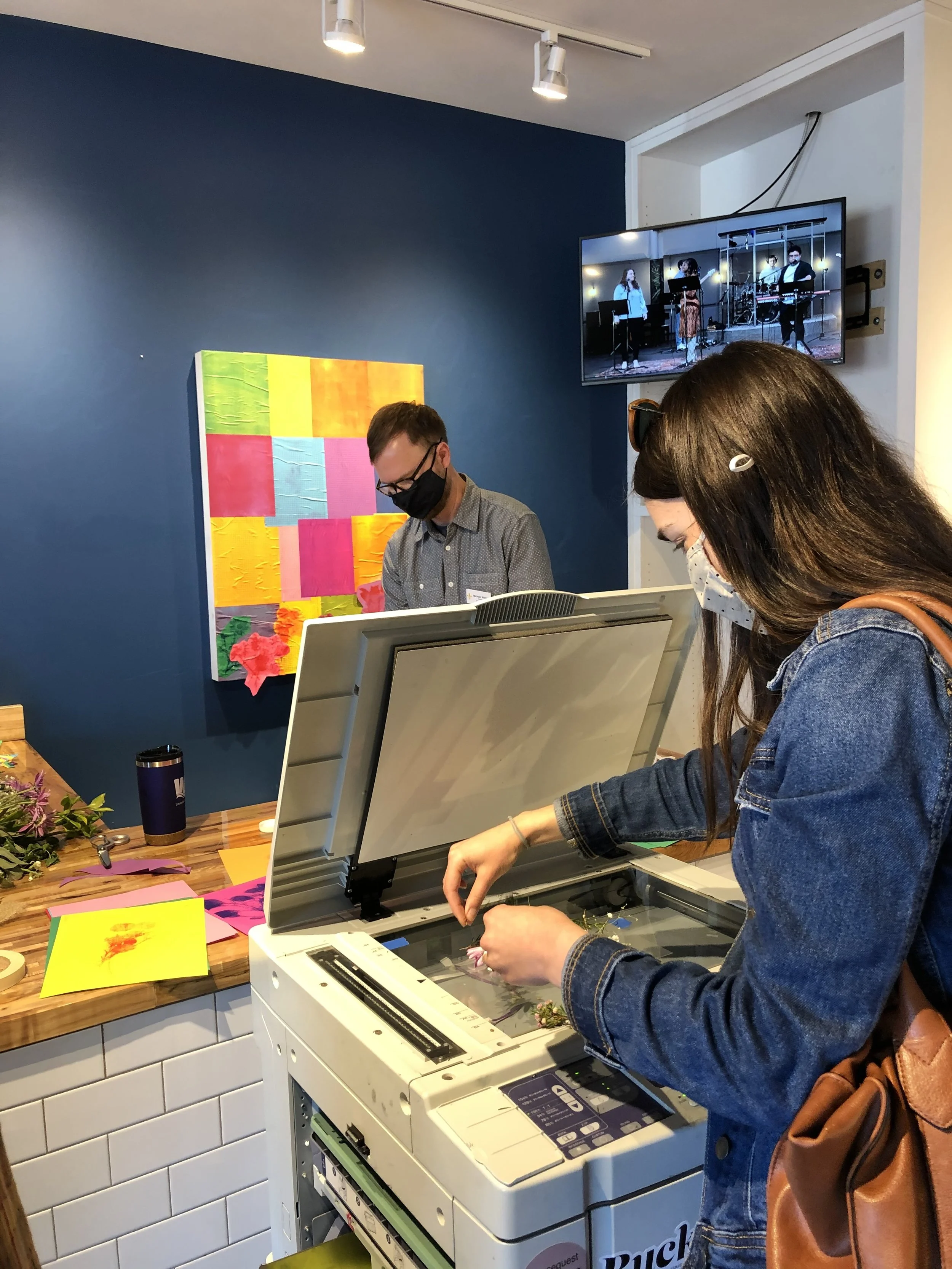
2021: Moveable Garden by Tim Robertson and Sojourn Midtown. Risograph printed paper, glue, wood panel.

On Easter morning 2021, Tim Robertson led us in this community arts project. Participants created bouquets and then scanned and Riso printed them on bright, colorful paper. The prints were then cut up and collaged on panel, creating our very own “Moveable Garden.”

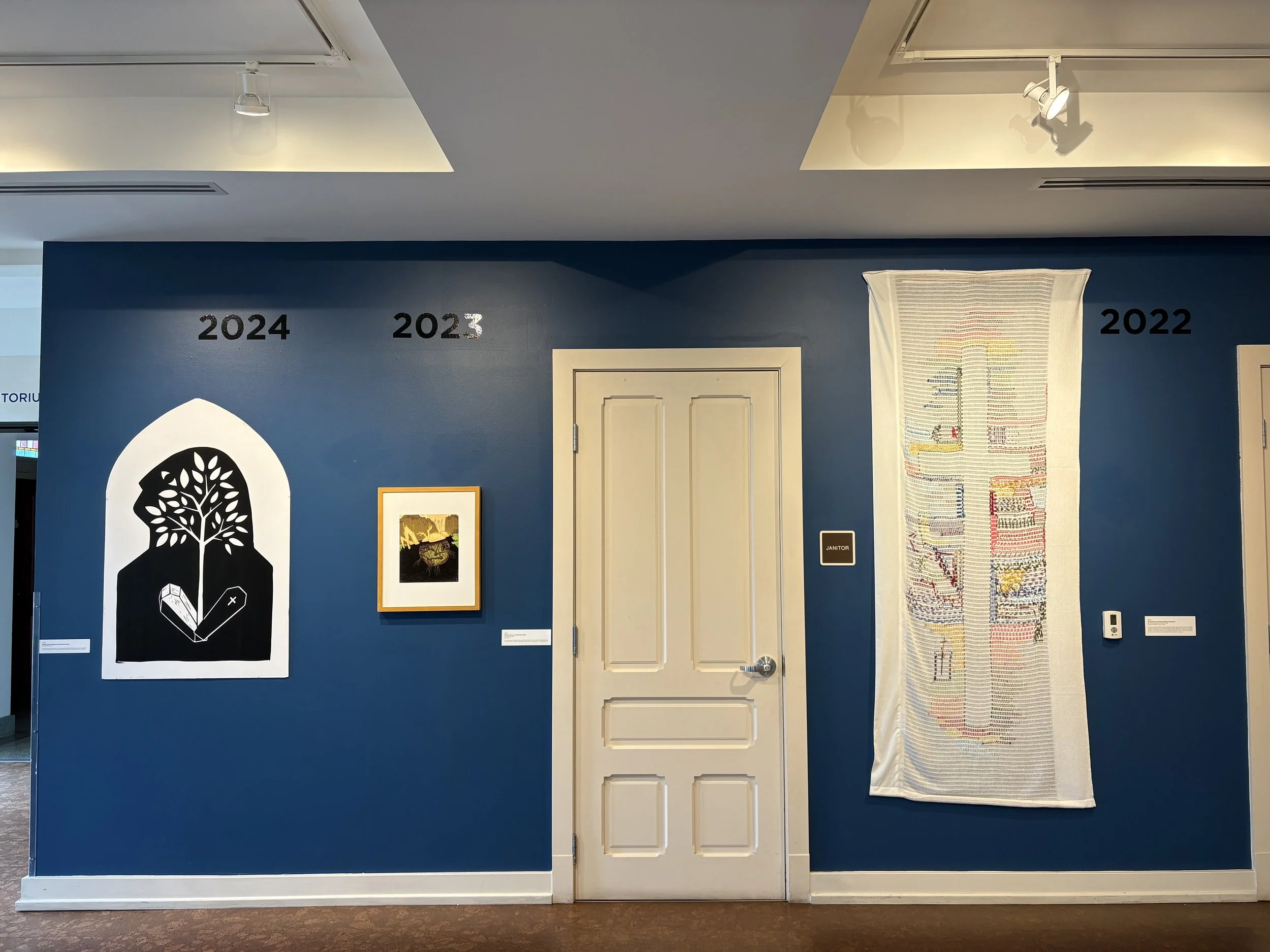
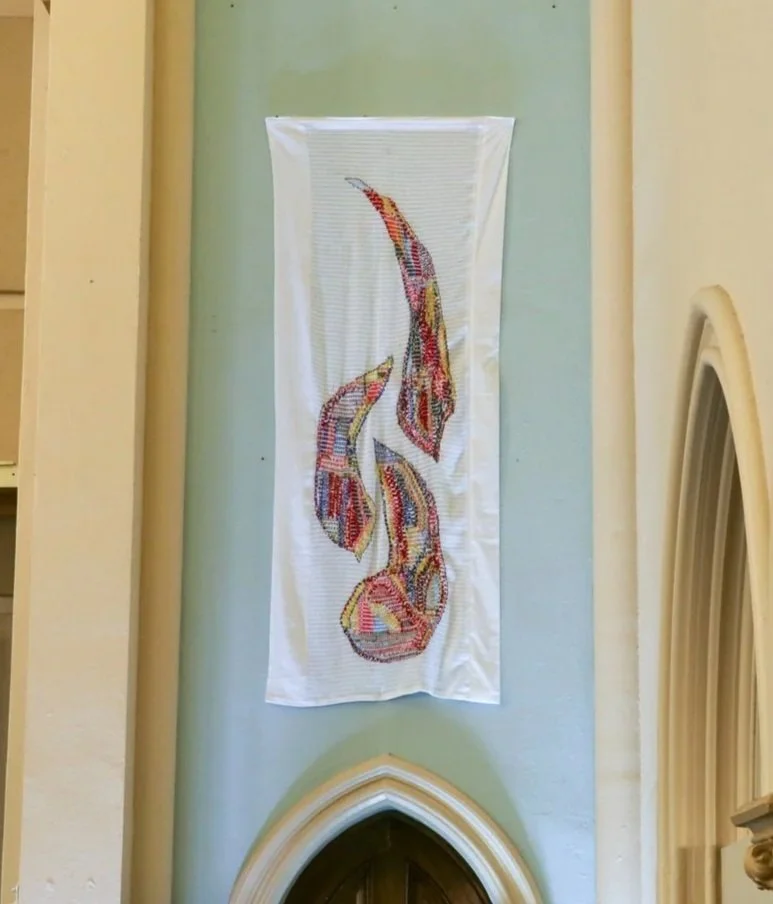
2022: Community weaving (Pentecost Banners) by Jenny Stopher and Sojourn Arts. Hospital blankets, yarn, thread.

Artist Jenny Stopher started this community art project on Easter Sunday, inviting participants to weave colorful yarn into a hospital blanket, a visual metaphor for weaving our lives into Christ’s. The banners, one with a cross and the other with flames, remind us of Jesus’s promise in John 14:26 to send the Holy Spirit to the disciples, and in Acts 2 when the Spirit poured out. The other banner is hanging in the stairwell to the balcony. 

2023: Resurrection: 1 Corinthians 15:42 by Jared Boggess. Illustration.

From the exhibit The Resurrection and the Life by Fishcoin Press. “So is it with the resurrection of the dead. What is sown is perishable; what is raised is imperishable.” –1 Corinthians 15:42

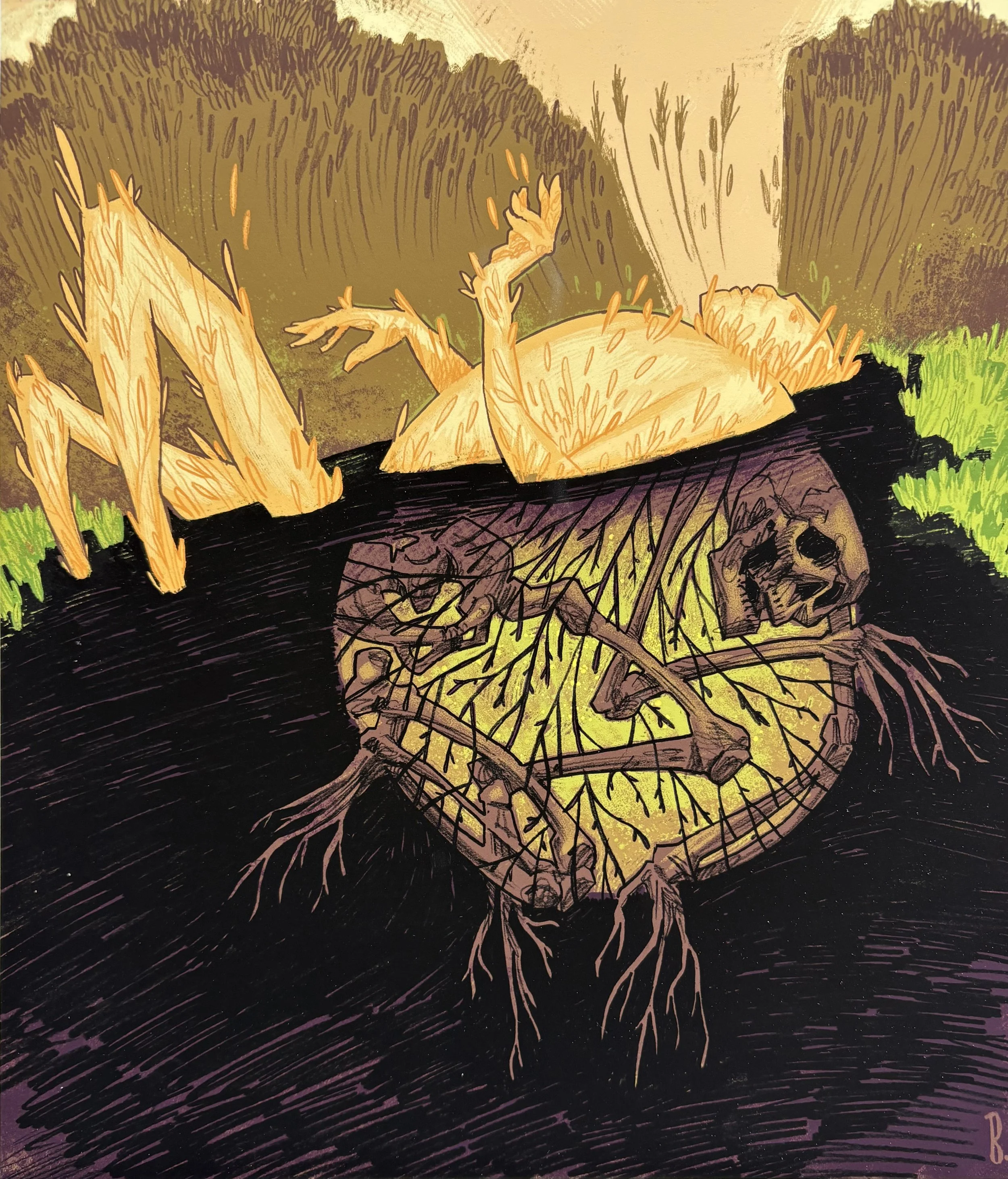
2024: Raised from Stations of the Resurrection by Scott Erickson.

Scott Erickson created a series of 14 images that together tell the story of Christ’s resurrection and invite viewers to contemplate the meaning of Christ’s resurrection in their own lives.

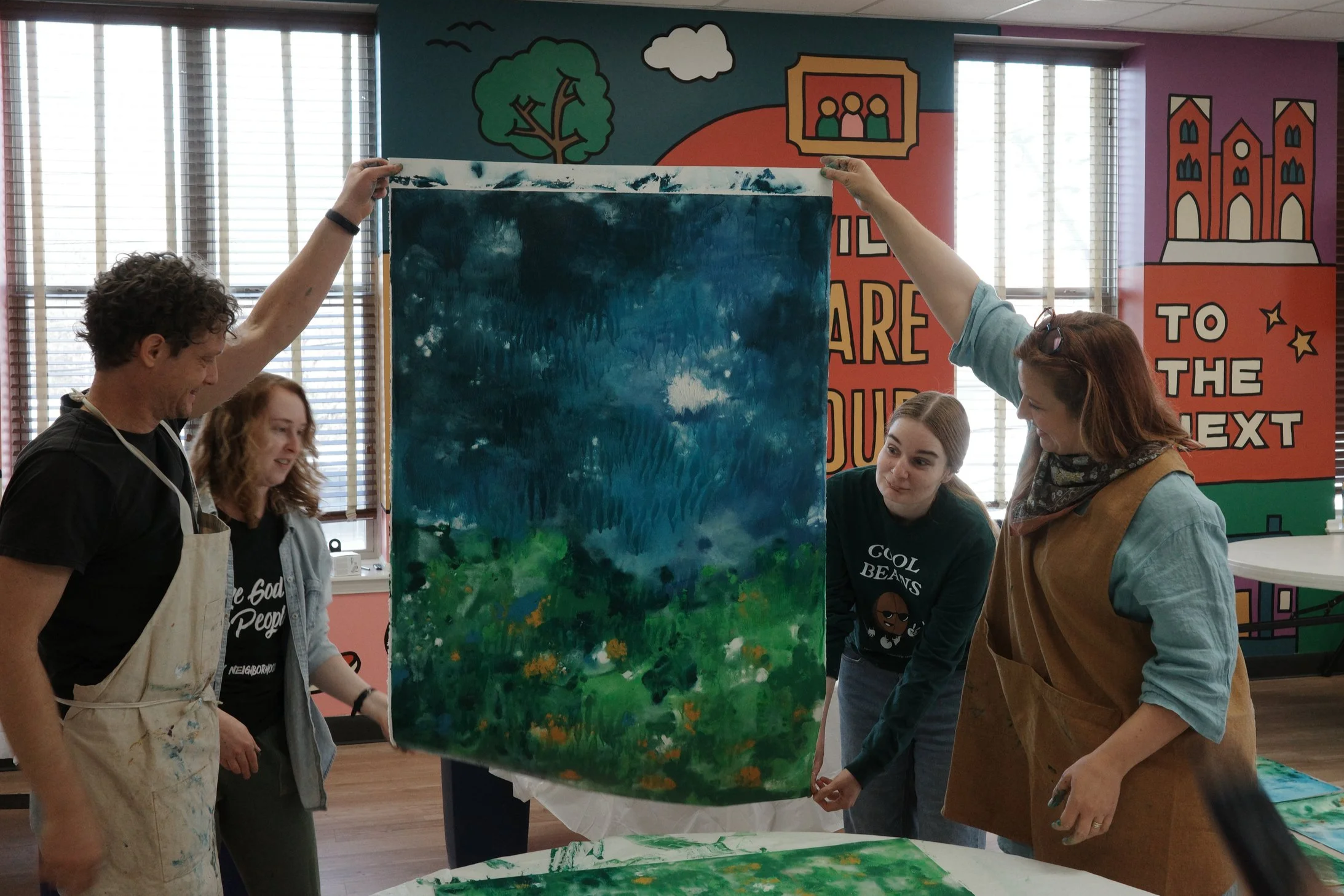
2025: from Alee / Aweather by Phaedra Taylor with Sojourn Midtown. Monoprint with collage. Created for Easter 2025.

Together with participants of Sojourn Midtown, Phaedra Taylor created a series of 14 arch-shaped artworks like this for our sanctuary. This rectangular one was also created at the same time for the art collection next to the balcony.

May we continue to cultivate beauty for the next 25 years!

Many thanks to Michael Winters for sharing the memories above that were printed on each title card.